430 NMDPRA Workers Get Housing Allocations as FMBN Processes ₦8.3bn Mortgages
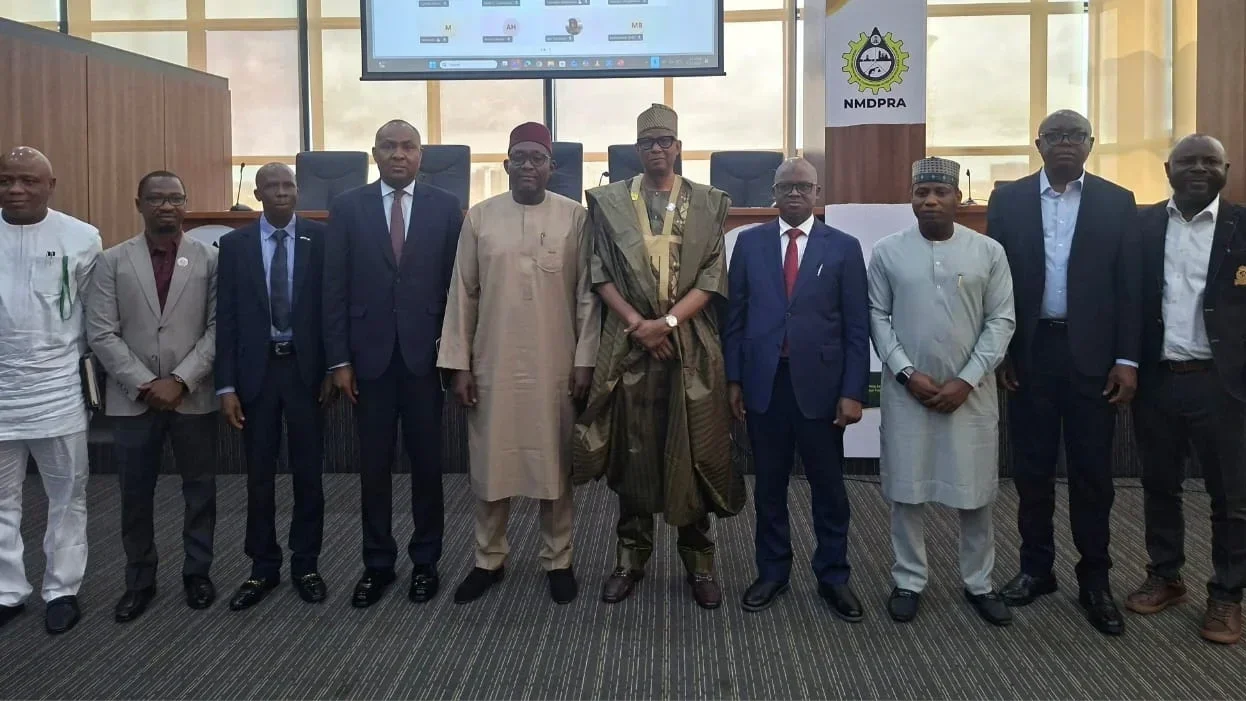
NMDPRA workers receive housing allocations
About 430 workers of the Nigerian Midstream and Downstream Petroleum Regulatory Authority (NMDPRA) have received housing allocations under the Federal Government’s Renewed Hope Cities and Estates Programme, as the government expands institutional support for worker homeownership.
/ You Might Also Like /




The allocations cover housing developments in Abuja, Kano and Lagos, while 197 National Housing Fund mortgage applications valued at about ₦8.3 billion are being processed for eligible NMDPRA staff.
The development was announced during the formal presentation of allocation letters to beneficiaries, where the Minister of Housing and Urban Development, Muttaqha Darma, highlighted the importance of institutional partnerships in expanding access to affordable housing.
430 Workers Receive Housing Allocations
NMDPRA Chief Executive Rabiu Umar said about 430 members of staff were receiving allocation letters under the housing programme.
However, demand for the scheme has exceeded the number of available units. The NMDPRA Authority Staff Cooperative Society said more than 1,000 workers had applied, leaving hundreds of applicants awaiting allocation.
The first phase includes developments in Karsana, Abuja, Janguza, Kano and Lagos.
₦8.3bn in Mortgage Applications Under Processing
The housing allocations are being supported by mortgage financing through the Federal Mortgage Bank of Nigeria (FMBN).
FMBN Managing Director Shehu Osidi said 197 NHF mortgage applications worth approximately ₦8.3 billion were being packaged for submission to the bank through City Code Mortgage Bank.
The financing structure is intended to connect eligible workers to completed housing units rather than relying solely on upfront payments, helping spread the cost of homeownership over time.
FMBN has also provided a ₦100 billion off-take guarantee for the Renewed Hope Cities and Estates Programme, beginning with the Karsana project, alongside ₦19.9 billion in direct funding.
Abuja, Kano and Lagos Projects
The first phase of the programme covers different housing types across the three locations.
In Abuja, the development comprises 365 units, including two- and three-bedroom flats and three-bedroom terrace duplexes with boys’ quarters.
Kano has 14 units comprising three- and four-bedroom bungalows, fully detached houses and three-bedroom terrace duplexes with boys’ quarters.
The Lagos component consists of 56 two- and three-bedroom apartments with boys’ quarters.
A second phase is expected next year to accommodate some applicants who were not included in the initial allocation.
Additional projects are also planned for Asaba, Enugu and Ibadan.
FMBN Plans Rent-to-Own Product for Civil Servants
The initiative also comes as FMBN expands the range of housing-finance products available to workers.
Osidi said the bank would soon introduce a Rent-to-Own product for eligible civil servants. FMBN has also launched a Diaspora Mortgage Loan and signed a memorandum of understanding for a ₦10 billion housing loan scheme for Federal Civil Servants.
The expansion of financing options is significant because the affordability challenge extends beyond the supply of physical housing. Workers may still struggle to purchase completed homes where mortgage terms, income levels and upfront costs do not align.
Rising Construction Costs Continue to Pressure Affordability
Housing Minister Darma linked the importance of programmes such as the NMDPRA scheme to the rising cost of construction and building materials.
Higher development costs can translate into higher selling prices, making conventional homeownership increasingly difficult for workers whose incomes have not increased at the same pace.
This makes the availability of mortgage finance and institutional housing schemes important components of the affordability equation. However, sustained affordability will also depend on land costs, construction efficiency, infrastructure provision and the terms attached to housing finance.
Institutional Housing Could Expand Housing Delivery
The NMDPRA scheme demonstrates how employer-backed housing programmes can complement broader government housing initiatives.
Rather than relying exclusively on individual households to enter the housing market independently, institutions can aggregate demand from their workforce and work with mortgage lenders, developers and government housing agencies to structure housing delivery.
For developers, such arrangements can also provide greater certainty around demand and off-take, potentially improving the financing conditions for projects.
FMBN's ₦100 billion off-take guarantee is particularly relevant in this regard because guaranteed demand can reduce some of the uncertainty developers face when financing affordable housing projects.
Housing Demand Still Exceeds First-Phase Supply
Despite the progress, the numbers also illustrate the scale of unmet demand.
More than 1,000 NMDPRA workers reportedly applied for the scheme, while about 430 have been accommodated in the first phase. The gap demonstrates that even within a single institution, demand for structured access to affordable housing can substantially exceed available supply.
The Federal Government has previously announced several workers-focused housing initiatives. In August, for example, it broke ground on a 250-unit civil service estate in Dukpa, Gwagwalada, Abuja, designed to expand affordable accommodation for federal civil servants.
The wider challenge will therefore be converting individual housing schemes into a consistent pipeline of affordable homes supported by accessible and sustainable mortgage finance.
Outlook for Workers’ Homeownership
The NMDPRA allocation provides a practical example of how institutional partnerships can connect workers to housing while creating demand certainty for developers and mortgage providers.
With additional phases planned and projects proposed for other cities, the effectiveness of the model will depend on the pace of delivery, affordability of the units, access to mortgage finance and the ability to accommodate workers who remain on waiting lists.
For Nigeria's housing market, the more significant development is the integration of housing supply, institutional demand and mortgage finance into a single delivery model. If replicated across public and private organisations, such arrangements could become an additional channel for expanding formal homeownership among workers.
READ MORE