UN-Habitat Warns 3.4 Billion People Face Global Housing Crisis
Housing Crisis Escalates Worldwide as Billions Lack Adequate Shelter
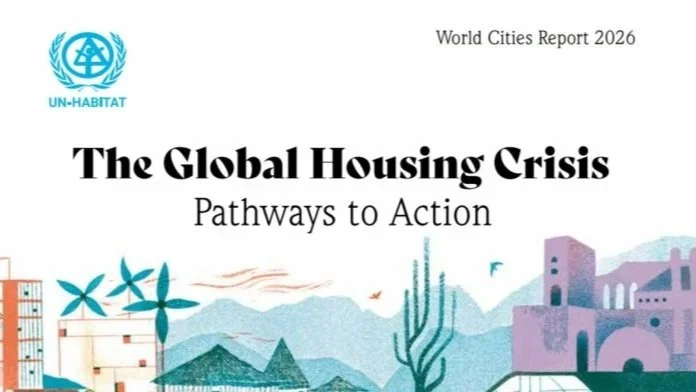
The United Nations Human Settlements Programme (UN-Habitat) has warned that up to 3.4 billion people globally now lack access to secure, safe, and adequate housing, highlighting what it described as an escalating global housing crisis requiring urgent policy intervention and investment.
The warning was issued ahead of the 13th session of the World Urban Forum (WUF13) in Baku, Azerbaijan, where global leaders, urban planners, policymakers, and development institutions gathered to discuss housing affordability, urban resilience, and sustainable city development.
/ You Might Also Like /




According to UN-Habitat, more than one billion people currently live in slums and informal settlements, while over 300 million people face homelessness worldwide. The organisation warned that worsening urbanisation pressures, rising housing costs, population growth, and climate-related displacement are intensifying housing insecurity across both developed and emerging economies.
Housing affordability pressures worsening globally
UN-Habitat stated that housing affordability has deteriorated significantly over the past decade, with millions of households spending unsustainable portions of their income on accommodation.
The agency estimates that one in five households globally now spends more than 40% of household income on housing-related costs, while global housing costs have risen sharply since 2010.
The crisis remains particularly severe in Africa and Asia, where rapid urban population growth continues to outpace housing supply and infrastructure development. According to UN data, informal housing now accounts for approximately 62% of urban dwellings across Africa.
Experts at the forum noted that rising construction costs, weak mortgage systems, limited access to land, and inadequate urban planning have further constrained affordable housing delivery in many developing economies.
Climate change and displacement intensify housing risks
UN-Habitat also linked the worsening housing crisis to climate change, forced displacement, and increasing urban vulnerability.
The agency warned that millions of people living in informal settlements face heightened exposure to flooding, extreme heat, poor sanitation, and environmental disasters due to inadequate infrastructure and insecure housing conditions.
Global displacement trends have also contributed to housing pressure, with conflict, economic instability, and climate-related migration increasing demand for shelter in urban centres.
Housing experts at the World Urban Forum argued that future urban development strategies must integrate housing policy with climate resilience, transportation systems, water access, and economic planning to ensure long-term sustainability.
UN pushes integrated housing reforms
At the forum, UN-Habitat Executive Director Anacláudia Rossbach called for stronger global cooperation to accelerate practical housing solutions and investment-driven urban reforms.
The organisation’s proposed Strategic Plan for 2026–2029 prioritises affordable housing expansion, land access reforms, slum upgrading, and infrastructure investment as core pillars of sustainable urban development.
UN-Habitat also reiterated support for what it describes as a “twin-track” housing strategy focused on upgrading existing informal settlements while simultaneously increasing the supply of affordable housing units.
According to the agency, housing investment can generate broader economic benefits through job creation, infrastructure development, improved public health, and increased economic productivity.
Governments urged to prioritise housing policy
Stakeholders at the World Urban Forum stressed that housing challenges should no longer be treated solely as social welfare issues but as critical economic and development priorities.
Urban policy analysts noted that inadequate housing increasingly affects labour mobility, productivity, financial stability, and social cohesion, particularly in rapidly urbanising economies.
The forum also highlighted growing interest in public-private partnerships, digital urban planning systems, social housing frameworks, and cooperative housing models as governments search for scalable solutions to expanding housing deficits.
Outlook for the global housing sector
UN-Habitat warned that without accelerated intervention, global housing pressures could worsen substantially over the coming decades, particularly in fast-growing urban regions.
The agency estimates that billions more people could face inadequate living conditions by 2050 if governments fail to increase affordable housing supply, strengthen urban infrastructure, and improve access to land and financing.
As policymakers and investors intensify discussions around sustainable urbanisation, housing affordability is increasingly emerging as one of the defining global economic and development challenges of the next several decade
READ MORE