Umahi Orders Hartland MD’s Arrest Over N14bn Road Project
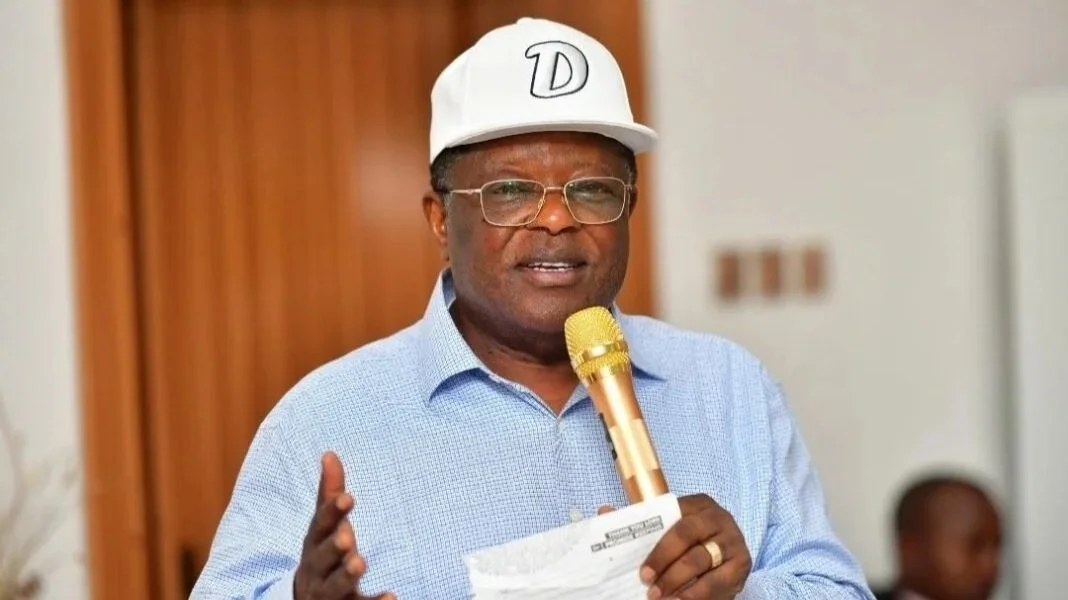
Umahi orders action over delayed Benin-Onitsha Expressway project
Minister of Works David Umahi has ordered the arrest of the Managing Director of Hartland Civil Engineering Construction over the contractor’s failure to complete an 11-kilometre section of the Benin-Onitsha Expressway despite receiving up to N14 billion from the Federal Government.
Umahi issued the directive during an inspection of the road project, where he expressed concern over the pace and quality of work. According to the minister, Hartland had completed only about 40 per cent of the agreed scope covering the section from Summit Junction to the bridge, including channelisation and hydraulic structures.
/ You Might Also Like /




Umahi Questions Delivery of N14bn Road Project
Umahi said the Federal Government had paid Hartland up to N14 billion and agreed with the contractor that the funds would support completion of the 11-kilometre section.
The minister said the contractor had not delivered the agreed scope despite the payments.
He subsequently directed the ministry’s controller to locate the company’s managing director and have him arrested. Umahi also ordered officials to review Hartland’s payments and certificates across its projects and warned that the contractor would face sanctions.
Nairametrics, however, reported that Hartland Civil Engineering Construction’s website does not list a position titled Managing Director in its management structure. The company identifies Fouad Sarraf as Technical Director.
Only 40% of Agreed Work Completed
The minister’s criticism centres on the level of work completed compared with the agreed scope.
Umahi said Hartland had delivered approximately 40 per cent of the work on the affected section. He described the state of the road as unacceptable and directed officials to identify immediate measures that could ease the difficulties facing motorists.
The ministry was also instructed to inspect two bridges in the area and assess approximately one kilometre of the road to determine what interventions could improve traffic movement.
Minister Orders Immediate Road Interventions
Umahi directed officials to use stone base materials to address sections that could receive immediate remedial work.
He also warned ministry controllers that they would be held accountable where federal roads remained in poor condition while construction projects were ongoing.
The minister further directed the arrest of people found trading on the road and warned that contractors could face arrest when sections of roads under their projects become impassable.
The directives reflect the ministry’s growing emphasis on maintaining road usability during construction rather than allowing ongoing projects to create additional hardship for motorists.
Benin-Asaba Corridor Faces Wider Construction Problems
The development comes amid broader concerns over the condition of the Benin-Asaba Expressway.
The Federal Government recently criticised the Benin-Asaba Expressway Concession Company Limited (BAECC) over the pace and methodology of work on the 125-kilometre corridor.
The government said it was considering intervention under the overriding public interest provision of the concession agreement, including the possibility of engaging other contractors to restore severely damaged sections.
BAECC Managing Director Samuel Daramola attributed some of the difficulties to heavy traffic and rainfall, while the project consultant said the concessionaire had been advised to construct drainage before removing existing asphalt.
Road Infrastructure Remains Critical to Property Development
The condition of major road corridors has direct implications for Nigeria’s housing and property markets.
Roads provide the connectivity that allows residents to access employment centres, schools, markets and other services. For developers, road infrastructure also determines how easily construction materials can reach development sites and how accessible completed properties will be to potential buyers and tenants.
When major roads deteriorate or remain under prolonged construction without adequate traffic management, travel times and transportation costs can rise.
These factors can affect the attractiveness and commercial viability of property developments located along affected corridors.
Poor Roads Can Increase Housing Costs
Transport infrastructure also contributes indirectly to the cost of housing.
Higher logistics costs can increase the expense of moving cement, steel, blocks, aggregates and other construction materials to development sites.
For residents, poor roads can increase daily commuting costs and reduce the practical value of housing located far from major employment and commercial centres.
As a result, road infrastructure is not simply a transport issue. It forms part of the wider infrastructure required to support functioning housing markets and sustainable urban expansion.
Accountability Is Important for Infrastructure Delivery
The Hartland dispute also highlights the importance of stronger project monitoring and contractor accountability.
Large infrastructure projects require clear performance benchmarks, transparent payment structures and effective supervision to ensure that public funds translate into completed infrastructure.
The Works Ministry’s decision to review Hartland’s payments and certificates across its projects could provide additional information on the relationship between funds released and work completed.
For investors and developers, stronger accountability can improve confidence in the delivery of public infrastructure that supports private-sector development.
Federal Government Faces Growing Infrastructure Pressure
The Hartland development comes as the Federal Government addresses several major road and bridge projects across the country.
In Lagos, the government is reconstructing the 1.58-kilometre Carter Bridge, while also reviewing options for new Carter Bridge and Third Mainland Bridge projects.
The Federal Executive Council has considered estimated costs of N359 billion for a new Carter Bridge and N3.6 trillion for a new Third Mainland Bridge, while rehabilitation estimates stand at N387 billion and N3.8 trillion respectively.
These projects demonstrate the scale of investment required to maintain and expand Nigeria’s ageing transport infrastructure.
Infrastructure Quality Will Shape Urban Growth
Nigeria’s urban expansion requires infrastructure to keep pace with population and economic growth.
Housing estates, commercial developments and industrial projects cannot operate effectively without reliable transport connections. Where infrastructure delivery falls behind development, congestion and higher operating costs can reduce the efficiency of entire urban corridors.
For property investors and policymakers, the issue therefore extends beyond individual road contracts. Consistent infrastructure planning and project execution are essential to creating locations where housing and businesses can develop sustainably.
Outlook
Umahi’s directive against Hartland comes as the Federal Government increases scrutiny of contractors responsible for major road projects.
The minister’s claim that Hartland received up to N14 billion but completed only about 40 per cent of the agreed 11-kilometre scope raises questions about project monitoring, payment certification and contractor performance.
For Nigeria’s housing and property markets, the outcome of the intervention will matter beyond the affected road section. Completing and maintaining strategic transport corridors can improve accessibility, reduce logistics costs and support property development along emerging urban and economic routes.
The broader challenge remains ensuring that public infrastructure spending produces timely, usable assets that support both economic activity and long-term urban development.
READ MORE