Tinubu Reviews Management and Disposal of EFCC-Seized Houses
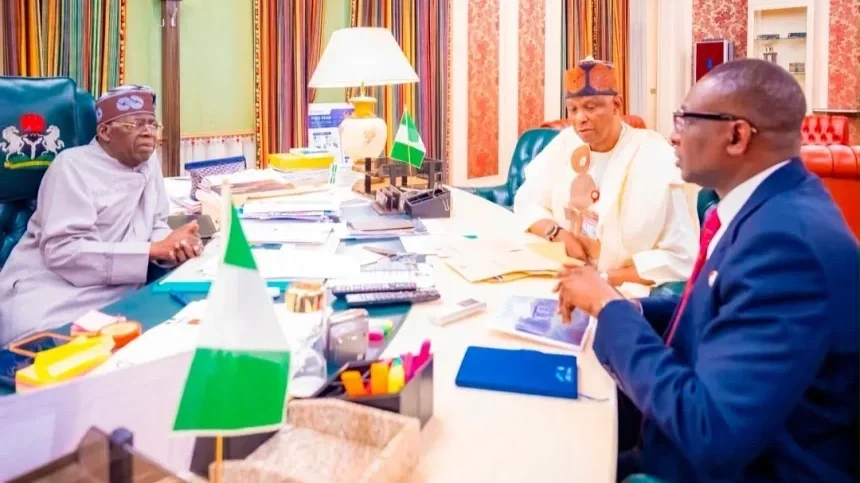
EFCC, Housing Ministry Brief Tinubu on Management of Seized Properties
President Bola Ahmed Tinubu has reviewed the management and disposal of houses seized by the Economic and Financial Crimes Commission (EFCC), following a meeting with EFCC Chairman Olanipekun Olukoyede and Minister of Housing and Urban Development Muttaqha Rabe Darma at the State House in Abuja on Tuesday, 18 August 2026.
/ You Might Also Like /




The Presidency said the discussions focused on the management and disposal of seized houses nationwide, with transparency and accountability guiding the process.
Government reviews handling of recovered properties
The meeting comes as the Federal Government continues to manage properties recovered through financial-crime investigations.
The State House did not disclose details of individual properties discussed at the meeting or announce the sale of any specific houses. Instead, the briefing centred on how seized houses should be managed and ultimately disposed of under appropriate transparency and accountability requirements.
The distinction is important because properties seized during investigations may pass through several legal stages before the government can dispose of them. The status of an individual property can depend on court orders, forfeiture proceedings and other applicable legal requirements.
Housing Ministry involved in property management
The involvement of the Federal Ministry of Housing and Urban Development places the management of recovered residential assets within the government's wider housing and property administration framework.
The Housing TV Africa report noted that the government has previously transferred recovered housing assets to the ministry for management. One prominent example is a 753-unit housing estate in Abuja that the EFCC handed over to the Housing Ministry in May 2025 after its recovery from former Central Bank of Nigeria Governor Godwin Emefiele.
The estate illustrates the scale of residential assets that can enter government control through asset-recovery proceedings.
Transparency remains central to disposal
The Presidency's emphasis on transparency and accountability is significant because the disposal of recovered properties involves public assets.
A transparent process would need to establish how properties are valued, how eligible buyers are identified, how sales are conducted and how proceeds are accounted for.
It would also help reduce the risk of undervaluation, preferential treatment or other practices that could undermine the value recovered for the public.
BusinessDay reported that the Federal Government has developed mechanisms to track recovered assets through a National Central Database of Forfeited Assets. The publication also reported that the EFCC had recovered more than 1,500 non-monetary assets, predominantly properties, between late 2023 and 2025.
These figures highlight the scale of the asset-management challenge facing government agencies.
Seized properties present an asset-management challenge
Recovered houses require more than legal ownership or custody. Government agencies must also ensure that properties remain secure, properly maintained and accurately valued while legal and administrative processes continue.
Vacant or poorly managed properties can deteriorate, increasing maintenance costs and reducing their eventual market value.
For properties that have received final forfeiture orders, government must also determine whether disposal, completion, conversion or another form of public use provides the best outcome under the applicable rules.
The Housing Ministry's technical role could become important where properties require assessment, rehabilitation, completion or integration into broader housing programmes.
Recovered houses could have housing-market implications
The management of forfeited residential properties also has implications for Nigeria's housing market.
In cities such as Abuja and Lagos, where demand for housing remains high, recovered properties could potentially contribute to housing supply if government policy and legal requirements allow some assets to be deployed for residential purposes.
However, the government has not announced a policy to allocate all recovered houses to housing programmes. Any decision to retain, transfer, rehabilitate or sell individual properties would depend on their legal status and applicable asset-disposal procedures.
The immediate issue, therefore, remains the establishment of a credible and accountable framework for managing the properties.
Disposal process could affect property-market confidence
The way government handles recovered properties could also influence confidence in Nigeria's property market.
Clear valuation standards, competitive disposal processes and publicly accountable procedures would provide greater certainty to prospective buyers and investors.
For the government, effective asset management could also help preserve the value of recovered properties and improve the financial return from assets that ultimately enter the disposal process.
At the same time, properties that remain subject to litigation or interim forfeiture orders require careful handling to avoid disposing of assets before their legal status becomes final.
Outlook
Tinubu's meeting with the EFCC chairman and Housing Minister places the management of recovered houses within a broader government effort to strengthen oversight of seized assets.
The Presidency has not announced specific sales, prices or allocation plans following the meeting. The immediate focus remains on ensuring that seized houses are managed and disposed of according to transparency and accountability principles.
For Nigeria's property sector, the effectiveness of the process will depend on how government balances legal requirements, asset preservation, public accountability and the potential economic value of recovered properties.
READ MORE