How Leading Countries Finance Affordable Housing - Lessons for Nigeria
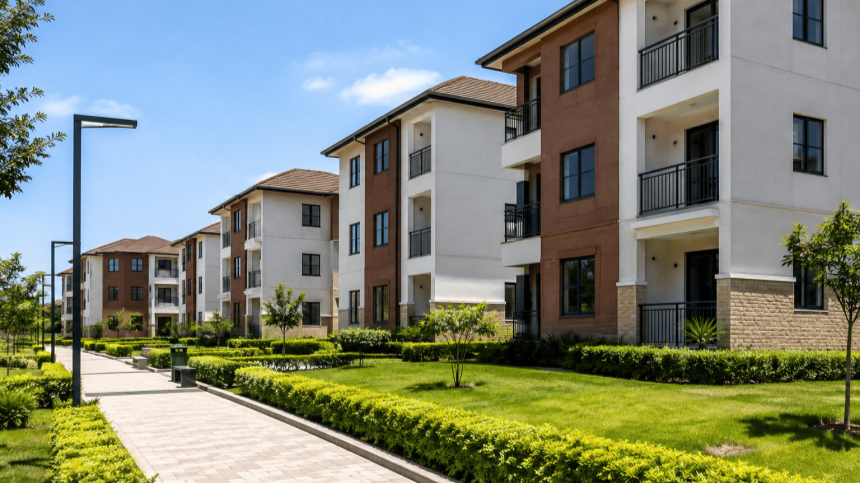
Global Affordable Housing Models Offer Financing Lessons for Nigeria
Nigeria's housing affordability challenge cannot be solved by increasing the number of homes built alone. The financing structure behind land, infrastructure, construction and mortgages plays a critical role in determining whether completed homes remain within reach of low- and middle-income households.
/ You Might Also Like /




An examination of housing-finance systems in the United States, United Kingdom, Canada, Singapore and Malaysia shows that governments use different combinations of public funding, tax incentives, land policies, guarantees and private capital to reduce the cost of delivering and accessing housing.
For Nigeria, the experience of these countries suggests that a sustainable affordable-housing strategy would need to address the entire housing value chain, from land acquisition and infrastructure to construction finance, mortgage lending and rental support.
Affordable housing starts with affordable finance
Housing programmes often measure success by the number of units planned or delivered. However, the financing structure behind those units can determine whether households can actually afford them.
A developer that purchases land at market prices, finances infrastructure independently, borrows at high interest rates and faces rising construction costs must recover those expenses through the eventual sale or rental price.
The Housing TV Africa analysis therefore argues that governments need to intervene before the house reaches the household by reducing some of the costs carried by developers and buyers.
These interventions can include subsidised land, capital grants, infrastructure provision, low-interest development finance, mortgage guarantees, tax incentives and support for affordable rental housing.
United States relies on tax incentives and private capital
The United States provides an example of how government can stimulate affordable housing without directly constructing every home.
One of its major mechanisms is the Low-Income Housing Tax Credit, which provides tax incentives for investors supporting the acquisition, rehabilitation or construction of affordable rental housing.
The model allows private investors to provide equity to qualifying projects in exchange for tax benefits. Developers can consequently reduce their reliance on conventional debt, lowering financing costs and making lower rents more viable.
The US system also demonstrates the importance of combining supply-side and demand-side support.
Government can reduce the cost of producing housing while also providing rental assistance to households that cannot afford market rents.
For Nigeria, this suggests that housing policy should not focus exclusively on homeownership. Affordable rental housing, social housing, student housing, worker housing and other tenure options can form part of a broader national strategy.
UK combines grants with housing providers
The United Kingdom uses substantial government grants alongside housing associations, local authorities, private capital and borrowing.
The Housing TV Africa analysis highlights the UK's Social and Affordable Homes Programme 2026–2036, a 10-year programme valued at £39 billion, with Homes England responsible for at least £27 billion of the funding outside London.
Capital grants reduce the amount that housing providers need to raise through commercial borrowing.
That creates an important financing principle: Affordable rents can begin with lower-cost capital rather than rent controls alone.
The UK model also limits the need for government to act simultaneously as developer, contractor, landlord, mortgage lender and property manager.
Instead, government can establish the policy and regulatory framework, provide subsidies and work with specialised housing providers.
Canada shows the importance of federal and state coordination
Canada offers a particularly relevant comparison for Nigeria because both countries operate federal systems.
Its National Housing Strategy is a multi-year programme involving federal funding and cooperation with provinces, territories and municipalities. According to the Housing TV Africa analysis, the programme exceeds C$115 billion, while official reporting indicated that more than C$82 billion had been committed by July 2026.
Different levels of government have distinct responsibilities.
The federal government provides financing, while provincial and territorial governments participate through agreements and municipalities influence land use, planning, permitting, density, infrastructure and housing approvals.
The implication for Nigeria is significant.
Federal housing programmes may struggle to achieve their full potential if they do not align with the responsibilities of states and local authorities over land, planning and infrastructure.
Singapore integrates land, housing and finance
Singapore provides one of the most integrated housing models examined in the report.
Government intervention extends across land management, planning, housing development, pricing, household grants, housing finance and retirement savings.
The Housing & Development Board plays a central role in public housing delivery, while eligible first-time families can receive housing grants through the country's Central Provident Fund system.
The key lesson for Nigeria is not simply the provision of subsidies.
Singapore demonstrates the importance of coordinating multiple elements of the housing system so that land policy, infrastructure, development, household income and housing finance work towards the same affordability objective.
Malaysia combines subsidies with mortgage guarantees
Malaysia provides another relevant model because it combines public housing programmes with mechanisms designed to expand access to housing finance.
Its Program Perumahan Rakyat provides subsidised rental housing for qualifying low-income households, while the Rumah Mesra Rakyat programme supports eligible households with land but insufficient funds to build adequate homes.
The country also operates a housing credit guarantee system designed to help borrowers who may not qualify for conventional mortgages.
This addresses an important challenge that Nigeria shares with many emerging markets: a significant proportion of workers earn income without receiving traditional monthly salaries.
Nigeria could move beyond salary-based mortgage assessment
Nigeria's large informal economy presents a major challenge for conventional mortgage lending.
Traders, entrepreneurs, drivers, consultants and other self-employed workers may have regular income but lack the payslips and employment structures that conventional mortgage underwriting often requires.
A more inclusive system could assess verified income through bank statements, tax records, business transactions, rent-payment history, cooperative savings and other reliable financial records.
Government-backed mortgage guarantees could also reduce lenders' exposure to certain risks while maintaining proper credit assessment.
This could expand the potential pool of mortgage borrowers without abandoning prudent lending standards.
Land remains a critical part of housing affordability
The international examples also demonstrate that housing affordability begins before construction starts.
Where land prices rise sharply, the cost eventually feeds into property prices or rents.
Singapore's strategic approach to public land management demonstrates how governments can use land policy as part of a broader housing strategy.
For Nigeria, public land could similarly support affordable housing when governments contribute land transparently and attach measurable affordability conditions to the subsidy.
Such conditions could include lower sale prices, controlled rents, rent-to-own arrangements or long-term affordable housing requirements.
Public funding should leverage private capital
The five international models differ significantly, but they share one important characteristic: governments do not necessarily provide all the money required to build affordable housing.
Instead, public resources can be structured to attract larger pools of private and institutional capital.
Nigeria could combine federal capital grants, mortgage guarantees and tax incentives with state-provided land and infrastructure, private developer equity and bank or institutional financing.
This approach would allow public funds to support a much larger volume of housing investment.
What the models mean for Nigeria
Nigeria does not need to replicate any one of these countries.
Its housing market has distinct characteristics, including a large informal economy, federal land and planning structures, significant infrastructure deficits and a substantial housing shortage.
However, elements of the five models could inform a Nigerian affordable-housing finance framework.
Such a framework could combine:
Federal affordable-housing grants
Long-term development finance
Mortgage guarantees
State-provided land
Infrastructure support
Tax incentives for affordable housing investment
Institutional investment
Affordable rental housing
Income-based mortgage assessment
Stronger housing providers and cooperatives
The objective would be to reduce the cost of housing at several points rather than expecting households to absorb the full cost through expensive mortgages or high rents.
Outlook
The international experience shows that affordable housing requires more than construction targets.
The United States demonstrates how tax incentives can attract private capital; the UK shows the role of capital grants and specialised housing providers; Canada highlights federal-state coordination; Singapore demonstrates integrated land and housing policy; while Malaysia illustrates how subsidies and mortgage guarantees can widen access to housing finance.
For Nigeria, the central lesson is that housing affordability is fundamentally a financing and policy-design issue.
A coordinated framework that combines land, infrastructure, development finance, mortgage guarantees and private investment could help lower the cost of delivering and accessing housing while reducing the pressure on government budgets.
READ MORE