Tinubu Seeks Approval for ₦3.15tn Cut to 2026 Budget
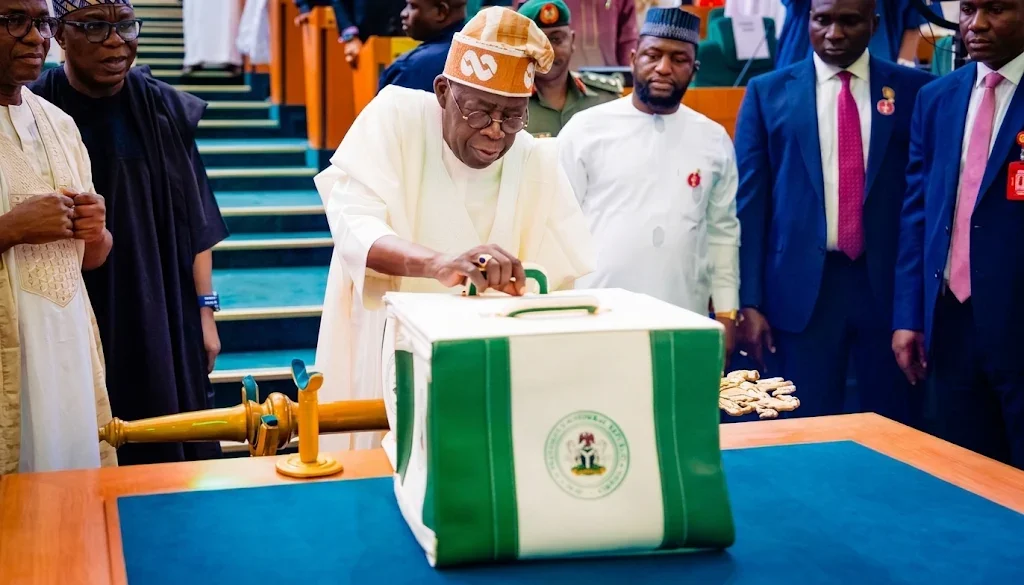
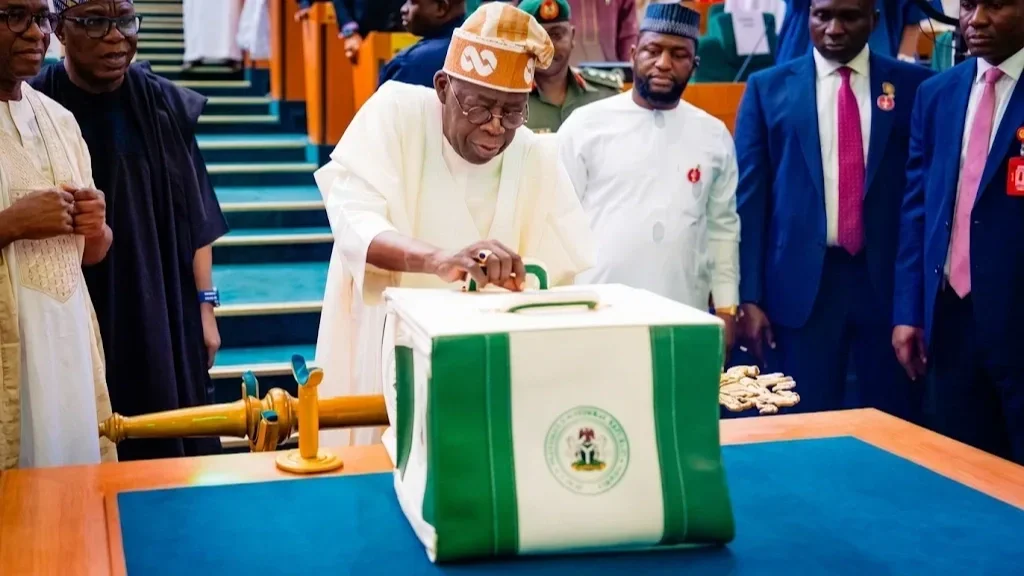
President Bola Tinubu has asked the House of Representatives to approve a revised ₦65.176 trillion federal budget for 2026, proposing a ₦3.147 trillion reduction in the expenditure plan previously approved by the National Assembly.
The President transmitted a bill seeking to repeal and re-enact the 2026 Appropriation Act, alongside a revised Federal Government Fiscal Framework, to the House for consideration. The Speaker, Tajudeen Abbas, read the request during plenary on Tuesday, November 24, 2026.
/ You Might Also Like /




Under the proposed revision, aggregate expenditure would fall from ₦68.323 trillion to ₦65.176 trillion. However, the government plans to retain the fiscal deficit at ₦31.457 trillion, equivalent to 5.64 per cent of gross domestic product (GDP), as well as its proposed ₦29.218 trillion borrowing plan.
The revised framework provides for projected federal revenue of ₦33.720 trillion, including receipts from government-owned enterprises, and capital expenditure of ₦26.232 trillion.
Tinubu said the adjustments would align the budget with existing government obligations and available resources, while improving the implementation of approved capital projects and addressing outstanding financial commitments.
Tinubu proposes ₦3.15 trillion reduction in 2026 spending
The proposed adjustment would reduce the federal government's overall spending authority by approximately 4.6 per cent compared with the ₦68.323 trillion appropriation approved earlier in the year.
In his letter to the House, Tinubu explained that the revision would regularise certain expenditures incurred by the Nigerian National Petroleum Company Limited (NNPCL) on behalf of the Federation.
The revised framework also seeks to address underprovided debt-service obligations, recognise capital warrants and supplementation commitments, and provide for refunds to ministries, departments and agencies (MDAs), as well as special accounts.
The President said most of the revised capital provisions for MDAs relate to funds that the government had already warranted. However, the proposal also includes some new capital and overhead allocations for priority national interventions.
He said the adjustments would help align expenditure commitments with available resources and improve the credibility and execution of the capital budget.
Revised budget retains ₦31.46 trillion deficit
Despite the proposed reduction in total expenditure, the government intends to maintain the fiscal deficit at ₦31.457 trillion, representing 5.64 per cent of GDP.
The deficit represents the gap between projected government expenditure and revenue, which the Federal Government plans to finance through borrowing and other funding arrangements.
The proposed revision therefore reduces the overall spending plan without changing the deficit target. This means the adjustment does not represent a corresponding reduction in the government's planned financing gap.
Projected federal revenue, including earnings from government-owned enterprises, stands at ₦33.720 trillion, while aggregate capital expenditure is estimated at ₦26.232 trillion.
The retention of the deficit also means that the revised proposal continues to depend on the government's planned borrowing programme to finance its expenditure commitments.
Government retains ₦29.22 trillion borrowing plan
Tinubu also confirmed that the proposed new borrowing would remain at ₦29.218 trillion under the revised fiscal framework.
The borrowing plan comprises ₦18.428 trillion in domestic borrowing and ₦10.790 trillion in foreign borrowing.
The President further explained that the proposed $7.7 billion external borrowing, estimated at approximately ₦10.368 trillion using an exchange rate of ₦1,346.50 to the dollar, would finance the existing foreign borrowing provision rather than increase the government's borrowing envelope.
The decision to retain the borrowing plan alongside the existing deficit indicates that the proposed revision focuses on adjusting expenditure provisions and accommodating outstanding obligations rather than reducing the government's overall financing requirements.
Road projects, agriculture and water infrastructure receive priority
The President identified the completion of critical road projects, protection of agricultural production, reduction of production costs, improvement of farm yields and expansion of market access among the priorities under the revised spending framework.
The proposal also includes interventions to address water vulnerability.
Tinubu said the government introduced selected capital and overhead provisions to support these priorities, while maintaining that most MDA capital allocations consist of funds already warranted.
The emphasis on completing existing road projects is relevant to infrastructure development, as transport connectivity influences access to economic centres, residential locations and commercial districts.
However, the President's letter did not provide a detailed breakdown of the specific projects, their respective allocations or the locations expected to benefit from the revised provisions.
For the housing and real estate sector, the eventual impact will depend on how much of the capital budget reaches infrastructure projects that support land development, housing delivery, transport access and essential services.
National Assembly approval required before implementation
The proposed changes will require legislative approval before they can take effect. Tinubu has urged lawmakers to consider and pass the bill promptly, arguing that the revised appropriation would support orderly budget implementation and settlement of outstanding obligations.
The request follows the National Assembly's approval of the ₦68.323 trillion 2026 budget, which the President signed into law on April 17, 2026.
The House of Representatives will now scrutinise the proposed repeal and re-enactment bill and the accompanying fiscal framework before deciding whether to approve the revised expenditure plan.
Until the legislative process is complete, the ₦65.176 trillion figure remains a proposal rather than the operative 2026 budget.
What the revised budget means for infrastructure and housing
The proposed reduction comes as the Federal Government seeks to accommodate existing obligations while maintaining its infrastructure and economic intervention commitments.
For the housing and real estate industry, the key issue is how the revised capital expenditure will translate into funding for roads, water infrastructure and other public facilities that support property development.
Road construction and improved connectivity can influence land values, development costs and access to residential and commercial locations. Water infrastructure also plays an important role in determining the viability and liveability of new housing developments.
However, the revised framework does not provide a specific allocation for housing delivery or identify how much funding will go towards infrastructure serving residential developments.
The proposed ₦3.15 trillion reduction in total expenditure, alongside the retention of the deficit and borrowing targets, makes the composition and execution of capital spending particularly important. The eventual implications for property developers, investors and housing delivery will depend on the projects that receive funding and the pace at which the government implements them.
READ MORE