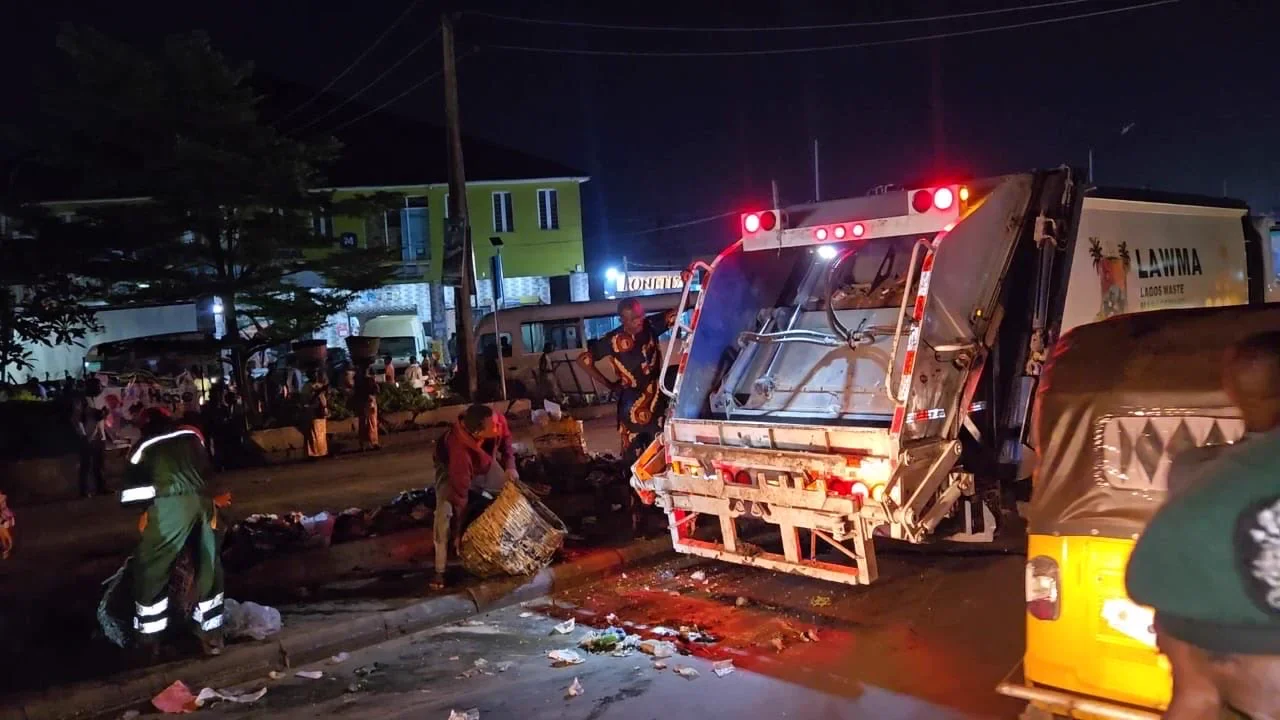
LAWMA Intensifies Night-Time Waste Evacuation Across Lagos
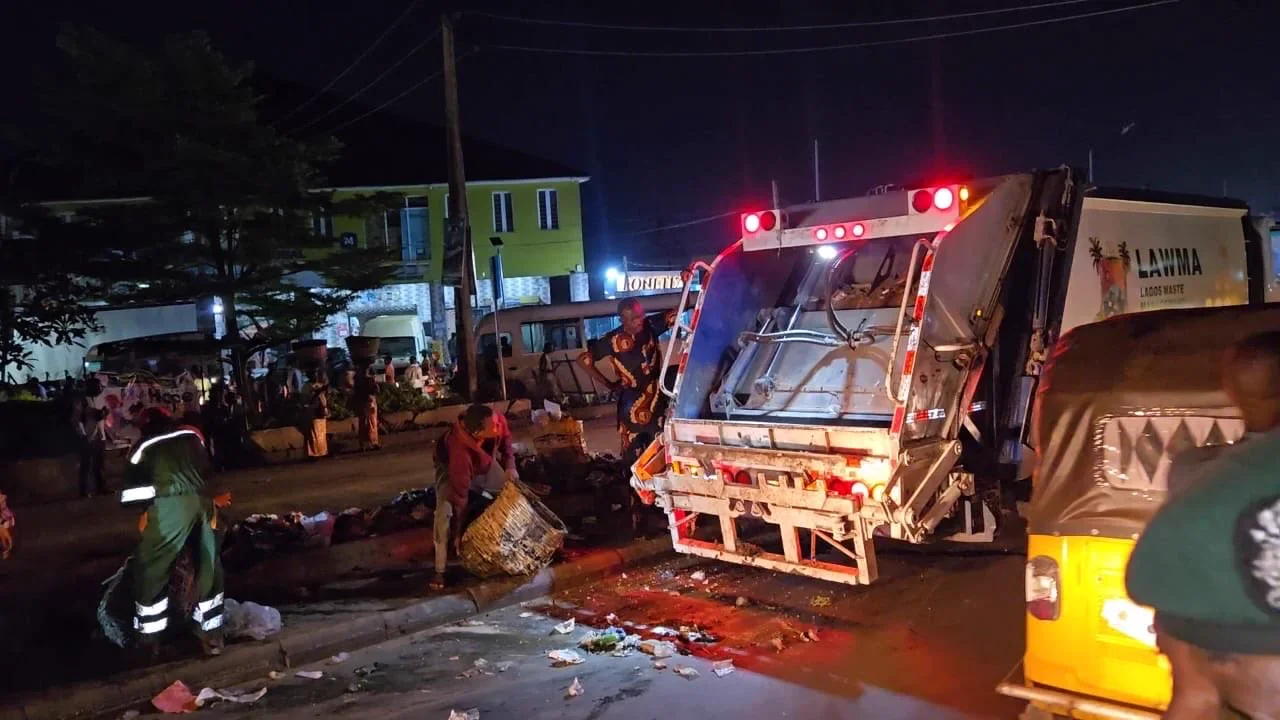
The Lagos Waste Management Authority (LAWMA) has launched a night-time waste clearance operation across Lagos, beginning with the Isheri-Igando-LASU-Iba corridor, as the state steps up efforts to tackle refuse accumulation ahead of the Christmas and New Year celebrations.
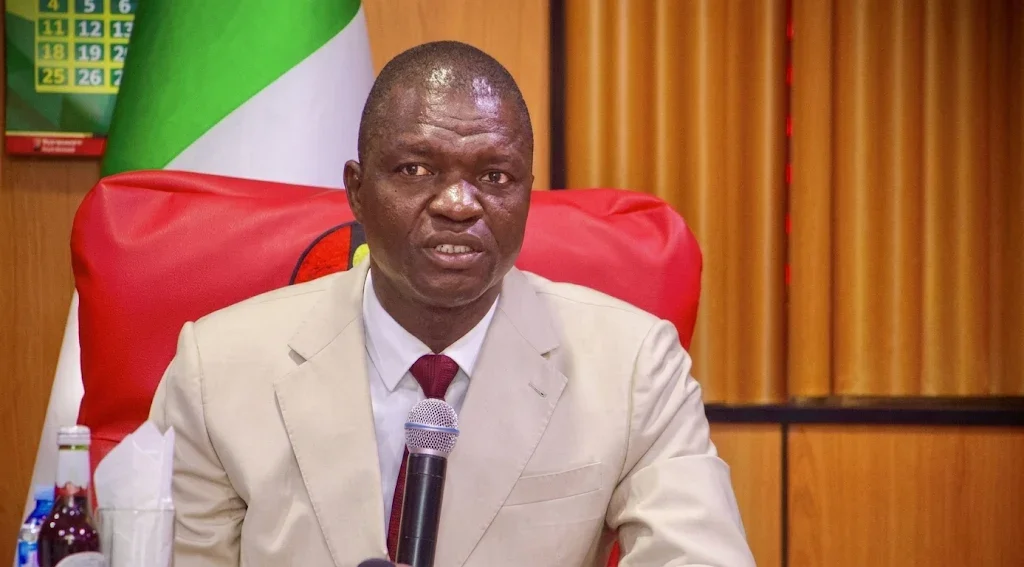
The operation, which commenced on Monday night, involves the deployment of sanitation teams and equipment to remove accumulated waste and clear identified refuse hotspots. LAWMA Acting Managing Director, Olajuwon Akinyemi, led the exercise at Igando Bus Stop alongside senior officials of the authority.
/ You Might Also Like /




The agency plans to extend the operation to other major routes and high-traffic areas, including the Ojota-Ikorodu Road, Mushin-Moshalashi axis and Lekki-Ajah corridor.
The initiative forms part of a wider effort to improve environmental sanitation, address persistent waste disposal problems and strengthen LAWMA's operational capacity across the state.
LAWMA expands night-time waste evacuation to major Lagos corridors
According to a statement issued by LAWMA's Director of Public Affairs, Mukaila Sanusi, the initial exercise focused on removing accumulated refuse along the Isheri-Igando-LASU-Iba corridor.
Akinyemi said the authority would extend the clean-up to other strategic locations, particularly major entry routes and busy roads where waste accumulation has affected the urban environment.
The planned expansion to Ojota-Ikorodu Road, Mushin-Moshalashi and Lekki-Ajah will take the operation beyond its initial location and cover several important movement corridors across Lagos.
LAWMA said the exercise aims to improve the condition of public spaces and provide a cleaner environment for residents and visitors during the festive period.
The authority has also begun engaging traditional institutions across the state to strengthen community participation in waste management. The engagement is intended to improve monitoring and discourage residents from returning to cleared locations to dump refuse illegally.
LAWMA plans more than 10 operational regions
Beyond the immediate clean-up exercise, LAWMA is working towards establishing more than 10 operational regions across Lagos to decentralise its activities and improve service delivery.
Akinyemi described the proposed restructuring as a necessary step towards bringing waste management operations closer to communities. The regional structure is expected to improve supervision, strengthen coordination and enable the authority to respond more quickly to sanitation problems.
The plan would also give LAWMA a more decentralised operational framework for monitoring waste collection and addressing service gaps across different parts of the state.
The proposed regional expansion comes as the authority faces pressure to improve waste collection and evacuation across a rapidly growing metropolis. Akinyemi said the restructuring, alongside the current clean-up operation, forms part of management's broader strategy to reposition the agency.
LAWMA has not provided a detailed implementation timetable for the proposed regional structure.
Residents urged to report poor waste collection services
The authority has called on residents to support the clean-up programme by using approved waste collection arrangements and reporting service failures.
Households are expected to patronise their assigned Private Sector Participation (PSP) waste collection operators. Residents who experience missed collections or other service lapses have been advised to report the problems through LAWMA's established communication channels.
The agency said such reports would enable it to intervene and ensure that operators meet their service obligations.
PSP operators play an important role in household waste collection across Lagos. Their performance therefore remains central to the state's ability to prevent refuse from accumulating in residential neighbourhoods and public spaces.
However, clearing existing waste hotspots will not by itself resolve persistent collection problems. Sustained improvements will depend on regular evacuation, effective supervision of operators, adequate equipment and cooperation from residents.
Waste generation continues to pressure Lagos infrastructure
Lagos faces substantial waste management demands because of its large population, high daily waste generation and pressure on existing collection and disposal infrastructure.
LAWMA estimates that the state generates approximately 13,000 tonnes of waste daily, placing considerable demands on the systems responsible for collection, transportation and disposal.
The volume highlights the scale of the challenge facing the authority. Waste management requires more than periodic clean-up campaigns; it also depends on reliable collection services, sufficient transportation capacity, effective disposal facilities and consistent enforcement against illegal dumping.
The Lagos State Government has previously announced measures to improve oversight of waste collection. In April 2025, it outlined plans to introduce GPS tracking for waste disposal trucks and require digital payments for PSP operators to strengthen monitoring and accountability.
The authority has also taken enforcement action against underperforming operators. In October 2026, LAWMA withdrew the operating licences of six PSP operators over poor service delivery in parts of the state.
These measures reflect the government's efforts to address operational weaknesses within the waste collection system, although their effectiveness will depend on consistent implementation and monitoring.
Illegal dumping remains a challenge for urban sanitation
Indiscriminate waste disposal continues to undermine sanitation efforts across Lagos. Refuse dumped along road medians, drainage channels and other unauthorised locations can obstruct public infrastructure and increase environmental and public health risks.
The state has previously warned that dumping waste in drainage channels and other public spaces can contribute to flooding. It has also imposed penalties for illegal dumping and littering as part of efforts to strengthen compliance with environmental regulations.
LAWMA's latest operation therefore combines waste evacuation with a broader effort to prevent cleared locations from becoming illegal dumpsites again.
The agency's engagement with traditional institutions and its appeal to residents to report service failures suggest that it intends to combine operational intervention with community participation.
For Lagos, the longer-term test will be whether the night-time operation produces sustained improvements beyond the immediate festive period. The proposed regional structure, stronger supervision of PSP operators and consistent enforcement will be important to maintaining cleaner public spaces across the state.
Conclusion
LAWMA's night-time clean-up operation marks another intervention in Lagos' efforts to address refuse accumulation and improve environmental sanitation. Its expansion to additional transport corridors and the proposed establishment of more than 10 operational regions could strengthen the authority's reach, but lasting improvements will depend on reliable waste collection, adequate infrastructure and sustained public cooperation.
READ MORE