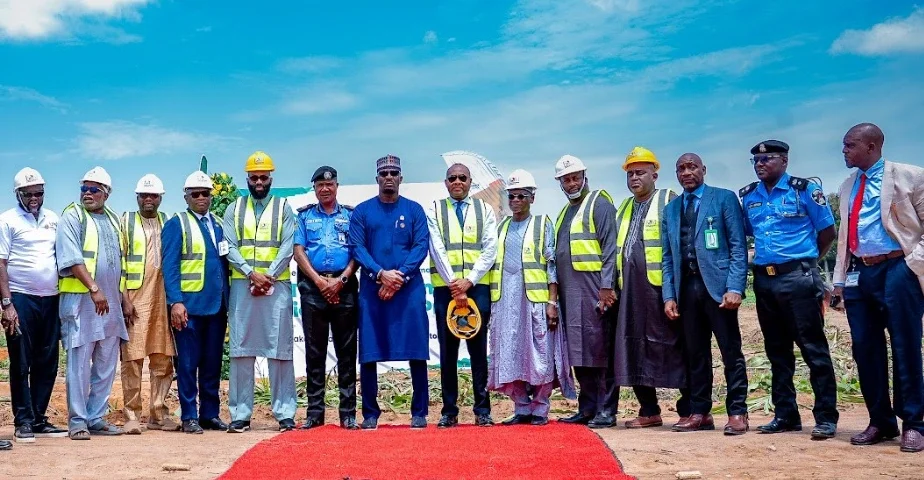
Tinubu Greenlights Ogun Police Academy Campus with ₦15 Billion Take-Off Fund
President Bola Ahmed Tinubu has approved the establishment of a new campus of the Nigeria Police Academy in Ogun State, alongside a ₦15 billion take-off grant. The initiative, announced on April 20, 2026, is designed to expand training capacity, strengthen institutional governance, and support Nigeria’s broader security reform agenda.
/ You Might Also Like /




Project Scope and Funding Structure
The new campus will be located in Erinja, Yewa South Local Government Area of Ogun State. The ₦15 billion allocation will fund core infrastructure, including academic facilities, student accommodation, and specialised training assets.
Funding for the project will be sourced from the 2026 allocation of the Tertiary Education Trust Fund (TETFund), reflecting a cross-sector financing approach that links education funding to national security priorities.
Policy and Legal Framework
The approval aligns with the Nigeria Police Academy (Establishment) Act, 2021, which mandates the expansion of the institution into a multi-campus system nationwide.
The academy, currently headquartered in Wudil, Kano State, operates as a degree-awarding institution responsible for training officers across multiple disciplines, including law enforcement, social sciences, and management.
The Ogun campus represents the first major step in operationalising the decentralisation framework outlined in the Act.
Strategic Rationale
The decision followed a high-level consultative process involving key stakeholders, including the Federal Ministry of Education, the Ministry of Police Affairs, the Inspector-General of Police, and the National Universities Commission.
Key considerations included student intake capacity, funding constraints, academic quality assurance, and the long-term manpower requirements of the Nigeria Police Force.
The expansion comes as the federal government continues to scale police recruitment to address personnel shortages and rising security demands nationwide.
Security Context and Capacity Expansion
Nigeria’s internal security landscape has intensified in recent years, with increasing incidents of kidnapping and violent crime placing pressure on law enforcement capacity.
The expansion of training infrastructure is therefore positioned as a critical enabler of workforce development. By increasing intake capacity and improving training quality, the new campus is expected to enhance operational readiness and professional standards within the police force.
Economic and Infrastructure Implications
Beyond security outcomes, the project carries broader economic implications. Large-scale public investment in educational infrastructure typically generates local economic activity through construction, employment, and service demand.
The integration of housing, academic facilities, and training infrastructure within the campus design also aligns with wider government efforts to stimulate regional development through institutional investments.
The approval of a new Police Academy campus in Ogun State, backed by a ₦15 billion grant, represents a strategic intervention in Nigeria’s security and education sectors. By expanding training capacity and decentralising institutional infrastructure, the federal government aims to strengthen policing effectiveness and address long-standing workforce gaps.
Sustained impact will depend on timely execution, funding continuity, and alignment with broader security reforms, as Nigeria seeks to modernise its law enforcement architecture in response to evolving threats.
READ MORE