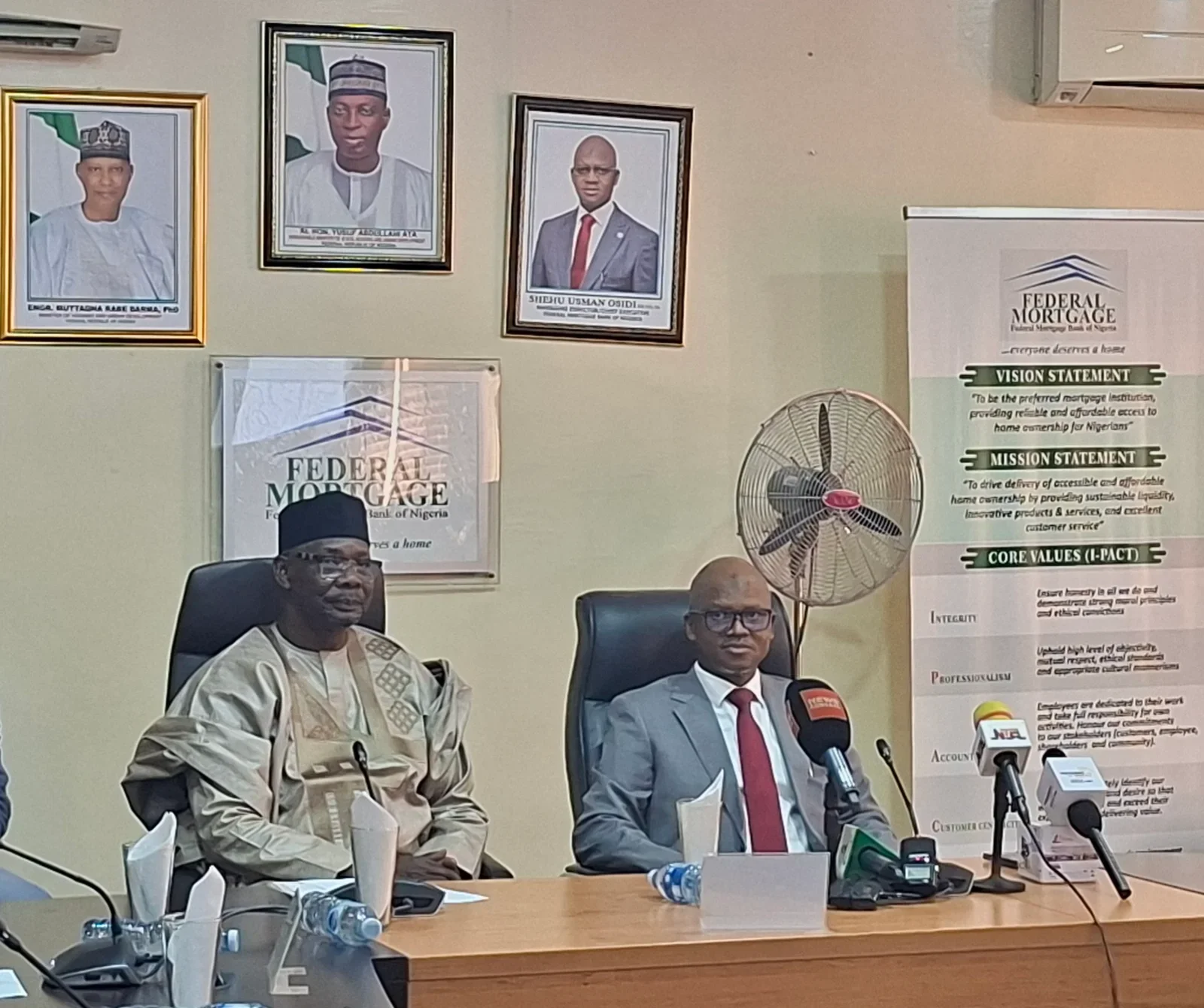
FMBN financed 6,911 affordable housing units in 2025
The Federal Mortgage Bank of Nigeria (FMBN) approved more than ₦208 billion in housing and mortgage loans in 2025 and financed 6,911 affordable housing units, as the bank continues efforts to expand access to homeownership and housing finance.
/ You Might Also Like /




The bank disbursed over ₦120 billion during the year to support housing construction, mortgage lending, home renovation, cooperative housing and rent-to-own initiatives. The figures were disclosed by FMBN Managing Director and Chief Executive, Shehu Usman Osidi, at the 2026 combined commemoration of World Habitat Day and World Cities Day in Abuja on 19 October.
The 6,911 units represented 96% of FMBN’s annual target of 7,200 homes under the 2025 Presidential and Ministerial Deliverables. The bank therefore finished the year 289 units short of its target.
The performance highlights FMBN’s role in Nigeria’s affordable housing system, while the difference between loan approvals and disbursements underscores the importance of tracking how financing commitments translate into actual housing delivery.
FMBN Approvals Exceed ₦208bn as Disbursements Top ₦120bn
FMBN’s reported performance covers a range of housing-related financing activities rather than mortgage lending alone.
The approved loans supported housing construction, individual mortgage finance, home renovation, cooperative housing and rent-to-own arrangements. These programmes serve different needs, from financing the development of housing units to helping eligible contributors purchase, improve or access accommodation.
However, approved loans and actual disbursements measure different stages of the financing process. Approval indicates that financing has received the bank’s authorisation, while disbursement reflects funds released. Neither figure alone establishes how many homes were completed and occupied during the year.
The 6,911 financed units provide a separate measure of housing activity, although further details on completion, allocation, pricing and beneficiary income would help assess the programme’s wider affordability impact.
For the housing sector, the central question is whether FMBN can sustain lending growth while ensuring that financing supports homes that eligible Nigerians can realistically afford.
FMBN Records 96% of Its Housing Delivery Target
The bank financed 6,911 units against its target of 7,200 in 2025, achieving 96% of the planned delivery figure.
Although the result fell short of the target, it provides a benchmark for assessing the scale of housing delivery supported through FMBN’s programmes. Consistent reporting on targets, approvals, disbursements and completed units would make it easier to determine whether the bank is expanding its contribution to housing supply.
Nigeria’s housing challenge requires both more homes and financing arrangements that match household incomes. Increasing the number of units supported by public institutions will have a greater affordability impact when projects reach completion, homes are allocated transparently and buyers can meet the associated repayment obligations.
The bank’s performance also needs to be considered alongside its funding capacity. FMBN has previously identified its limited capital base as a constraint on its ability to finance affordable housing at scale and has pursued a recapitalisation target of ₦750 billion.
Diaspora Mortgage Product Expands Homeownership Options
FMBN has formally launched its National Housing Fund (NHF) Diaspora Mortgage Loan, designed to give eligible Nigerians living abroad a route to invest in residential property in Nigeria.
The initiative broadens the bank’s housing-finance offering beyond contributors and prospective buyers living in the country. It could provide another route for Nigerians overseas who want to purchase homes at home, subject to the product’s eligibility requirements, financing terms and application procedures.
Diaspora participation could also create an additional source of demand for residential property. However, its contribution to affordable housing will depend on the types of homes financed, the terms available to applicants and whether the programme reaches households seeking primary residences rather than only investment properties.
Clear information on eligibility, interest rates or profit structures, repayment periods, required contributions and property prices will be important to help prospective applicants assess whether the product meets their needs.
Non-Interest Mortgage and Rent Assistance Plans
FMBN also announced plans to commence implementation of its Non-Interest Mortgage Product before the end of October 2026. The initiative is intended to provide an alternative for eligible contributors who prefer financing structured around non-interest principles.
The bank also plans to introduce a Rent Assistance Product aimed at easing rental costs for federal civil servants. The initiative is intended to provide support with rent while offering a potential pathway towards eventual homeownership.
The two initiatives address different housing needs. Non-interest mortgage financing could widen the range of financing structures available to prospective homeowners, while rent assistance is aimed at households that need help meeting immediate accommodation costs.
Their practical impact will depend on the final terms, eligibility criteria, funding arrangements and implementation. In particular, details on the level of rent assistance, repayment requirements and the number of eligible beneficiaries will be necessary to assess how much relief the programme can provide.
What the Figures Mean for Affordable Housing in Nigeria
FMBN’s performance illustrates the importance of specialised housing-finance institutions in a market where many households struggle to accumulate deposits or secure long-term mortgage loans.
Financing for construction can help developers deliver homes, while individual mortgages enable eligible buyers to spread payments over time. Cooperative housing can also help groups of contributors pool resources, and renovation loans can improve existing homes without requiring households to purchase new properties.
However, loan approvals and housing-unit figures do not by themselves show whether homes are affordable to low- and middle-income earners. A full assessment would also consider property prices, beneficiary incomes, repayment burdens, completion rates and the geographical distribution of financed homes.
For FMBN, expanding access will require sufficient funding, efficient loan processing, strong project oversight and financing terms that reflect the capacity of intended beneficiaries to repay.
The bank’s performance also reinforces the importance of distinguishing between financing mobilised, funds disbursed, homes financed and units completed. Each measure provides different information about how effectively public housing finance translates into actual accommodation.
Outlook for FMBN’s Housing Finance Programme
FMBN’s approval of more than ₦208 billion in housing and mortgage loans and financing of 6,911 units in 2025 demonstrate the scale of its current housing-finance activity. The bank’s additional products could widen the range of options available to Nigerians at home and abroad.
The next test is implementation: whether new products become accessible to eligible beneficiaries, whether disbursements support completed homes and whether housing finance reaches households that are currently underserved by conventional mortgage arrangements.
For policymakers and the property industry, the figures provide a useful baseline for measuring future progress. Sustained improvements in funding capacity, delivery performance and transparency will be important if FMBN is to increase its contribution to affordable homeownership.
Ultimately, the success of the bank’s programmes will be measured not only by the value of loans approved, but also by the number of households that secure suitable homes on terms they can afford.
READ MORE