Tinubu Appoints Dalhatu Abubakar as NCX Chairman, Names New Board
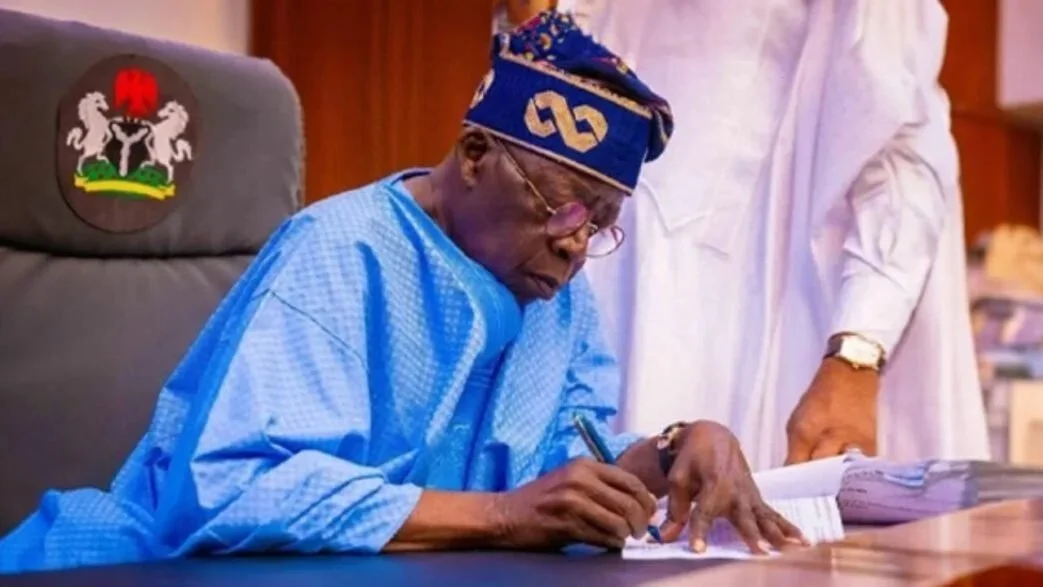
Tinubu Names New Leadership for Nigeria Commodity Exchange
President Bola Ahmed Tinubu has approved the appointment of Dalhatu Abubakar as Chairman of the Nigeria Commodity Exchange (NCX), alongside the reconstitution of its governing board. The move, announced on April 2, 2026, is part of efforts to strengthen Nigeria’s commodity trading system and expand non-oil exports.
Strategic Repositioning of the Commodity Exchange
According to the presidency, the new appointments align with the administration’s economic agenda focused on food security, market efficiency, and export diversification
/ You Might Also Like /




The reconstituted board is expected to provide strategic oversight to fully operationalise the exchange, enhance transparency, and improve price discovery across commodity markets.
Authorities emphasised that strengthening the NCX is critical to building a structured and efficient marketplace for agricultural and extractive commodities in Nigeria.
Composition of the New Board
The newly appointed board includes:
Najah Muhammed (Non-Executive Director)
Bamidele Hussein (Non-Executive Director)
Mezuo Nwuneli (Non-Executive Director)
Obi Igwe (Non-Executive Director)
Foluso Ayo-Olaiya (Non-Executive Director)
In addition, Anthony Atuche has been appointed as Managing Director of the exchange.
The composition reflects a mix of industry and corporate governance experience aimed at repositioning the exchange.
Role of the NCX in Economic Development
The Nigeria Commodity Exchange serves as a structured platform for trading commodities, improving market access, and ensuring fair pricing for producers and traders.
A functional commodity exchange is essential for:
Enhancing price transparency
Reducing market inefficiencies
Supporting agricultural value chains
Attracting investment into storage and logistics infrastructure
The government views the NCX as a critical institution for formalising commodity trade and integrating Nigeria into regional and global value chains.
Profile of the New Chairman
Dalhatu Abubakar is a businessman from Kano State and currently chairs Al-Hamsad Integrated Rice Mills. He also serves as President of the Conference of Northern States Chambers of Commerce, Industry, Mines and Agriculture (CONSCCIMA).
He previously held leadership roles within the Kano Chamber of Commerce, Industry, Mines and Agriculture, where he contributed to enterprise development and agribusiness growth.
His appointment signals a focus on leveraging private sector expertise to drive reforms in the commodity market.
Investment and Infrastructure Implications
The presidency indicated that the reconstituted board will prioritise attracting investment into key areas such as:
Warehousing systems
Logistics infrastructure
Commodity aggregation and distribution networks
Improved infrastructure is expected to reduce post-harvest losses, enhance supply chain efficiency, and stabilise commodity prices.
Broader Economic Significance
Boosting Non-Oil Exports
The reform aligns with Nigeria’s strategy to diversify away from oil dependency by expanding agricultural and commodity exports. Structured commodity markets can improve export quality, traceability, and competitiveness.
Supporting Food Security
A more efficient commodity exchange can help stabilise food prices and improve distribution, particularly amid rising inflation and supply chain disruptions.
Enhancing Market Transparency
Improved price discovery mechanisms reduce information asymmetry and create a fairer trading environment for farmers, traders, and investors.
The appointment of Dalhatu Abubakar and the reconstitution of the Nigeria Commodity Exchange board mark a strategic step toward strengthening Nigeria’s commodity market framework. By improving governance, infrastructure, and market transparency, the reform aims to unlock value across agricultural and extractive sectors.
The effectiveness of the initiative will depend on the board’s ability to operationalise the exchange, attract investment, and deliver measurable improvements in market efficiency and export performance.
READ MORE