Tinubu Calls for Stronger African Economic Integration at Nairobi Summit
Africa Must Strengthen Economic Unity for Sustainable Growth, Tinubu Says
President Bola Ahmed Tinubu has called for deeper African economic integration, stronger regional cooperation, and reforms to the global financial system as African leaders gathered at the Africa Forward Summit in Nairobi, Kenya.
Tinubu made the remarks during the high-level summit co-hosted by Kenyan President William Ruto and French President Emmanuel Macron, where leaders from more than 30 countries convened to discuss industrialisation, trade expansion, investment, and Africa’s long-term economic transformation agenda.
/ You Might Also Like /




The Nigerian president stressed that Africa must strengthen intra-continental partnerships, improve access to affordable financing, and accelerate industrial development to compete effectively within the global economy.
Tinubu Advocates Stronger Regional Cooperation
Speaking during plenary sessions at the summit, Tinubu argued that stronger economic coordination among African countries would help unlock growth opportunities, stimulate investment, and improve regional competitiveness.
According to the presidency, the summit focused on key development priorities including industrialisation, energy transition, agriculture, digital transformation, blue economy development, and reforms to the international financial system.
Tinubu said African economies must move beyond fragmented development approaches and build stronger economic alliances capable of supporting sustainable growth across the continent.
Analysts note that the renewed emphasis on African economic integration aligns with ongoing efforts to expand implementation of the African Continental Free Trade Area (AfCFTA), which seeks to improve trade and investment flows across member states.
President Highlights Need for Industrialisation
Tinubu also stressed the importance of industrialisation and value addition across African economies, warning that the continent continues to rely excessively on raw material exports while importing finished products at higher costs.
“Africa’s share of global manufacturing value added remains below two percent,” Tinubu stated, attributing the situation partly to financial systems that restrict affordable capital access for African industries.
The president argued that African manufacturers continue to face disproportionately high borrowing costs compared with competitors in Europe, Asia, and North America.
According to Tinubu, the continent cannot effectively build cross-border industrial value chains while infrastructure financing gaps and high debt costs continue to limit productive investment.
Industry analysts say financing constraints remain a major obstacle affecting industrial growth across several African economies.
Nigeria Highlights Economic Reform Agenda
During the summit, Tinubu highlighted several economic reforms undertaken by the Nigerian government, including fuel subsidy removal, exchange rate unification, banking sector recapitalisation, and tax reforms.
The president stated that these reforms were aimed at improving macroeconomic stability, restoring investor confidence, and creating a more competitive investment environment.
According to presidential spokesperson Bayo Onanuga, Tinubu presented Nigeria’s reforms as examples of policy measures capable of supporting broader African economic transformation.
Tinubu stated that Nigeria’s external reserves had strengthened while the country’s debt-to-GDP ratio was projected at 32.3 percent in 2026.
However, he warned that high debt servicing obligations continue to reduce fiscal space available for industrial investment and infrastructure expansion.
Calls for Global Financial Reform Intensify
A major theme of the summit centred on calls for reforms to the international financial architecture affecting African economies.
African leaders criticised global financial systems that classify African countries as high-risk borrowers despite ongoing economic reforms and growth potential.
Tinubu argued that the existing financial system imposes punitive borrowing costs that undermine industrialisation and economic development across the continent.
Reuters reported that African leaders at the summit called for fairer risk assessment mechanisms and improved access to affordable credit to support infrastructure and industrial financing.
Kenyan President William Ruto and United Nations Secretary-General António Guterres also criticised global credit rating systems that they said unfairly increase borrowing costs for African countries.
Blue Economy and Maritime Security Prioritised
Tinubu also highlighted Nigeria’s blue economy strategy during the summit, emphasising the importance of maritime security, regional cooperation, and ocean governance in driving economic growth.
The president pledged to strengthen regional maritime coordination by expanding the use of Nigeria’s Deep Blue Project maritime intelligence infrastructure as a shared platform for willing Gulf of Guinea states.
According to Tinubu, secure sea routes, predictable regulation, and stronger legal systems are necessary to attract long-term private investment within Africa’s maritime sector.
Analysts note that maritime trade remains critical to Africa’s economic integration agenda due to the continent’s growing reliance on cross-border commerce and export-driven industries.
Summit Focuses on Africa-France Partnerships
The Africa Forward Summit was organised as part of broader efforts to strengthen Africa-France economic cooperation and reposition international partnerships toward investment and industrial development.
French President Emmanuel Macron reportedly announced investment commitments valued at approximately €23 billion involving both public and private sector financing initiatives.
The summit attracted government officials, multilateral institutions, investors, business leaders, and development finance organisations focused on energy, infrastructure, manufacturing, digital transformation, and climate financing.
Industry observers say the summit reflects increasing efforts by African governments to diversify global partnerships while promoting investment-led economic growth.
African Trade Integration Gains Momentum
Experts note that stronger regional integration has become increasingly important as African countries seek to expand intra-continental trade and reduce dependence on commodity exports.
The African Continental Free Trade Area is expected to create one of the world’s largest free trade zones by connecting over 1.3 billion people across the continent.
Analysts say improved trade coordination, infrastructure investment, and financial integration could help strengthen industrial production, manufacturing competitiveness, and regional supply chains.
However, persistent infrastructure deficits, financing constraints, policy inconsistencies, and trade barriers continue to limit the pace of integration across several African economies.
Bilateral Engagements Held on Summit Sidelines
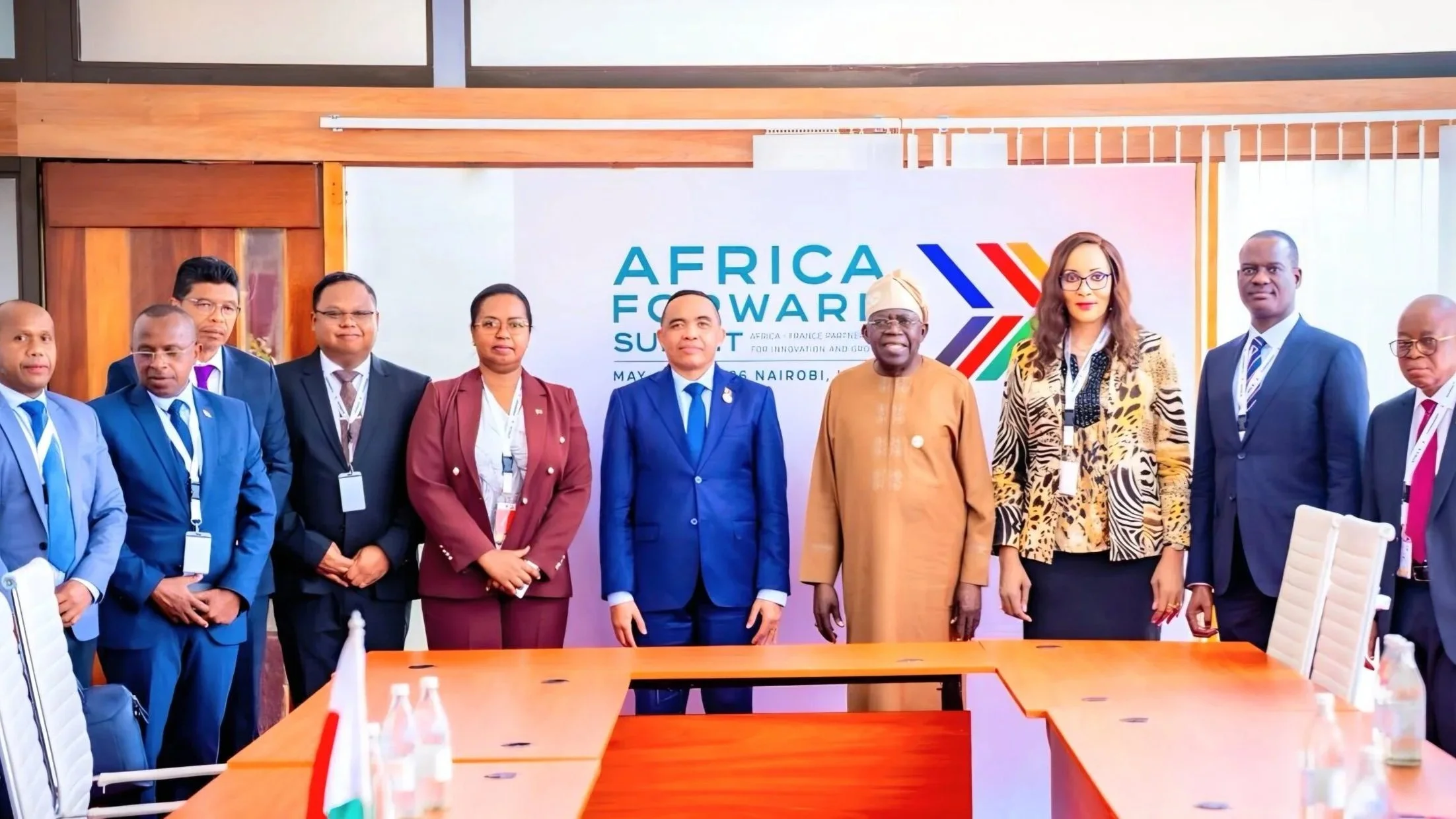
On the sidelines of the summit, Tinubu held bilateral discussions with Madagascar’s President Michael Randrianirina to explore opportunities for strengthening diplomatic and economic cooperation between both countries.
The Nigerian president also met with Confederation of African Football (CAF) President Patrice Motsepe, where discussions reportedly focused on collaboration between governments, sports institutions, and the private sector.
Tinubu also reiterated Nigeria’s interest in hosting the 2026 CAF Awards.
Conclusion
President Tinubu’s remarks at the Africa Forward Summit underscore growing calls among African leaders for deeper regional integration, industrialisation, and fairer global financing systems.
As African economies continue to pursue economic diversification and infrastructure expansion, analysts say stronger trade cooperation, improved access to affordable capital, and coordinated regional policies will remain central to achieving sustainable long-term growth.
The Nairobi summit also reflects broader efforts by African governments to strengthen strategic partnerships capable of accelerating investment, improving industrial competitiveness, and positioning the continent more effectively within the global economy.
READ MORE