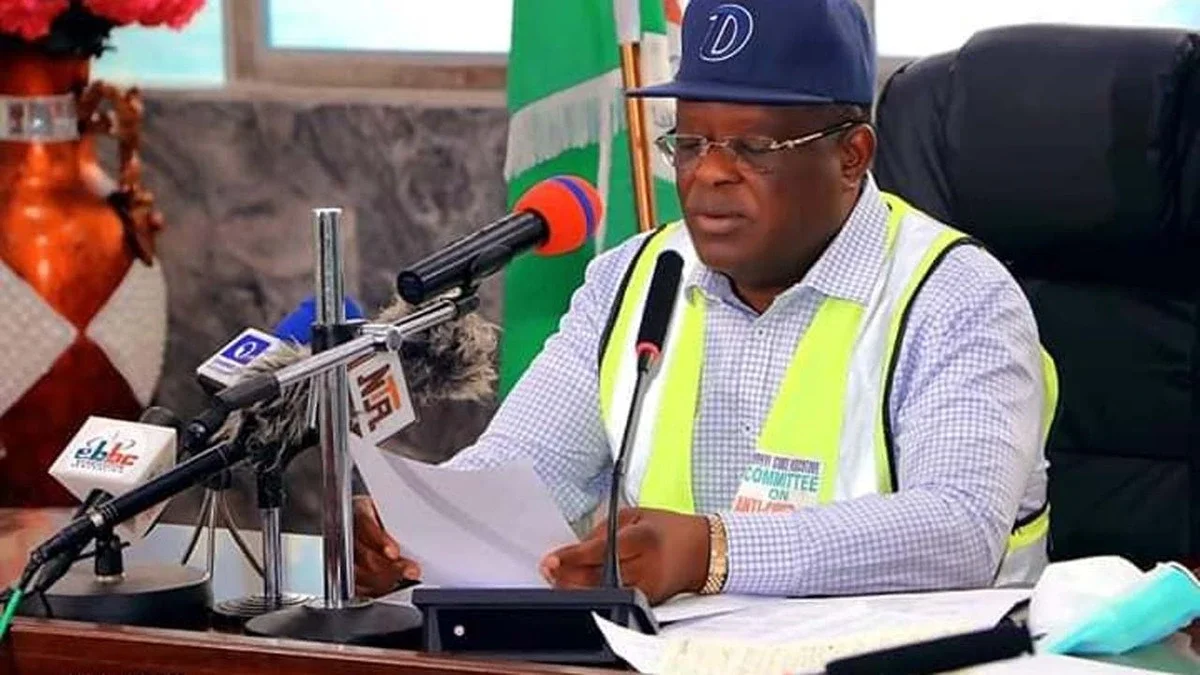
Works Minister David Umahi
Minister of Works David Umahi has accused Landmark Africa of land grabbing along the Lagos beachfront and threatened legal action against the company’s chief executive, Paul Onwuanibe, over statements concerning the impact of the Lagos-Calabar Coastal Highway project on the business.
/ You Might Also Like /




Speaking during an interview on Arise News on October 23, 2026, Umahi challenged Landmark Africa to publish its Certificate of Occupancy and other documents establishing its legal interest in the affected land. He disputed the company’s account of the demolition and questioned its reported financial losses.
The dispute centres on structures demolished in May 2024 along the coastal highway’s right of way. It raises continuing questions about land ownership, government infrastructure development, compensation and the protection of private investment.
Umahi maintained that the Federal Government adjusted the highway’s route to preserve Landmark’s main permanent structures. He argued that the demolished structures were largely informal buildings along the beachfront and said the government had identified and compensated eligible affected occupants.
The allegations and competing claims have not been resolved by a court ruling in the material reviewed for this report.
Minister Questions Landmark’s Reported Losses
Umahi also challenged the figures associated with Landmark’s reported losses, questioning how the company’s earlier reference to investments worth about $250 million related to its more recent claim of approximately ₦42 billion in losses following the demolition.
He rejected the suggestion that the government had arbitrarily destroyed a legitimate investment without regard for ownership or compensation rights. He maintained that eligible affected occupants had been identified and paid directly into their bank accounts.
The minister warned that he could pursue legal action if Onwuanibe continued making statements he considered misleading.
The disagreement over the scale of the losses and the compensation process remains central to the dispute. The minister’s statements represent the government’s position, while Landmark’s account of the damage and its financial consequences has differed.
Dispute Revives Questions About Property Rights and Compensation
The controversy dates to April and May 2024, when the Federal Government demolished structures along the beachfront to make way for the Lagos-Calabar Coastal Highway.
At the time, Onwuanibe called for changes to the highway’s alignment, warning that the demolition could disrupt more than 80 businesses operating within the Landmark ecosystem and put about 12,000 direct and indirect jobs at risk.
Umahi maintained that the affected structures stood within the highway’s right of way and that the government had taken steps to preserve Landmark’s principal facilities.
The latest exchange brings the dispute back into focus more than two years after the demolition. It also highlights the importance of establishing land boundaries, verifying title documents and determining compensation entitlements where major public infrastructure projects affect existing businesses and property interests.
For property investors, the dispute underscores the risks that can arise when land ownership, government rights of way and development plans intersect. Clear title documents and compliance with applicable planning and land regulations are important, but disputes must ultimately be assessed against the relevant records and legal framework.
For government agencies, transparent documentation of land acquisition, demolition notices, property assessments and compensation payments can help reduce uncertainty and demonstrate that projects follow due process.
Coastal Highway Dispute Has Wider Investment Implications
The disagreement carries implications beyond Landmark Africa because the Lagos-Calabar Coastal Highway is a major public infrastructure project that intersects with existing businesses, land interests and coastal development.
Road infrastructure can improve connectivity and support economic activity, but project delivery can also disrupt established businesses and property uses where construction affects occupied land.
The dispute illustrates why route planning, land surveys, environmental assessments, stakeholder engagement and compensation procedures matter in large infrastructure projects. These processes help authorities identify competing interests before construction and clarify the legal basis for decisions affecting private property.
However, the latest allegations do not establish whether Landmark’s title claims are valid or whether the company is entitled to additional compensation. Those questions require examination of the relevant documents and, where contested, determination through the appropriate legal process.
For now, Umahi has threatened legal action against Onwuanibe, while the competing accounts of land ownership, demolition and financial losses remain unresolved.
READ MORE