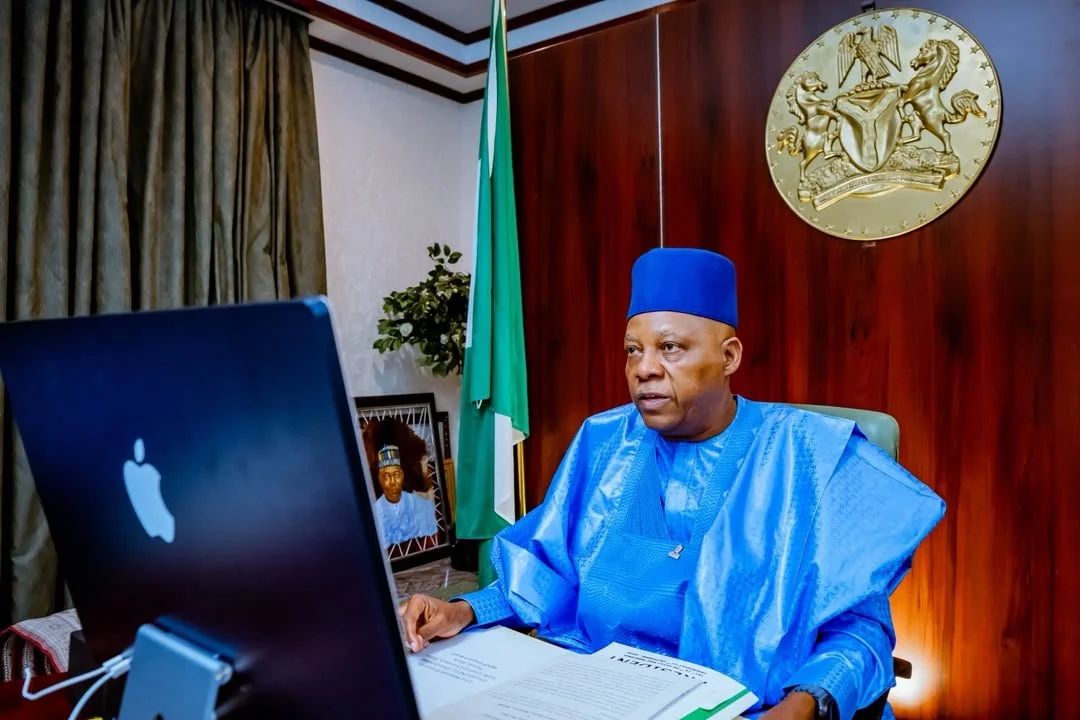
Vice-President Kashim Shettima
Nigeria’s National Economic Council (NEC) has endorsed a 90-day economic action plan aimed at reducing the cost of living, improving food affordability and accelerating projects expected to deliver direct benefits to households and businesses.
/ You Might Also Like /




The plan, proposed by the Federal Ministry of Finance, was endorsed at NEC’s 161st meeting on October 22, 2026, chaired virtually by Vice-President Kashim Shettima.
It identifies five priority areas: food affordability, tax harmonisation, completion of high-impact projects, removal of investment bottlenecks and regulated household support.
The council also approved a national dashboard to track projects across the federation, with particular attention to transparency, accountability and the use of proceeds from petrol subsidy removal.
However, the government has yet to disclose the full implementation framework, specific interventions, funding allocations or measurable targets for the 90-day programme. Its impact will therefore depend on how quickly federal and state authorities translate the broad priorities into practical measures.
Food Affordability Takes Centre Stage
Food affordability is one of the plan’s five priorities, reflecting the pressure that high living costs continue to place on household budgets.
Food prices affect more than consumers’ grocery bills. They influence wage demands, household savings, retail activity and the amount families can allocate to rent, utilities, transport and other essential expenses.
When food consumes a larger share of household income, families may struggle to meet housing costs, while landlords and property investors may face pressure from tenants whose disposable income has declined.
The plan’s focus on food affordability could therefore have implications for housing demand and rental payment capacity. However, the council has not yet specified the measures it intends to introduce to lower food prices or improve access to affordable supplies.
The effectiveness of the intervention will depend on the details of its implementation, including whether it addresses the factors driving food costs and whether any benefits reach households within the 90-day period.
Tax Harmonisation and Investment Bottlenecks
The council’s second set of priorities includes tax harmonisation and the removal of investment bottlenecks, two areas with implications for businesses operating across Nigeria.
A more coordinated tax environment could help reduce uncertainty for companies dealing with different levels of government. However, the practical benefits will depend on the scope of the harmonisation measures, the agencies involved and how consistently the changes are implemented.
Removing barriers to investment could also support business expansion and job creation by reducing delays associated with approvals, administrative processes and other constraints.
For the housing and construction sector, these priorities are particularly relevant. Developers and building-material suppliers operate within a business environment shaped by taxation, regulatory approvals, infrastructure constraints and financing costs.
If the government’s plan results in clearer procedures and fewer administrative obstacles, it could improve project delivery conditions. The council has not yet identified specific housing-sector measures, however, so any direct benefit to property development remains uncertain.
Government Accelerates High-Impact Projects
The plan also prioritises the completion of high-impact projects expected to produce direct benefits for Nigerians.
Infrastructure delivery can affect the cost of doing business, access to essential services and the viability of new residential and commercial developments. Roads, electricity, water supply and transport links are particularly important to housing delivery because they influence construction costs, property values and the attractiveness of locations to investors.
Completing existing projects could provide benefits sooner than launching new schemes, provided authorities focus on projects that are adequately funded, sufficiently advanced and capable of meeting clearly defined needs.
The council has not published a detailed list of the projects covered by the 90-day plan. The national dashboard is expected to provide a mechanism for tracking projects, but its value will depend on the quality of the information made available and whether it allows the public to assess progress.
National Dashboard to Track Spending and Delivery
NEC approved the establishment of a national dashboard to monitor projects across the federation, including the use of funds generated from petrol subsidy removal.
The proposed system is intended to strengthen transparency and accountability by improving the tracking of ongoing projects and reporting on public expenditure.
For investors, reliable project information can help clarify whether government commitments are translating into completed infrastructure and services. For communities, it can provide a clearer picture of the projects intended to improve local conditions.
The dashboard’s effectiveness will depend on the frequency of updates, the accuracy of reported information and the level of public access. Without clear indicators and consistent reporting, the platform may provide limited insight into whether projects are meeting their objectives.
The council has yet to disclose when the dashboard will become operational or the precise information it will publish.
Household Support and Transport Costs
Regulated household support is another priority under the plan, although the government has not provided details on eligibility, the form of assistance or how beneficiaries will be identified.
The council also addressed transport affordability, resolving to establish a joint financing framework between the Federal Government and state governments to accelerate the deployment of compressed natural gas (CNG) and electric vehicles.
It directed relevant authorities to engage transport unions and operators to ensure that savings generated through the use of these vehicles are passed on to commuters through lower fares.
The council’s position recognises that introducing alternative-energy vehicles does not automatically reduce the cost of transport for passengers. The benefit depends on operating costs, financing arrangements, vehicle availability and whether operators adjust fares accordingly.
Lower transport costs could leave households with more income for food, rent and other essentials. For businesses, affordable transport can also influence workers’ commuting expenses and the movement of goods.
Implementation Will Determine the Plan’s Impact
The 90-day plan sets out broad priorities for easing living costs and improving economic conditions, but the endorsement is not itself evidence that food prices or household expenses will fall.
The next stage requires clear implementation responsibilities, financing arrangements, timelines and measurable outcomes. Federal and state authorities will also need to coordinate their actions because several priorities including tax administration, infrastructure delivery and transport cross institutional boundaries.
For Nigeria’s housing market, the most relevant potential benefits would come through lower pressure on household budgets, more predictable business conditions and improved infrastructure delivery. These outcomes could support tenants’ ability to meet rent obligations and strengthen the environment for property investment, but they are not guaranteed by the plan’s announcement.
As the programme moves towards implementation, attention will turn to the specific measures governments adopt, the projects they prioritise and the evidence they provide that public spending is producing measurable benefits.
The 90-day period gives the initiative a defined timeframe. Its success, however, will depend on whether the government can turn its stated priorities into visible improvements in the daily costs faced by households and businesses.
READ MORE