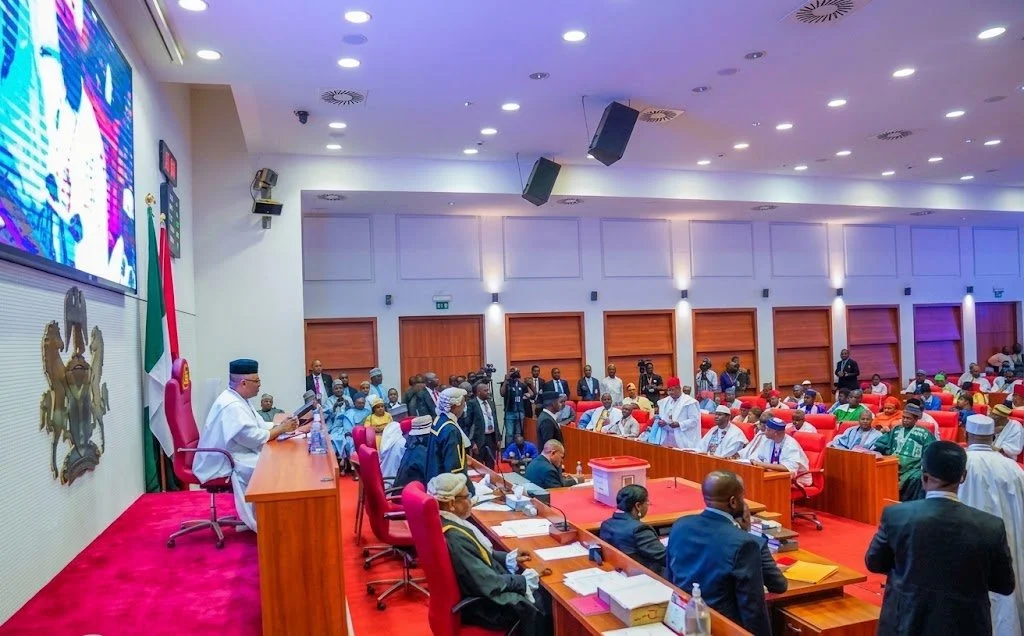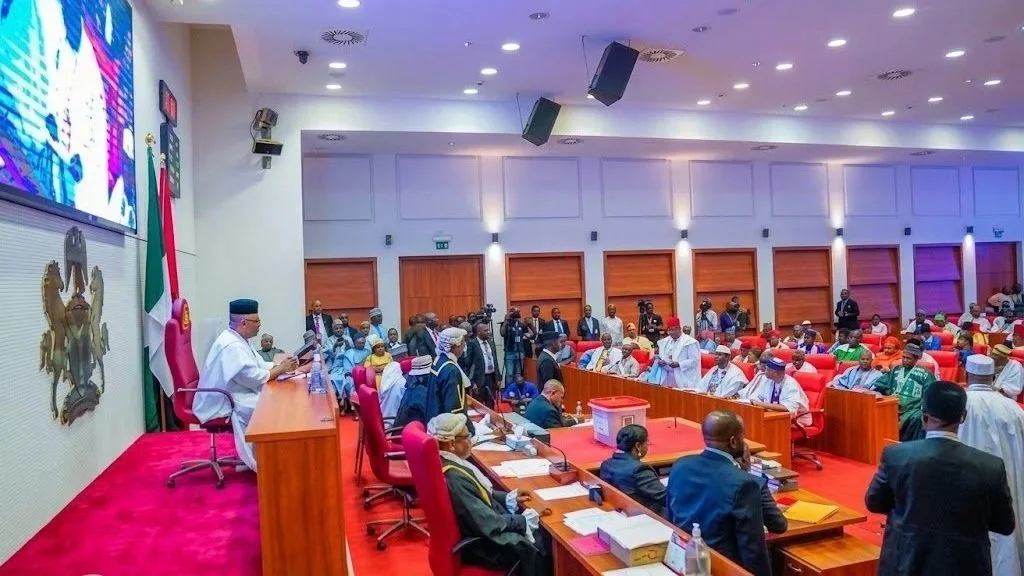
Senate President Godswill Akpabio has called for a fresh approach to establishing a viable Nigerian national airline
The Nigerian Senate has rejected proposals to revive the controversial Nigeria Air project, calling instead for a fresh approach to establishing a viable national carrier.
The decision followed deliberations on a motion concerning Nigeria's Bilateral Air Services Agreement (BASA) with China during plenary on Tuesday, November 3, 2026.
/ You Might Also Like /




Senate President Godswill Akpabio initially dismissed the proposal to revive Nigeria Air, describing it as a dead issue. However, he maintained that Nigeria still needed a national airline capable of representing the country and meeting growing demand for domestic and international air travel.
He urged lawmakers to initiate a fresh legislative process that would allow the government to explore alternative arrangements for establishing a Nigerian-owned carrier.
Akpabio recalled the operations of the defunct Nigerian Airways, which once operated a fleet of about 40 aircraft, and expressed concern that the country now depended heavily on foreign airlines for international connectivity.
He also questioned whether existing private airlines had sufficient capacity to meet passenger demand, particularly during peak travel periods.
Senate Rejects Existing Nigeria Air Arrangement
The Nigeria Air project was introduced under former President Muhammadu Buhari's administration as an attempt to establish a national carrier through a partnership with Ethiopian Airlines.
The proposed arrangement gave Ethiopian Airlines a 49 per cent stake, while the Federal Government was expected to hold 5 per cent. Other investors, including the Nigerian Aviation Handling Company (NAHCO), were expected to hold the remaining shares.
The airline was unveiled in May 2023 under the supervision of former Aviation Minister Hadi Sirika. However, the project faced allegations of irregularities, questions about its commercial structure and opposition from domestic airline operators.
In August 2024, the Federal High Court in Lagos declared the proposed sale of the airline to Ethiopian Airlines invalid and legally ineffective.
Aviation Minister Festus Keyamo subsequently criticised the proposed arrangement, arguing that its financial and operational terms did not adequately protect Nigeria's interests. The government suspended the project.
The Economic and Financial Crimes Commission (EFCC) is also prosecuting Sirika and other defendants over alleged financial and contractual irregularities connected to the project. The allegations remain before the court and have not been established as convictions.
The Senate's latest position effectively rules out returning to the disputed Nigeria Air arrangement while leaving open the possibility of a new national carrier structure.
Lawmakers Seek Direct Nigeria-China Flights
The debate over the national carrier emerged during consideration of a motion sponsored by Senate Chief Whip, Senator Tahir Monguno, seeking the enforcement and renegotiation of Nigeria's Bilateral Air Services Agreement with China.
Monguno argued that the existing aviation arrangement did not provide Nigerian airlines with adequate reciprocal access to the Chinese market, despite the growing commercial relationship between both countries.
He called on the Federal Government to secure direct flight rights for Nigerian carriers, arguing that improved air connectivity would reduce travel time, strengthen trade and limit foreign exchange outflows associated with international travel.
The senator also identified opportunities for Nigerian businesses to expand exports, particularly agricultural products and other goods requiring efficient transportation.
Following the debate, the Senate urged the Ministry of Aviation and Aerospace Development to renegotiate the agreement and establish reciprocal direct commercial flight arrangements.
It also called on the Ministry of Foreign Affairs to engage Chinese authorities on business visa facilitation for Nigerian traders and reciprocal airport slot allocations.
The Senate directed its Committees on Aviation and Foreign Affairs to monitor implementation and report back within four weeks.
Implications for Trade and Investment
The push for direct flights between Nigeria and China reflects the importance of international aviation connectivity to trade, investment and business operations.
China remains an important source of manufactured goods, machinery, construction materials and industrial equipment for Nigerian businesses. More direct air connections could reduce travel time for business operators and improve access to commercial opportunities.
Improved connectivity could also strengthen the movement of high-value goods and support Nigerian businesses seeking access to Asian markets.
For Nigeria's aviation industry, however, securing direct flight rights would not automatically guarantee that local airlines could operate profitable routes. Nigerian carriers would still need sufficient aircraft, financing, technical capacity and competitive operating costs to sustain international services.
What a New National Carrier Would Need
The Senate's call for a fresh national carrier proposal raises questions about the ownership, financing, governance and commercial structure of any future airline.
Nigeria's previous national airline, Nigerian Airways, ceased operations in 2003 after years of financial difficulties, operational problems and mismanagement.
A new carrier would therefore need a commercially sustainable model, transparent procurement arrangements, strong corporate governance and clear accountability to avoid repeating the challenges associated with its predecessor.
It would also need to compete in an international aviation market where established airlines benefit from larger fleets, extensive route networks and stronger financial capacity.
For policymakers, the central challenge is not simply establishing an airline that flies the Nigerian flag, but creating one capable of operating sustainably without becoming a long-term financial burden on public resources.
READ MORE