Renewed Hope Cities Attract Over 100,000 Nigerians as Housing Projects Expand Nationwide
Renewed Hope Housing Programme Gains Traction as Projects Spread Across Nigeria
The Federal Government’s Renewed Hope Cities housing programme has attracted more than 100,000 expressions of interest as housing developments expand across Abuja, Lagos, Kano and other parts of the country.
The programme, structured as a public-private partnership, brings together the Federal Ministry of Housing and Urban Development, private developers and financial institutions to increase housing supply and expand access to homeownership.
/ You Might Also Like /




More than 10,000 applicants have reportedly progressed to firm subscriptions, while thousands of allocation letters and mortgages have been issued under the programme.
The scale of interest highlights the depth of housing demand in Nigeria, while the expansion of the projects indicates a growing effort to combine housing construction with mortgage financing and private-sector participation.
Mortgage Access Expands Alongside Housing Supply
Mortgage financing remains a central component of the Renewed Hope Cities programme.
The Federal Mortgage Bank of Nigeria has extended mortgage opportunities to contributors to the National Housing Fund, with more than 2,000 Nigerians reportedly benefiting from the scheme and more than 10,000 additional applications undergoing processing.
Housing Minister Muttaqha Rabe Darma has also placed greater emphasis on extending homeownership opportunities to Nigerian workers and people operating within the informal sector.
The minister has set a target of at least 5,000 mortgages annually as part of wider reforms aimed at improving access to housing finance.
The development is significant because expanding housing supply without improving access to finance can leave completed homes beyond the reach of the households that need them.
Projects Expand Beyond Abuja
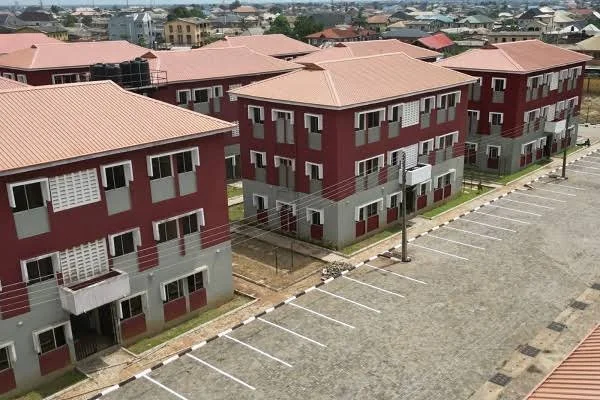
The Renewed Hope Cities programme has moved beyond its flagship development in Karsana, Abuja.
The Karsana project comprises 2,400 housing units and is approaching completion, while another 2,000-unit development is planned at Jibi near Kubwa. A further 1,200 units are planned for Kagini as part of a second phase.
In Kano, more than 350 units at Janguza have reportedly been completed, with another 650 units under construction and scheduled for delivery in March 2027.
In Lagos, developers are working on 2,004 units along Monastery Road, with an initial 550 units expected by April 2027.
Projects are also planned or being developed in locations including Asaba, Ibadan, Katsina, Enugu, the Sagamu-Papalanto corridor and Port Harcourt. The Federal Government has indicated an intention to extend the programme to all states.
Infrastructure Supports Housing Expansion
The expansion of housing projects has also increased the importance of infrastructure around development sites.
In Abuja, government-funded access roads have been provided to support the Karsana development, with the first phase of the access road completed.
Infrastructure connectivity is particularly important for large housing developments because transport access, electricity, water and other services influence both the attractiveness of new estates and their long-term viability.
For developments located on the outskirts of major cities, improved road connections can also encourage new commercial activity and support the emergence of additional development corridors.
Private Developers Provide Construction Capital
The Renewed Hope Cities programme relies on a combination of public and private financing.
Private equity from developers is being combined with construction and mortgage finance from FMBN, support from Family Homes Funds and the Nigeria Sovereign Investment Authority, as well as commercial banking support from Keystone Bank.
This financing structure reflects the scale of capital required to expand housing delivery in Nigeria.
Government resources alone are unlikely to meet the country's housing needs, making private capital and institutional finance increasingly important to the development of large-scale housing projects.
Cooperatives Help Connect Workers to Homeownership
Cooperative societies and organised employee groups have also become an important channel for participation in the programme.
Organisations and groups from the petroleum, financial, telecommunications and other sectors have reportedly joined the scheme, alongside trader associations and government employee cooperatives.
Some institutions have gone further by supporting employees with their equity contributions, reducing one of the initial financial barriers to home acquisition.
This approach could provide a model for other employers seeking to support workers who can afford mortgage repayments but struggle to meet the upfront equity requirement.
430 Housing Units Handed Over to NMDPRA Beneficiaries
The Federal Ministry of Housing and Urban Development and Renewed Hope Cities developers handed over 430 housing units to staff and cooperative members of the Nigerian Midstream and Downstream Petroleum Regulatory Authority on September 23.
NMDPRA reportedly supported its beneficiaries by funding a 30 per cent equity contribution, allowing participating employees to meet the initial requirement while financing the balance through mortgages and other payment arrangements.
The initiative demonstrates how institutional support can complement mortgage financing and potentially make structured homeownership more accessible to salaried workers.
NMDPRA's cooperative has also reported more than 1,000 staff expressing interest in the programme, suggesting that demand extends beyond the initial group that has received allocations.
Housing Demand Highlights Financing Challenge
The more than 100,000 expressions of interest recorded by the programme point to substantial demand for formal housing.
However, expressions of interest do not necessarily translate into completed purchases or mortgages. The ability of households to convert interest into homeownership will depend on income levels, property prices, mortgage rates, equity requirements and the availability of long-term financing.
This distinction is important for assessing the programme's impact on Nigeria's housing deficit.
Increasing the number of houses under construction is necessary, but sustained housing delivery will require a financing system capable of connecting completed units with households that can afford them.
Renewed Hope Cities Could Reshape Development Corridors
The geographic expansion of the projects could also influence urban development patterns.
Housing developments in areas such as Karsana, Jibi, Kagini and the Lekki-Epe corridor are located within or around rapidly expanding urban areas. New housing supply in these locations can stimulate demand for transport, retail, schools, healthcare facilities and other services.
The development of such supporting infrastructure will be important to ensure that new estates become integrated communities rather than isolated housing schemes.
For developers and investors, the expansion of infrastructure and housing around emerging corridors could create additional opportunities in commercial property, retail, logistics and other supporting real estate segments.
Outlook
The Renewed Hope Cities programme is gaining scale as housing developments expand beyond Abuja into Lagos, Kano and other parts of the country, while more than 100,000 Nigerians have reportedly expressed interest.
Its longer-term impact will depend on whether the government and private developers can sustain construction, improve mortgage access and ensure that housing prices remain within reach of the target market.
The programme's combination of private-sector development, institutional financing, mortgage support and employer-backed equity contributions provides several potential pathways to homeownership.
For Nigeria's housing market, the critical measure will ultimately be how many of the proposed homes reach completion and how effectively financing mechanisms convert the country's substantial demand for housing into actual homeownership
READ MORE