Nigeria’s Raw Material Trade Swings From ₦1.67tn Deficit to ₦466.79bn Surplus
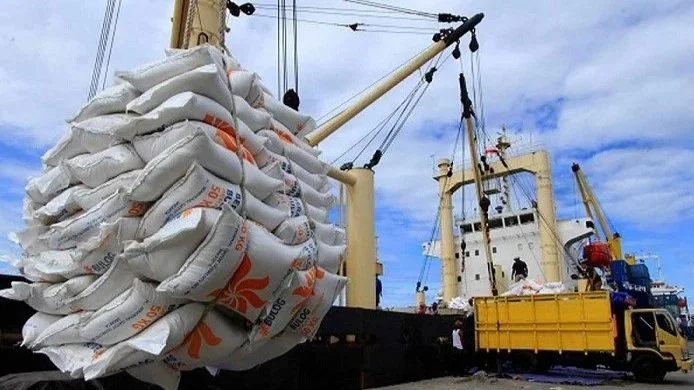
Nigeria records raw-material trade surplus
Nigeria recorded a ₦466.79 billion surplus in raw-material trade during the first half of 2026, marking a sharp reversal from the ₦1.67 trillion deficit recorded in the corresponding period of 2025.
The shift followed a 105.9% year-on-year increase in raw-material exports to ₦3.84 trillion, while imports fell 4.5% to ₦3.37 trillion, according to Nairametrics’ analysis of the National Bureau of Statistics’ Q2 2026 Foreign Trade Statistics.
/ You Might Also Like /




Raw-material trade balance reverses sharply
The ₦466.79 billion surplus represents an improvement of about ₦2.13 trillion compared with the first half of 2025.
Nigeria had recorded a ₦1.67 trillion deficit in H1 2025, reflecting the country's longstanding dependence on imported raw materials.
The latest figures mark a significant departure from that pattern, although the improvement has emerged after several years of substantial deficits rather than through a gradual, uninterrupted reduction in the gap.
Nigeria recorded raw-material trade deficits in every full year from 2016 through 2025. The annual deficit widened to ₦4.79 trillion in 2024 before narrowing to ₦3.80 trillion in 2025.
Exports drive the turnaround
The strongest change occurred on the export side.
Raw-material exports reached ₦3.84 trillion in H1 2026, compared with ₦1.86 trillion during the same period in 2025.
The H1 2026 figure already represents 93.7% of the ₦4.10 trillion recorded for the entire 2025 year.
The acceleration was particularly pronounced in the second quarter, when raw-material exports reached ₦2.31 trillion. That represented approximately 60% of total H1 exports and an increase of about 181% compared with the ₦819.72 billion recorded in Q2 2025.
Q2 produces the first quarterly surplus
The improvement became particularly visible in the second quarter.
Nigeria recorded raw-material exports of ₦2.31 trillion against imports of ₦1.79 trillion in Q2, resulting in a ₦515.40 billion quarterly surplus.
That represented a ₦564.01 billion improvement from the ₦48.61 billion deficit recorded in Q1.
In Q1, raw-material imports stood at ₦1.58 trillion while exports were ₦1.53 trillion.
The second-quarter performance therefore pushed the overall H1 position into surplus and marked the first quarter in the data reviewed in which raw-material exports exceeded imports.
Nigeria has historically relied heavily on imported raw materials
The latest result stands out because of Nigeria's long history of raw-material trade deficits.
Between 2016 and 2025, raw-material imports consistently exceeded exports. Imports increased from ₦945.71 billion in 2016 to ₦7.90 trillion in 2025, while exports increased from ₦44.48 billion to ₦4.10 trillion over the same period.
Although exports have expanded significantly, the growth in imports has historically remained larger, leaving manufacturers and other industries exposed to international prices, foreign-exchange movements and supply-chain disruptions.
The H1 2026 surplus therefore represents a notable change in the composition of Nigeria's raw-material trade.
What the shift means for local industry
A sustained increase in raw-material exports could strengthen Nigeria's external trade position and provide additional foreign-exchange earnings.
However, the economic significance of the development will depend partly on the nature of the materials being exported.
Nigeria has historically exported substantial volumes of primary commodities while importing processed and manufactured products. Increasing raw-material exports can generate revenue, but greater domestic processing could potentially capture more value within the economy.
This is particularly relevant to manufacturing, construction and other industries that depend on reliable access to locally produced inputs.
Implications for construction and housing
The development also has implications for Nigeria's property and construction sectors.
Building materials represent a significant component of development costs, while manufacturers depend on raw materials to produce cement-related products, metals, fittings, chemicals and other construction inputs.
A stronger domestic raw-material base could reduce exposure to imported inputs over time if increased production is accompanied by greater local processing and manufacturing capacity.
However, the trade figures alone do not establish that imported construction materials will immediately become cheaper or more readily available.
The relationship between raw-material exports and domestic construction costs will depend on production capacity, processing infrastructure, energy costs, logistics, foreign-exchange conditions and the share of locally produced materials supplied to the Nigerian market.
RMRDC has called for reduced import dependence
The latest trade figures come against efforts by the Raw Materials Research and Development Council (RMRDC) to reduce Nigeria's dependence on imported industrial inputs.
The council has previously called for Nigeria to reduce its reliance on imported raw materials by at least 60% over five years and increase the use of locally available resources to support manufacturing.
The H1 2026 surplus provides evidence of a changing trade position, but it does not by itself establish that Nigeria has achieved a structural shift towards domestic raw-material production.
Maintaining the trend over several quarters will be important.
Trade improvement comes after years of widening deficits
The scale of the recent improvement becomes clearer when viewed against the previous decade.
Nigeria's raw-material trade deficit increased from ₦901.23 billion in 2016 to ₦1.42 trillion in 2021 and 2022.
The deficit then widened to ₦2.18 trillion in 2023 and reached ₦4.79 trillion in 2024.
Although the gap narrowed to ₦3.80 trillion in 2025, imports remained substantially higher than exports for the full year.
The move to a ₦466.79 billion surplus within the first six months of 2026 therefore represents a significant departure from the recent trend.
Export growth needs to translate into domestic value
The stronger export performance presents an opportunity for Nigeria to move beyond exporting primary commodities towards developing more sophisticated domestic value chains.
For the manufacturing sector, this could mean expanding local processing capacity and creating stronger connections between producers of agricultural and mineral raw materials and domestic manufacturers.
For the housing and construction industry, greater domestic processing could eventually create a more stable supply of building inputs.
However, achieving this would require investment in processing facilities, electricity, transport infrastructure, storage and logistics.
Outlook
Nigeria's ₦466.79 billion raw-material trade surplus in H1 2026 marks a sharp reversal from the ₦1.67 trillion deficit recorded a year earlier.
The turnaround was driven primarily by the surge in exports, which more than doubled year-on-year, alongside a modest decline in imports.
The immediate question is whether the surplus can be sustained through the second half of the year.
For the wider economy, continued improvement could strengthen non-oil trade and support efforts to deepen domestic value chains. For manufacturing, construction and real estate, the greater significance will depend on whether increased raw-material production translates into stronger domestic processing and more reliable supplies of locally produced inputs.
READ MORE