Nigeria, Morocco to Sign $25bn Transcontinental Gas Pipeline Deal in 2026
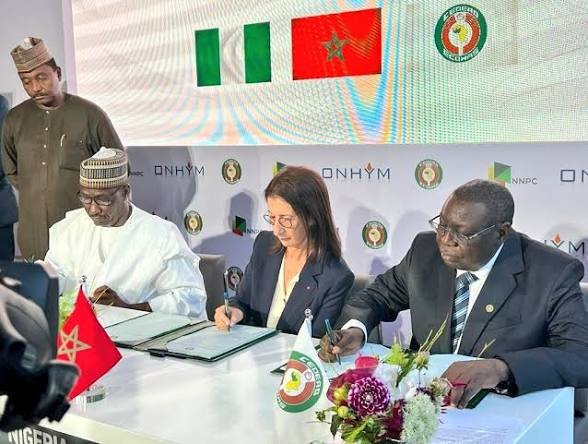
FG Advances $25bn Nigeria-Morocco Gas Pipeline Agreement
Nigeria and Morocco are set to sign an intergovernmental agreement for a $25 billion transcontinental gas pipeline in 2026, marking a major milestone in one of Africa’s most ambitious energy infrastructure projects. The agreement is expected to formalise political and regulatory commitments required to advance the long-delayed pipeline linking West Africa to Europe.
/ You Might Also Like /




Project Overview and Strategic Scope
The proposed pipeline, known as the African Atlantic Gas Pipeline, will span approximately 6,900 kilometres, running through multiple West African countries before reaching Morocco and connecting to European markets.
Designed as a hybrid offshore and onshore system, the pipeline will have a maximum capacity of 30 billion cubic metres of gas annually. About 15 billion cubic metres is expected to serve Morocco’s domestic needs, while the remainder will support exports to Europe.
The project involves 13 countries and has the backing of the Economic Community of West African States (ECOWAS), positioning it as a cornerstone of regional energy integration.
Institutional Framework and Implementation Plan
Following the signing of the agreement, a governing authority is expected to be established in Nigeria, comprising ministerial representatives from participating countries. This body will coordinate regulatory alignment and oversee implementation.
In addition, a joint venture between the Nigerian National Petroleum Company Limited (NNPC) and Morocco’s Office National des Hydrocarbures et des Mines (ONHYM) will be created to manage execution, financing, and construction.
The project will be developed in phases, allowing individual segments to become operational independently. This phased approach is designed to deliver early economic benefits without waiting for a single final investment decision.
Financing and Investment Outlook
While investor interest in the pipeline remains strong, final funding commitments have yet to be secured. The financing model is expected to combine equity and debt, mobilised through the project company.
The scale and structure of the project are seen as attractive to international investors, particularly given its potential to reshape energy trade between Africa and Europe.
Economic and Regional Impact
The Nigeria–Morocco pipeline is expected to significantly enhance energy access, electricity generation, and industrial development across West Africa. It also offers a strategic opportunity for Nigeria to monetise its vast natural gas reserves and diversify revenue sources beyond crude oil.
For Morocco, the project reinforces its ambition to serve as an energy bridge between Africa and Europe, while supporting Europe’s efforts to diversify gas supply sources amid shifting geopolitical dynamics.
Timeline and Outlook
According to project officials, the first gas from initial phases is projected for 2031, reflecting the long-term and capital-intensive nature of the infrastructure.
The planned agreement signals renewed political will to deliver the project, which has faced delays over the years due to financing challenges and complex cross-border coordination.
The planned signing of the $25 billion Nigeria-Morocco gas pipeline agreement marks a critical step toward unlocking one of Africa’s most transformative energy projects. If successfully executed, the pipeline could redefine regional energy dynamics, strengthen economic integration, and position West Africa as a key player in global gas supply chains.
READ MORE