Nigeria’s Housing Crisis Deepens as High Costs, Weak Supply Constrain Delivery
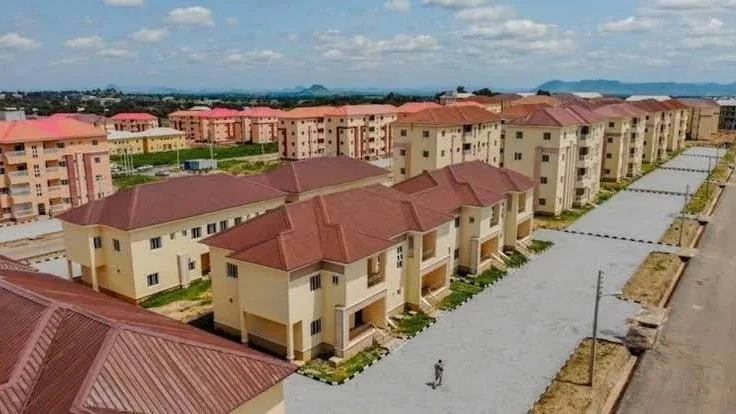
Structural barriers continue to constrain housing delivery
Nigeria’s housing crisis is being driven by a combination of rapidly rising demand, inadequate housing supply, high construction costs and structural barriers that continue to make affordable housing difficult to deliver.
Odunayo Ojo, Managing Director and Chief Executive Officer of UPDC Plc, said the country’s housing market is facing a severe demand-supply imbalance, particularly in major urban centres such as Lagos and Abuja.
/ You Might Also Like /




Speaking during a BusinessDay Television programme monitored in Lagos, Ojo identified population growth and rural-to-urban migration as major drivers of housing demand, while high construction costs and lengthy development timelines continue to constrain supply.
Demand Continues to Outpace Housing Supply
Nigeria’s rapid urbanisation is putting sustained pressure on available housing stock.
As more people move from rural areas to major cities in search of employment, education and economic opportunities, demand for residential property continues to increase. However, the pace at which new housing is delivered has not kept up with the growth in demand.
Ojo said the imbalance has become particularly pronounced in major urban markets, where limited housing stock is being subjected to increasing pressure from population growth and migration.
The problem is compounded by the time required to develop new properties. Developers must acquire land, secure approvals, arrange financing and complete construction before new units can enter the market.
This means that even when developers respond to rising demand, the supply response is often slower than the pace at which demand is increasing.
High Construction Costs Remain a Major Constraint
Construction costs have emerged as one of the biggest obstacles to expanding housing supply.
Ojo pointed to the high cost of construction, including the impact of imported materials and currency devaluation, as a factor making it more expensive for developers to deliver new homes.
The weakening of the naira increases the cost of imported construction materials and equipment, while domestic price increases also affect locally sourced inputs, labour, transportation and other development expenses.
As project costs rise, developers face difficult choices. They can increase selling prices, reduce project specifications, delay construction or postpone projects until market conditions become more favourable.
Higher development costs ultimately affect affordability because developers need to recover their investment while maintaining commercially viable projects.
Land Access Adds to Development Challenges
Access to suitable and affordable land is another structural issue affecting housing delivery.
In major cities, the availability of well-located land is increasingly limited, while infrastructure and demand have pushed land values higher in areas where residential development is commercially viable.
Ojo identified the need for stronger public-private partnerships that can improve access to land and help developers deliver housing at scale.
For developers, the challenge is not simply obtaining land but obtaining land that can support financially viable housing projects after accounting for acquisition costs, infrastructure, approvals, financing and construction.
Where developers must bear the full cost of providing infrastructure to previously undeveloped areas, the cost is ultimately reflected in the price of the housing delivered.
Financing Remains Critical to Housing Delivery
Long-term financing is another important component of the housing supply equation.
Housing development requires substantial upfront capital, while developers typically recover their investment gradually through property sales or rental income.
When financing is expensive or unavailable for sufficiently long periods, developers face greater pressure to rely on equity, pre-sales or short-term funding.
This can limit the scale and pace of development, particularly for mass-market housing where margins are narrower and prospective buyers have limited purchasing power.
Nigeria’s housing finance system therefore needs to address both sides of the market: developers require affordable development finance, while buyers need mortgages and other long-term financing products that match their incomes.
Regulatory and Legal Bottlenecks Add to Project Risk
Ojo also identified regulatory and legal constraints as part of the structural barriers affecting the housing market.
Regulatory processes can influence the length and cost of development, while weaknesses in property and mortgage enforcement can increase the risks faced by developers and financiers.
Foreclosure is particularly important to housing finance because lenders need an effective mechanism for recovering collateral when borrowers default.
Where enforcement processes are slow or uncertain, lenders may attach a higher risk premium to housing finance or become more cautious about providing long-term loans.
Previous analysis of Nigeria’s housing finance system has similarly identified weak foreclosure mechanisms and legal uncertainty as obstacles to the expansion of rent-to-own and other long-term housing finance models.
Public-Private Partnerships Could Expand Housing Delivery
Ojo called for stronger collaboration between government and private developers to address some of the structural constraints affecting the sector.
Public-private partnerships could potentially improve access to land, infrastructure and long-term financing while allowing private developers to contribute capital, construction expertise and project management capacity.
The importance of such partnerships lies in their potential to reduce some of the upfront costs that make affordable housing projects difficult to deliver commercially.
Government involvement does not necessarily have to mean direct construction. It can also involve making land available, providing infrastructure, streamlining approvals, creating financing incentives and establishing clearer frameworks for private-sector participation.
Housing Affordability Depends on More Than Construction
The current crisis demonstrates that increasing the number of housing units alone may not resolve Nigeria’s affordability problem.
New homes must also be priced within the purchasing capacity of the households they are intended to serve.
BusinessDay’s recent analysis of Nigeria’s housing market has highlighted the widening pressure on renters, with rising rents and limited affordable supply creating significant financial strain for urban households.
This creates a difficult equation for developers. Land, materials, labour, infrastructure and finance all carry market costs, but households cannot necessarily absorb equivalent increases in property prices or rents.
Closing this gap requires interventions that reduce the cost of housing production rather than simply increasing nominal housing output.
Urban Markets Face the Greatest Pressure
Lagos and Abuja remain particularly exposed because of their strong population growth, employment concentration and continued migration.
The concentration of economic opportunities in these cities attracts new residents while placing additional pressure on existing housing stock.
As development becomes more expensive in established locations, households increasingly move towards peripheral areas where land and rents may be cheaper.
However, when these peripheral communities lack adequate roads, public transport, electricity, water and other infrastructure, the apparent reduction in housing costs can be offset by higher commuting and living expenses.
This makes housing delivery an urban planning issue as well as a real estate issue.
Structural Reform Needed to Close the Housing Gap
The housing crisis therefore extends beyond the number of homes currently available.
The central challenge is creating an environment in which developers can produce housing at sufficient scale, at costs that allow ordinary households to afford it, while investors and financiers can operate within a predictable legal and regulatory framework.
This requires progress across several areas, including land administration, construction costs, infrastructure, housing finance, mortgage enforcement and development approvals.
For developers, reducing these structural constraints could improve project viability and make more housing segments commercially attractive. For investors, a more predictable operating environment could reduce development risk and encourage greater capital allocation to residential projects.
Outlook for Nigeria’s Housing Market
Nigeria’s housing demand is likely to remain strong as population growth and urbanisation continue to expand the number of households requiring accommodation.
The more immediate challenge is whether the housing industry can increase supply quickly enough and at prices that match household purchasing power.
Ojo’s assessment highlights the gap between strong market demand and the structural conditions required to convert that demand into actual housing delivery.
For Nigeria’s housing market, addressing construction costs, improving access to land and long-term finance, reducing regulatory bottlenecks and strengthening public-private partnerships will be central to expanding supply.
READ MORE