Nigeria’s 2026 Flood Outlook Signals Rising Climate and Infrastructure Risks
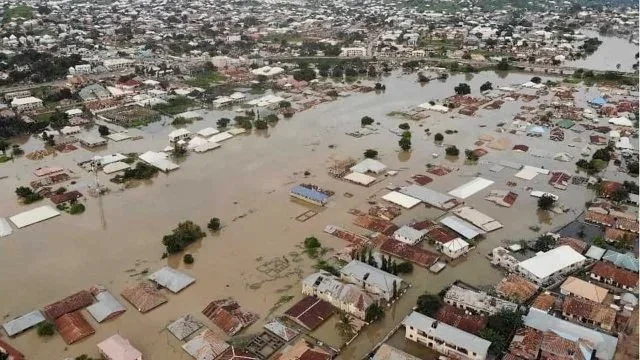
The Federal Government has issued a nationwide flood warning, projecting that at least 33 states and over 14,000 communities will face significant flood risks in 2026. The alert, contained in the Annual Flood Outlook (AFO) released in Abuja, highlights urgent concerns over climate vulnerability, infrastructure gaps, and disaster preparedness.
Nature of Risk Across States and Communities
According to the 2026 AFO presented by the Nigeria Hydrological Services Agency (NiHSA), 14,118 communities across 266 Local Government Areas (LGAs) fall within high flood-risk zones.
/ You Might Also Like /




States identified as high-risk include Bayelsa, Delta, Lagos, Rivers, Benue, and several others spanning all geopolitical zones. The Federal Capital Territory is also listed among vulnerable areas.
In addition, 405 LGAs across 35 states face moderate flood risk, while 923 communities in 24 states are expected to experience lower levels of flooding.
Urban Flooding Threatens Major Cities
The outlook projects increased incidence of flash and urban flooding in key cities, including Abuja, Lagos, Ibadan, Port Harcourt, and Kano.
These risks are driven by high rainfall intensity, inadequate drainage infrastructure, and poor urban planning. Authorities warned that limited attention to water management systems could exacerbate flood impacts in densely populated urban centres.
Coastal and Riverine Areas Face Elevated Risk
Coastal states such as Bayelsa, Delta, Lagos, and Rivers are expected to experience additional threats from rising sea levels and tidal surges.
These conditions could disrupt economic activities, particularly fishing and transportation, while increasing the vulnerability of riverine communities.
Government Calls for Early Mitigation Measures
The Minister of Water Resources and Sanitation emphasised that the flood outlook serves as a strategic planning tool rather than a routine forecast. He urged state governments, local authorities, and communities to implement early mitigation strategies, including:
Clearing drainage systems and waterways
Strengthening flood defences and infrastructure
Enforcing land-use regulations in flood-prone areas
Improving community awareness and early warning systems
Officials stressed that proactive planning remains the most effective way to reduce loss of lives, protect infrastructure, and limit economic disruption.
Advancements in Flood Forecasting
The 2026 outlook incorporates improved forecasting methods, including enhanced hydrological monitoring systems and integration with meteorological data. Authorities noted that the adoption of more advanced modelling techniques is expected to improve accuracy and response times.
The government also highlighted ongoing collaboration between hydrological and meteorological agencies to deliver more reliable and actionable data for stakeholders.
Implications for Housing and Infrastructure
The flood warning has significant implications for Nigeria’s housing and urban development sectors. High-risk zones often overlap with rapidly expanding urban areas, exposing critical infrastructure and residential developments to potential damage.
For policymakers, the outlook reinforces the need to integrate climate resilience into urban planning, housing development, and infrastructure investment. Failure to address these vulnerabilities could lead to increased displacement, property losses, and economic strain.
Outlook: A Test of Preparedness
The 2026 flood forecast underscores Nigeria’s growing exposure to climate-related risks. While improved forecasting provides a critical advantage, the effectiveness of response efforts will depend on execution at the state and community levels.
The Federal Government’s warning of widespread flooding across 33 states highlights the scale of Nigeria’s environmental and infrastructure challenges. With over 14,000 communities at risk, the focus now shifts to preparedness, coordinated response, and long-term resilience planning to mitigate the impact of recurring flood disasters.
READ MORE