NIESV Champions Corridor-Based Strategy to Unlock Nigeria’s Real Estate Potential
NIESV Calls for Coordinated Land Governance Along National Transport Hubs
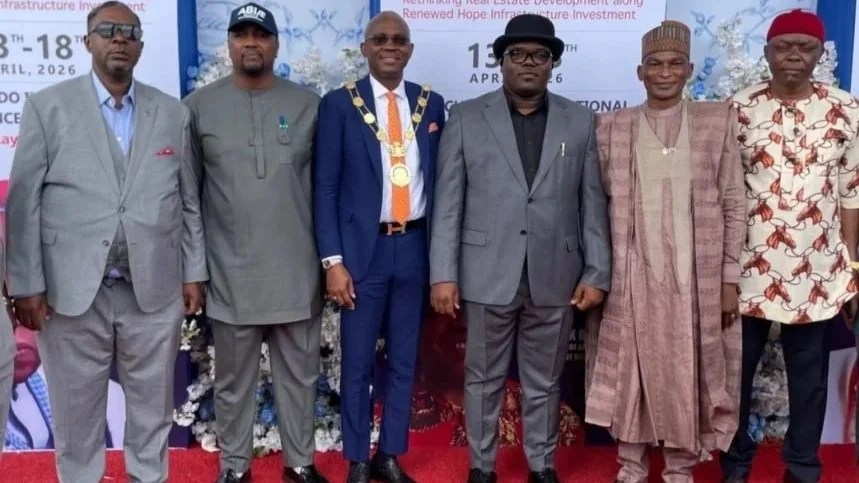
The Nigerian Institution of Estate Surveyors and Valuers (NIESV) has called for a fundamental shift in the nation’s property sector, urging a transition from isolated, project-based construction to an integrated, "corridor-led" development strategy. Speaking at the institution's 56th Annual Conference in Abia State, NIESV leadership emphasized that aligning real estate growth with the Federal Government’s massive infrastructure investments is critical for sustainable economic transformation
/ You Might Also Like /




Harnessing Infrastructure Corridors
The conference theme, “Corridors, Connectivity, and Capital: Rethinking Real Estate Development Along Renewed Hope Infrastructure Investments,” served as a focal point for the discussion. NIESV President, Victor Alonge, noted that major infrastructure projects such as the Lagos-Calabar Coastal Highway and the Sokoto-Badagry Highway should be viewed not just as transportation routes, but as economic arteries capable of driving land value and urban expansion.
"A road moves vehicles, but a corridor moves economies," Alonge stated. He argued that by identifying these emerging growth corridors early, estate surveyors can provide the data-driven guidance necessary to unlock significant capital and foster orderly urban growth, rather than allowing haphazard expansion to continue.
Data-Driven Decision Making and Land Governance
A primary concern raised during the deliberations was the prevalence of land speculation and "land banking," which often lead to artificial price hikes and uncoordinated urban sprawl. To counter this, NIESV is pushing for a comprehensive corridor planning framework. This framework would mandate the co-design of transport, energy, and digital infrastructure alongside residential and industrial hubs.
Key recommendations from the conference included:
Institutionalised Planning: Establishing corridor management authorities to coordinate development across regional boundaries.
Digital Land Governance: Empowering state governments to implement corridor-specific land governance systems, similar to the digitisation efforts currently being undertaken in Abia State.
Value-Sharing Mechanisms: Ensuring that the rise in land values benefit both the public sector and local communities through fair compensation and inclusive planning.
Addressing Regulatory and Investment Barriers
The institution also took a firm stance on the weak implementation of the Land Use Act. President Alonge criticized arbitrary government actions, such as the sudden revocation of Rights of Occupancy, which he identified as a major deterrent to long-term private sector investment.
NIESV experts highlighted that for the "Renewed Hope" housing agenda to succeed, the government must move away from competing with the private sector. Instead, the state should focus on creating an enabling environment through streamlined approval processes and low-interest construction financing.
A Model for Global Benchmarking
Drawing comparisons to international models like South Africa’s Gautrain corridor, NIESV highlighted that successful urban development requires the integration of high-density housing and commercial centers with transit systems. Professor Bankole Awuzie, a keynote speaker, warned that without such strategic planning, infrastructure investments might lead to "spatial fragmentation," where benefits are not evenly distributed across the population.
Conclusion and Forward Outlook
The 56th Annual Conference marks a proactive effort by NIESV to reposition estate surveyors as central players in national economic planning. By advocating for a corridor-based approach, the institution aims to transform Nigeria's real estate sector into a primary driver of GDP growth.
As the Federal Government continues to roll out its infrastructure-led recovery plan throughout 2026, the success of these corridors will depend on the ability of policymakers to adopt NIESV’s recommendations for integrated spatial planning and professional land administration. The institution is expected to release a detailed communiqué in the coming weeks to guide legislative and executive action on these strategic fronts.
READ MORE