Amauzam-Ugbawka and Agbani Communities Challenge Enugu Housing Project
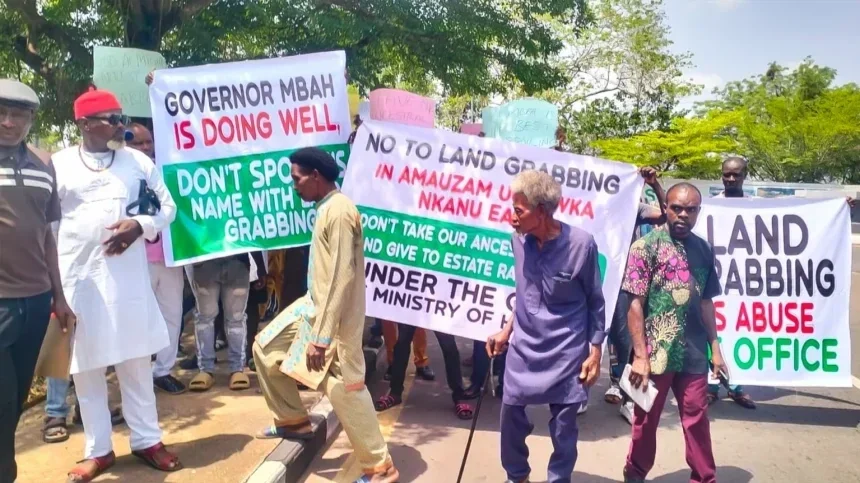
Tension has escalated in the Nkanu East Local Government Area of Enugu State as members of the Amauzam-Ugbawka and Agbani communities staged a peaceful protest against the alleged conversion of land belonging to the Girls Special Science School, Agbani, into a commercial housing estate. The host communities have formally petitioned the state government, describing the move as an act of "land grabbing" that violates the original purpose for which the land was acquired
/ You Might Also Like /




The Core of the Dispute
The protesters, who marched with placards to register their grievances, allege that the Enugu State Ministry of Housing has earmarked unoccupied and undeveloped portions of the school’s premises for a residential housing project. According to community spokespersons, the land spanning several hectares across Ugbawka Amauzam and Agbani was originally acquired approximately 22 years ago during the administration of former Governor Chimaroke Nnamani specifically for educational purposes.
The communities contend that since the school became operational, boundaries have never been clearly defined or demarcated. They argue that any land not actively utilized for the school's educational facilities should, by law and custom, revert to the ancestral owners rather than being repurposed for commercial real estate profit.
History of Diplomatic Engagement
In a petition signed by community representatives, including Chukwu William, Patrick Nwodo, and Ugbor Chukwuma, the residents highlighted a long history of seeking administrative clarity. Records indicate that the communities first wrote to the administration of former Governor Ifeanyi Ugwuanyi in 2016, requesting a formal survey and an agreement on the school’s boundaries.
The petition further states that a subsequent letter was sent to the current Governor, Peter Mbah, in 2024. In that correspondence, the communities requested the release of unoccupied land to affected families to mitigate economic hardship. The recent discovery that this land is now being prepared for a commercial estate has been described by the petitioners as a "great betrayal" of their decade-long patience and diplomatic efforts.
Legal and Social Implications
The protesters are demanding that the state government adhere to the Land Use Act, which governs the acquisition and compensation of communal lands. Specifically, they are calling for:
A formal resizing of the school land to reflect its actual operational needs.
The immediate return of all unused portions of the land to the host communities.
Transparent consultation and the payment of adequate compensation for land already utilised by the state.
Security personnel reportedly prevented the protesters from gaining direct access to the Government House; however, the group successfully submitted their petition to state officials. The communities expressed particular concern that the Ministry of Housing and the Ministry of Lands are proceeding with development plans without any prior discussion with the traditional leadership or landowners.
Conclusion and Forward-Looking Perspective
The conflict in Agbani serves as a critical case study for the "Renewed Hope" housing agendas seen across Nigeria, where state governments seek to bridge housing deficits by utilizing existing government-owned land. However, this incident underscores the necessity of clear title documentation and communal consent in land administration.
As of April 2026, the Enugu State Government has yet to issue a formal rebuttal to the specific claims of the Agbani and Ugbawka communities. The resolution of this dispute will likely depend on Governor Peter Mbah’s willingness to mediate between the Ministry of Housing's development goals and the host communities' demands for land justice and compensation. Failure to address these grievances could set a precedent for further civil unrest in other regions where school lands are currently under-utilised.
READ MORE