Lagos Targets 400MW Capacity Through Private Partnerships
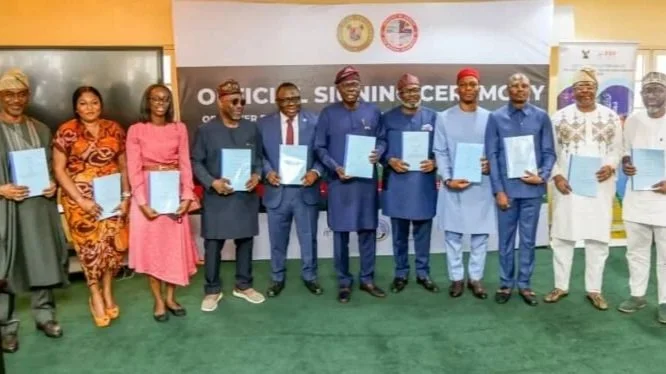
The Lagos State Government has signed a series of power purchase agreements and concession arrangements with three independent power producers to increase electricity generation capacity to between 200MW and 400MW over the next two to three years. The agreements, formalised at Lagos House in Marina, represent a key step in the state’s strategy to improve power reliability and reduce dependence on the national grid.
The deals involve Mainland Power Limited, Fenchurch Power Limited in partnership with Aggregate Utilities Limited, and Viathan Engineering Limited.
/ You Might Also Like /




Strategic Push for Energy Independence
Governor Babajide Olusola Sanwo-Olu described the agreements as a milestone in Lagos’ broader energy reform agenda. The initiative aligns with the state’s long-term objective of building a more reliable and self-sustaining electricity market capable of supporting economic growth.
Lagos has increasingly prioritised embedded power generation localised electricity production designed to serve specific clusters such as industrial zones, commercial hubs, and residential areas. This model reduces reliance on the national grid, which continues to face transmission and supply constraints.
Reforming the Electricity Market Framework
The new agreements introduce structural changes to how power is generated and paid for within the state. According to the Commissioner for Energy and Mineral Resources, Biodun Ogunleye, Lagos is transitioning away from legacy “take-or-pay” contracts that required payment for unused electricity.
Under the revised framework:
Payments will be tied strictly to metered electricity delivered.
Performance-based models will replace fixed contractual obligations.
Dual power supply systems will support critical infrastructure to improve reliability.
These reforms aim to improve transparency, reduce fiscal risk, and attract private sector investment into the electricity value chain.
Scaling Capacity Through Private Sector Participation
Lagos currently generates less than 60MW from its embedded power projects. The newly signed agreements are expected to increase this capacity significantly to as much as 400MW within a few years, driven largely by private investment.
The projects will serve key economic corridors:
Mainland Power will continue supplying electricity to areas including Ikeja, Oshodi, and major public facilities.
The Akute Independent Power Plant is undergoing rehabilitation to support water infrastructure and surrounding communities.
Viathan-linked plants will power government and commercial assets on Lagos Island through hybrid energy systems.
This decentralised approach reflects a broader shift in Nigeria’s electricity sector, where subnational governments play a more active role following regulatory reforms.
Implications for Infrastructure and Real Estate
Reliable electricity remains a foundational requirement for urban development, industrial productivity, and real estate investment. Lagos, as Nigeria’s commercial hub, faces persistent energy deficits that increase operating costs for businesses and developers.
By expanding embedded generation capacity, the state aims to enhance energy reliability across residential and commercial districts. This has direct implications for housing delivery, industrial expansion, and infrastructure planning.
Improved power supply reduces reliance on diesel generators, lowers operational costs, and enhances the attractiveness of Lagos for both domestic and foreign investors.
Outlook: A Market-Driven Energy Model
The Lagos power agreements signal a transition towards a more market-driven electricity system anchored on private sector participation and performance-based contracts. The elimination of legacy payment structures and the introduction of competitive frameworks mark a significant policy shift.
As Nigeria continues to decentralise its electricity market with Lagos among states now operating independent regulatory frameworks the success of these projects will depend on execution, regulatory consistency, and investor confidence.
For policymakers and investors, the initiative represents a critical test of subnational energy reform and its capacity to deliver scalable, sustainable power solutions in one of Africa’s largest urban economies.
READ MORE