FG Hands Over ₦545bn New Carter Bridge Project to CCECC in Lagos
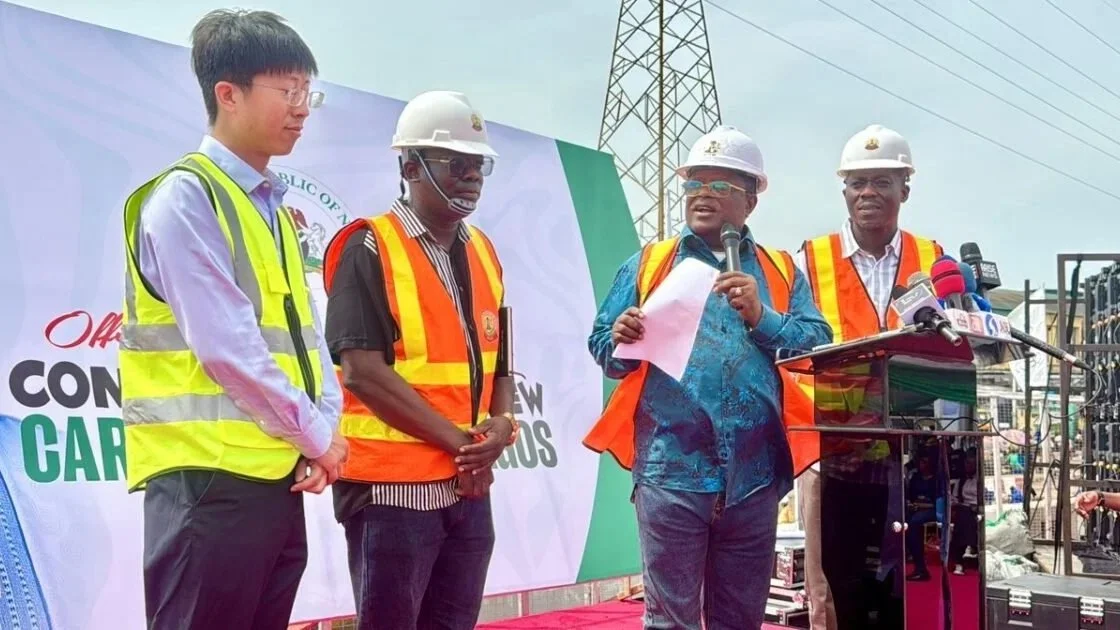
Lagos Set for New Carter Bridge as FG Commences ₦545bn Reconstruction Project
The Federal Government has officially handed over the construction of a new Carter Bridge in Lagos to China Civil Engineering Construction Corporation (CCECC), marking a significant milestone in Nigeria’s ongoing infrastructure renewal programme. The project, valued at approximately ₦545 billion, forms part of broader federal efforts to modernise critical transport infrastructure and address long-standing structural concerns affecting key bridges in Lagos.
/ You Might Also Like /




The handover ceremony took place at Carter Bridge in Lagos Island, where the Minister of Works, Senator David Umahi, confirmed that extensive structural investigations had revealed worsening defects beneath both Carter Bridge and the Third Mainland Bridge. According to the ministry, the reconstruction project is expected to run for 36 months and will include a modern cable-stayed bridge section designed to improve navigation and urban aesthetics.
Structural Concerns Prompt Full Reconstruction
Speaking during the project handover, Umahi explained that technical assessments conducted over several years identified severe underwater structural deterioration affecting the bridge’s support systems.
The minister stated that earlier investigations initiated in 2013 and 2019 had already highlighted structural vulnerabilities. However, additional underwater inspections conducted under the current administration reportedly confirmed that some bridge piles had shifted from their pile caps, significantly increasing safety concerns.
According to Umahi, consultations with local and international bridge experts concluded that rehabilitating the existing bridge would cost nearly twice as much as constructing a new structure.
He noted that the government ultimately opted for a complete reconstruction strategy to improve long-term durability, transportation efficiency, and commuter safety across Lagos Island and the mainland corridor.
The decision reflects growing federal attention on aging transport infrastructure in Lagos, where rapid urbanisation and increasing vehicular traffic continue to place significant pressure on critical road networks.
New Bridge to Include Cable-Stayed Design
A major feature of the new Carter Bridge project is the inclusion of a cable-stayed section intended to support navigational activities and modernise Lagos’ transport infrastructure landscape.
Umahi disclosed that the redesigned structure will include two 105-metre spans forming the cable bridge segment. The ministry also confirmed that the project will incorporate approximately 1.5 kilometres of ramps with a width of 9.3 metres, while the main bridge structure will span about 2.1 kilometres across dual carriageways.
The cable-stayed design represents a notable engineering upgrade compared with the current bridge configuration and aligns with broader efforts to improve the visual and functional quality of public infrastructure in Lagos.
Infrastructure analysts note that cable-stayed bridge systems can enhance maritime movement, reduce structural load distribution challenges, and improve long-term operational resilience when properly maintained.
Project Financing Structure
The Federal Government confirmed that the ₦545 billion project will be financed through a combination of direct government funding and external borrowing arrangements.
According to the Ministry of Works, the Federal Government will provide 30 per cent counterpart financing, while the remaining 70 per cent will be sourced through external financing channels.
The financing structure reflects Nigeria’s increasing reliance on blended funding models to execute large-scale infrastructure projects amid fiscal constraints and rising capital expenditure demands.
Public infrastructure experts have consistently emphasised the importance of sustainable financing mechanisms, transparent procurement processes, and strict project oversight in managing long-term infrastructure investments.
Competitive Procurement and Contractor Selection
Umahi stated that the contractor selection process followed established procurement procedures involving multiple local and international firms.
According to the minister, seven firms were invited to participate in the bidding process, while six companies submitted final bids, including major construction firms operating in Nigeria. The Bureau of Public Procurement reportedly recommended CCECC after technical and commercial evaluations identified the company as the most viable bidder.
CCECC has previously participated in several major infrastructure projects across Nigeria, including rail systems, highways, and bridge-related developments.
The minister directed the contractor to mobilise immediately to the site while assuring the public that the Ministry of Works would conduct monthly monitoring and compliance reviews throughout the project lifecycle.
Strategic Importance of Carter Bridge
Carter Bridge remains one of Lagos’ most critical transport corridors, linking Lagos Island with mainland districts and supporting thousands of daily commuters. Originally constructed during the colonial era, the bridge has undergone multiple upgrades and rehabilitation efforts over several decades.
The bridge forms part of Lagos’ broader network of mainland-island transport infrastructure alongside the Third Mainland Bridge and Eko Bridge, both of which have also undergone rehabilitation and structural maintenance in recent years.
With Lagos continuing to experience rapid population growth and urban expansion, transport infrastructure capacity has become increasingly important to economic productivity, logistics efficiency, and urban mobility management.
Analysts believe the reconstruction of Carter Bridge could reduce long-term maintenance risks while improving traffic management and transportation resilience across the state’s commercial corridors.
Broader Infrastructure Expansion Agenda
The Carter Bridge reconstruction aligns with the Federal Government’s wider infrastructure development strategy focused on transportation, logistics, and urban connectivity.
Recent federal projects include rehabilitation works on the Third Mainland Bridge, expansion of surveillance systems across Lagos transport infrastructure, and ongoing road corridor investments such as the Lagos-Calabar Coastal Highway project.
The government has also continued to support rail infrastructure expansion within Lagos through ongoing investments in urban mobility and transport integration projects.
Infrastructure spending remains central to Nigeria’s economic growth strategy, particularly as authorities seek to improve logistics efficiency, reduce travel time, and stimulate construction sector activity.
Outlook for Lagos Transport Infrastructure
The reconstruction of Carter Bridge represents one of the largest bridge infrastructure investments currently underway in Lagos and could significantly reshape traffic connectivity within Nigeria’s commercial capital once completed.
However, the project’s success will depend heavily on financing stability, effective project management, timely execution, and minimising traffic disruption during construction.
For investors, contractors, and infrastructure stakeholders, the project signals continued federal commitment to large-scale public infrastructure renewal despite broader economic and fiscal pressures.
If delivered within the projected 36-month timeline, the new Carter Bridge could become a major component of Lagos’ evolving urban transport network while strengthening long-term infrastructure resilience across the state.
READ MORE