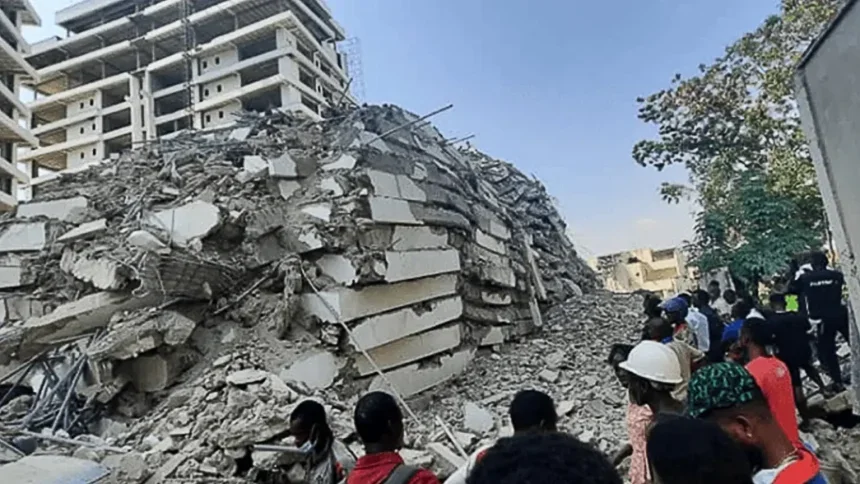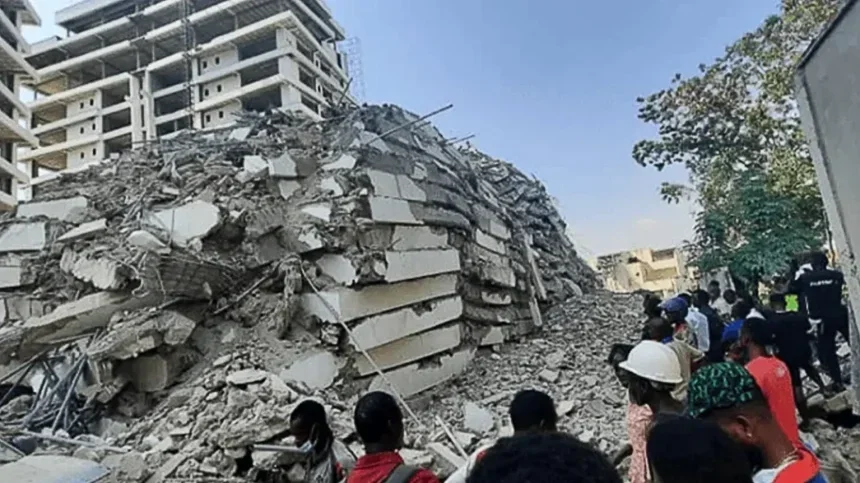
The collapse of a 21-storey building on Gerrard Road, Ikoyi, in November 2021
Several major building collapse cases in Lagos remain before the courts awaiting final judgments, raising fresh concerns about the enforcement of construction regulations and the accountability of developers, building professionals and public officials responsible for ensuring structural safety.
The Lagos State Building Control Agency (LASBCA) has acknowledged that some cases arising from previous building collapses are still undergoing judicial proceedings, leaving questions about how many individuals and organisations have been successfully prosecuted and convicted for construction-related violations.
/ You Might Also Like /




The development has renewed attention on the legal consequences of some of the state's most devastating building failures, including the 2014 Synagogue Church of All Nations collapse, the 2016 Lekki Gardens incident and the November 2021 collapse of a 21-storey building on Gerrard Road, Ikoyi.
These incidents exposed weaknesses in construction supervision, regulatory enforcement and compliance with approved building plans, while claiming lives and destroying property.
The continued absence of publicly established final outcomes in several high-profile cases has raised concerns about whether investigations and criminal charges are translating into effective accountability.
Major Building Collapse Cases Still Await Judicial Outcomes
One of Lagos's most devastating building disasters occurred in September 2014, when a six-storey guesthouse belonging to the Synagogue Church of All Nations collapsed, killing 116 people.
The Lagos State Government subsequently filed criminal charges against the church's trustees, engineers and associated companies over alleged violations of building approval requirements and involuntary manslaughter.
In March 2016, another major collapse occurred at the Lekki Gardens residential development, where 35 people died after a building under construction collapsed.
The state government charged the estate's managing director and other individuals over alleged construction violations, including building beyond approved specifications.
The November 2021 collapse of a 21-storey building on Gerrard Road, Ikoyi, further exposed concerns about regulatory oversight and professional responsibility.
The disaster claimed 45 lives and prompted investigations into the building's design, construction and approval process. A coroner's inquest identified negligence and failures involving regulatory agencies, design and quality control.
Although investigations and criminal proceedings followed some of these incidents, the filing of charges does not establish guilt. Final judicial decisions remain important in determining whether individuals and organisations found culpable will face legal consequences.
LASBCA Says Cases Are Awaiting Final Judgments
The General Manager of LASBCA, Florence Omolola Gbaye, acknowledged the need to strengthen accountability across the construction industry.
She maintained that responsibility for building safety should not rest exclusively on developers, arguing that professionals and government officials also have obligations to ensure that construction activities comply with established standards.
Gbaye described accountability as a shared responsibility involving everyone participating in the construction process.
She also stressed that professionals who compromise construction standards and public officials who fail to discharge their regulatory responsibilities must be held accountable.
When asked whether anyone had been prosecuted and convicted over previous building collapses, she said some cases remained before the courts awaiting final judgments.
Her response, however, did not establish how many individuals had been convicted or provide a detailed breakdown of the outstanding cases.
The lack of publicly available information on the progress and outcomes of individual proceedings continues to make it difficult to assess the effectiveness of enforcement efforts.
Building Safety Requires Accountability Beyond Developers
The cases highlight the different responsibilities involved in ensuring that buildings are safe for construction and occupation.
Developers must ensure that projects comply with approved plans, while architects, engineers, builders and other construction professionals must carry out their duties within established technical and professional standards.
Regulatory agencies also have responsibilities involving building approvals, inspections, compliance monitoring and enforcement against unauthorised construction.
Failures at any of these stages can increase the risk of structural defects and building collapse.
The Ikoyi disaster, in particular, raised questions about how a high-rise development could exceed its approved height and whether regulatory interventions were sufficient to prevent the tragedy.
The continued pursuit of legal proceedings is therefore important not only for determining individual responsibility but also for strengthening confidence in the institutions responsible for regulating the built environment.
Lagos Records a Significant Share of Nigeria's Building Collapses
The accountability debate comes amid continuing concerns about the frequency of building collapses across Lagos.
Figures attributed to the Building Collapse Prevention Guild indicate that Nigeria recorded 817 building collapse incidents between October 1971 and July 27, 2026, with Lagos accounting for 477 of them.
Of the incidents recorded in Lagos, 325 involved occupied buildings, representing 68.1 per cent of the state's total. Another 121 occurred during construction, while 31 involved buildings at the end-of-life stage.
These figures underline the scale of the building safety challenge facing the state and the importance of preventive regulation.
The collapse of occupied buildings is particularly concerning because residents, tenants, traders and other occupants may have little knowledge of structural defects or the risks associated with buildings they use.
Property owners and landlords therefore have a responsibility to maintain their buildings, respond to signs of structural distress and obtain professional assessments where necessary.
Regulatory agencies must also ensure that buildings identified as unsafe receive timely intervention.
Stronger Enforcement Needed to Restore Confidence in the Property Market
For Lagos's property market, the outcome of building collapse cases carries implications beyond the criminal justice system.
Investors and prospective homeowners depend on reliable building standards, effective regulatory institutions and clear accountability mechanisms to protect their investments.
Where developers can disregard approved plans or construction professionals compromise technical standards without meaningful consequences, confidence in the wider property market can weaken.
Stronger enforcement can help discourage unauthorised construction, encourage professional compliance and improve the protection of occupants and property owners.
However, accountability must extend beyond prosecution after a disaster. Regular inspections, proper documentation, competent supervision, quality materials and timely intervention are necessary to prevent structural failures before they occur.
The challenge facing Lagos is to ensure that investigations into building collapses produce clear legal outcomes while strengthening the regulatory systems responsible for preventing future tragedies.
For families affected by past disasters, the demand for justice remains important. For the wider property market, the ability of authorities to enforce building regulations consistently will be critical to protecting lives, property values and investor confidence.
READ MORE