The Federal Mortgage Bank of Nigeria’s Ijarah Lease-to-Own mortgage
The Federal Mortgage Bank of Nigeria (FMBN) has introduced a non-interest mortgage product that allows eligible National Housing Fund (NHF) contributors to acquire homes through a lease-to-own arrangement, offering financing of up to ₦50 million over a period of up to 30 years.
The product, known as Ijarah Muntahia Bittamleek (IMBT), was launched on 27 October 2026 in Kano. It allows beneficiaries to occupy a property through agreed rental payments while FMBN retains ownership until the customer fulfils the contractual obligations required for the transfer of title.
/ You Might Also Like /




The scheme provides an alternative to conventional interest-based mortgages and is available to eligible NHF contributors regardless of their religion or location. Its introduction expands the financing options available to Nigerians seeking to purchase homes through the formal mortgage market
How FMBN’s Non-Interest Mortgage Works
Unlike a conventional mortgage, where a lender advances money to a borrower who repays the principal with interest, the FMBN product uses a lease-to-own structure.
Under the Ijarah Muntahia Bittamleek model, FMBN acquires and retains ownership of the property while leasing it to the beneficiary. The customer makes agreed rental payments throughout the contract period and becomes eligible for ownership transfer after meeting the stipulated obligations.
The arrangement therefore bases payments on the use of an identified property rather than interest charged on a loan.
FMBN's official product information lists the following key terms:
Maximum financing: ₦50 million.
Financing period: One to 30 years, subject to eligibility and applicable conditions.
Annual rental rate: 7% of the property price.
Minimum initial contribution: 0%.
Ownership: FMBN retains ownership during the lease, with transfer following completion of the agreed payments.
The bank also provides for a one-month moratorium before rental payments commence under the current pilot product. Applicants should review the approved offer and contractual documents because the payment schedule and other obligations depend on the terms of the facility.
Who Can Benefit from the Scheme?
The product targets Nigerians who want to own homes but prefer an alternative to conventional interest-based mortgage financing.
According to FMBN's current product information, applicants for the available NHF Ijarah facility must meet specific eligibility requirements, including:
Active National Housing Fund contributions for at least six months.
First-time use of an NHF housing finance facility.
Verifiable income to support the agreed rental payments.
Compliance with the bank's identity verification, documentation and affordability assessments.
The scheme is not restricted to Muslims or any particular religious community. Its non-interest structure may appeal to people with religious or ethical objections to interest-based borrowing, as well as other Nigerians seeking alternative mortgage arrangements.
However, meeting the initial requirements does not guarantee approval. FMBN must assess the applicant's financial circumstances, supporting documents and suitability for the available property.
How to Apply for the FMBN Non-Interest Mortgage
FMBN has established an online platform through which prospective applicants can explore the product, check their eligibility and begin the application process.
The application journey involves several stages:
Check eligibility: Applicants should have their NHF contributor number available and verify their details through the official platform.
Create an account: Eligible applicants can establish secure access using their contact details and the email address registered with their NHF records.
Select a property: Applicants can review properties available under the scheme through their accounts.
Submit an application: They must provide the requested identity, income and NHF contribution documents.
Complete the assessment: FMBN reviews the application and may request additional information before making a decision.
Review the offer: Approved applicants should examine the rental schedule, contractual obligations and ownership-transfer conditions before accepting the facility.
Prospective beneficiaries can begin through the official FMBN Non-Interest Mortgage Portal.
FMBN clarifies that registering interest or verifying an NHF number does not amount to mortgage approval or guarantee property allocation.
Kano Estate Provides the Pilot for the Scheme
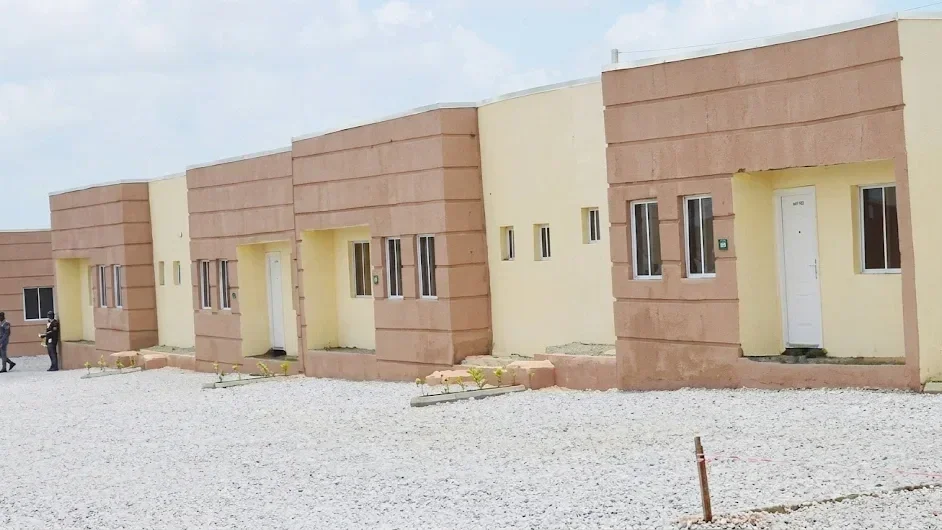
FMBN selected Kano State for the initial implementation of the non-interest mortgage product. The bank commissioned the FMBN-Ijarah-01 Estate in Bichi, where it handed over keys to the first beneficiaries during the product launch on 27 October 2026.
Developed by AYAB Construction Company, the estate comprises two- and three-bedroom bungalows with supporting infrastructure and essential facilities.
The pilot project provides an initial demonstration of how the lease-to-own arrangement can translate into completed homes for beneficiaries.
At the launch, the Minister of Housing and Urban Development, Muttaqha Rabe Darma, urged FMBN to expand the product beyond Kano to cities including Lagos, Port Harcourt, Enugu, Ibadan, Maiduguri, Sokoto and Abuja.
He identified simplicity of application, faster processing, transparency and nationwide delivery as important measures of the scheme's success.
The bank's Managing Director, Shehu Usman Osidi, said the product forms part of its efforts to broaden access to homeownership and accommodate the different financing preferences of NHF contributors.
What the Scheme Means for Nigeria's Housing Finance Market
The introduction of the non-interest mortgage product expands the range of financing arrangements available within Nigeria's formal housing market.
Conventional mortgage products remain the dominant financing route for many prospective homeowners. However, alternative arrangements can attract households that have previously avoided interest-based borrowing.
The scheme also creates an opportunity to widen participation in the National Housing Fund mortgage system. Its reach, however, will depend on more than the availability of financing.
Property prices, household income, the supply of qualifying homes and the cost of developing housing estates will influence how many contributors can use the facility.
The ₦50 million financing ceiling may provide access to a range of properties, but affordability will depend on the price and location of available homes, as well as the applicant's capacity to meet the agreed rental payments.
FMBN will also need to expand partnerships with credible developers to ensure that suitable properties are available beyond the initial Kano pilot.
Ultimately, the scheme's contribution to housing delivery will depend on how effectively the bank converts its financing framework into accessible homes for eligible Nigerians.
READ MORE