Environmental advocacy group Spaces for Change (S4C) has called on President Bola Tinubu to sign the National Oil Spill Detection and Response Agency (NOSDRA) Amendment Bill 2026 into law following its passage by the Senate.
/ You Might Also Like /




The proposed legislation seeks to introduce criminal liability and higher financial penalties for environmental offences, particularly oil spills and pollution linked to petroleum operations. The group says stronger sanctions could improve accountability among oil and gas operators, but argues that effective enforcement will also require greater funding and operational independence for NOSDRA.
S4C Executive Director Victoria Ibezim-Ohaeri made the appeal in Lagos, highlighting the continuing environmental and economic effects of oil pollution on communities in the Niger Delta.
Senate Amendment Seeks Tougher Penalties for Oil Pollution
The Senate passed the NOSDRA Amendment Bill 2026 after considering and adopting a report from its Committee on Environment at plenary.
The proposed changes seek to strengthen the agency’s enforcement powers by introducing criminal penalties and higher financial sanctions for environmental violations in the petroleum industry.
During consideration of the bill, lawmakers argued that existing penalties had not provided sufficient deterrence against oil spills and pollution. They also highlighted the damage these incidents cause to ecosystems and the livelihoods of communities that depend on fishing and farming.
The legislation is expected to provide a stronger legal framework for holding operators accountable for environmental damage if it receives presidential assent.
S4C Raises Concerns Over NOSDRA’s Independence
While supporting the proposed amendment, Spaces for Change warned that tougher penalties would not achieve their intended purpose without improvements to NOSDRA’s operational capacity.
The group identified the agency’s reliance on oil and gas companies for logistics, facilities and other resources during investigations as a potential threat to regulatory independence.
According to S4C, dependence on companies under investigation could restrict access to evidence, delay investigations and undermine public confidence in the agency’s findings.
The organisation therefore urged the Federal Government to provide NOSDRA with predictable funding, independent laboratory facilities, monitoring and sampling equipment, trained technical personnel and reliable transportation.
It also called for transparent procedures covering evidence collection, analysis and reporting to strengthen the credibility of oil spill investigations.
Oil-Producing Communities Face Environmental and Economic Costs
S4C linked the proposed amendment to the continuing environmental challenges facing oil-producing communities, particularly in the Niger Delta.
The group said oil pollution has contaminated water sources, destroyed farmland and damaged fishing livelihoods, leaving affected communities to bear significant environmental and economic costs.
These concerns also featured at the fifth National Extractive Dialogue, held in Port Harcourt on 29 and 30 September 2026. S4C organised the event in partnership with the Nigeria Extractive Industries Transparency Initiative (NEITI) and NOSDRA.
Participants examined gaps in environmental accountability, including weaknesses in pollution investigations and the settlement of outstanding liabilities in the petroleum sector.
The discussions highlighted the need for stronger regulatory institutions capable of independently investigating incidents, establishing responsibility and ensuring that operators meet their environmental obligations.
Presidential Assent Remains the Next Step
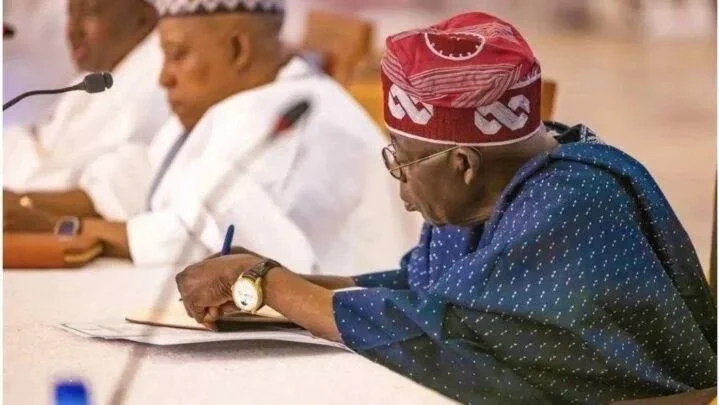
The proposed NOSDRA amendment now requires presidential assent before it can become law. S4C has urged President Tinubu to sign the bill without unnecessary delay, arguing that stronger sanctions would help improve accountability in the petroleum industry.
However, the group maintains that legislative changes must go hand in hand with adequate funding, technical resources and institutional independence for NOSDRA.
The outcome will have implications for environmental regulation in oil-producing areas, where pollution can affect land, water resources, livelihoods and the long-term viability of communities.
READ MORE