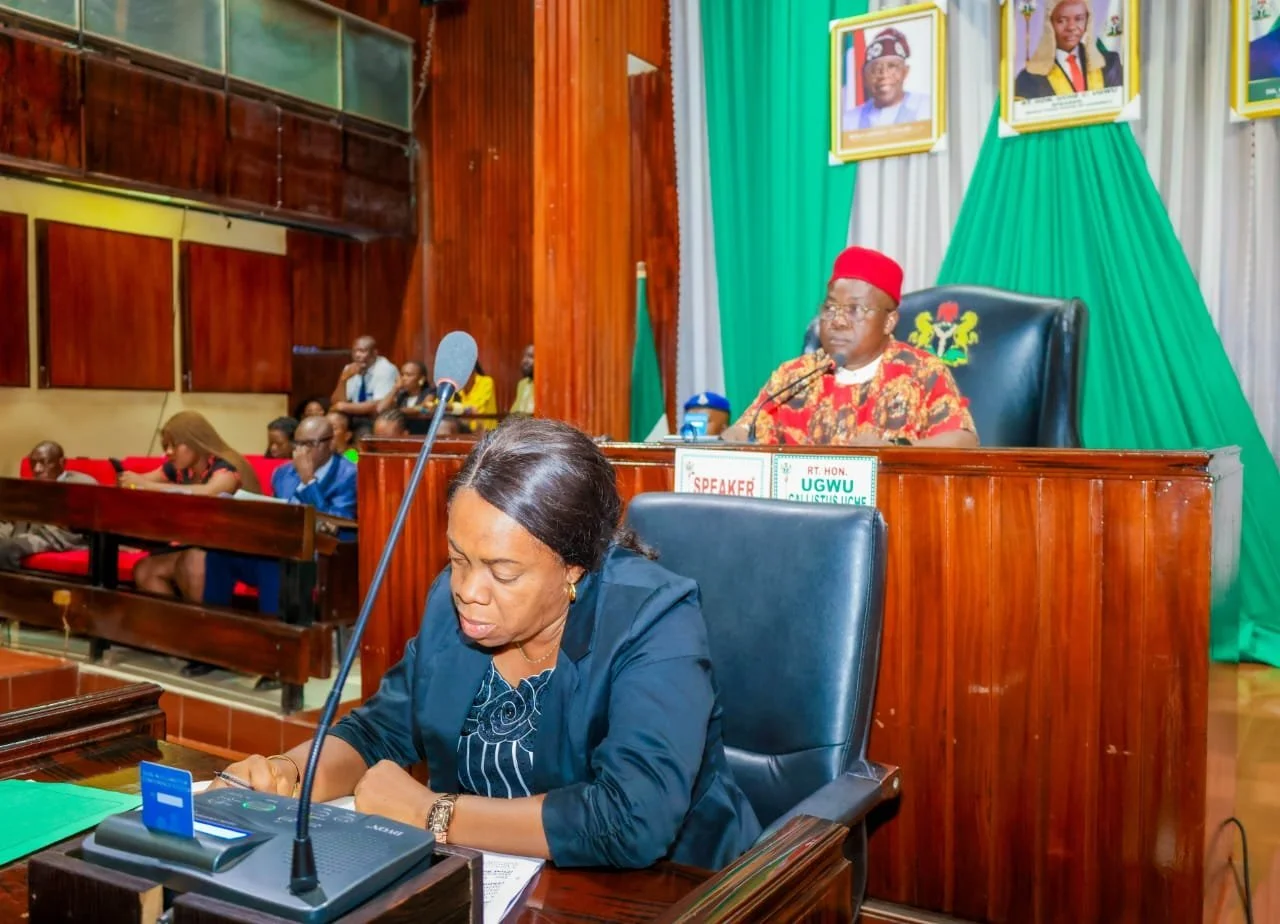
Enugu State lawmakers have passed a proposed tenancy law that would restrict rent increases
The Enugu State House of Assembly has passed a bill seeking to limit rent increases to 2 per cent after every four years, while introducing restrictions on agency, legal and caution fees charged to tenants. The proposed legislation, passed on November 17, 2026, also provides for rent increases of up to 10 per cent where landlords carry out substantial and verifiable renovations.
/ You Might Also Like /




The bill seeks to amend the state's Landlord and Tenant Law and address complaints about rising accommodation costs, arbitrary rent increases and excessive charges imposed on people seeking to rent properties. It now awaits the assent of Governor Peter Mbah before its provisions can become enforceable law.
Sponsored by Okey Mbah, who represents Nkanu East Constituency, the legislation followed consultations and a review by a special committee of the Assembly. Lawmakers said the proposed changes would strengthen tenant protections and establish clearer rules governing landlord-tenant relationships across the state.
Enugu Proposes Four-Year Restriction on Rent Increases
Under the proposed law, landlords would have to wait at least four years before increasing rent. Any permitted increase after that period would be capped at 2 per cent of the prevailing rent.
The bill also provides an exception for landlords who undertake reasonable, substantial and verifiable renovations. Such property owners may qualify for rent increases of up to 10 per cent, subject to the conditions set out in the legislation.
The proposed cap would limit how frequently landlords can review rents and the size of increases they can impose. It would not, however, automatically reduce existing rents or guarantee that tenants will pay less when renewing their agreements.
For example, if a property currently attracts annual rent of ₦1 million, a 2 per cent increase would amount to ₦20,000, bringing the annual rent to ₦1.02 million after the applicable four-year period. The renovation exception could allow a higher increase where the landlord meets the bill's requirements.
Bill Seeks to Regulate Agency, Legal and Caution Fees
Beyond rent increases, the legislation proposes limits on additional charges that tenants often face when securing accommodation.
Under the proposed provisions:
Agency fees would be capped at 5 per cent of annual rent.
Legal fees would be limited to 10 per cent of annual rent.
Caution fees would also be capped at 10 per cent and made refundable, subject to the condition of the property when the tenant leaves.
The bill also proposes a bond account under the custody of the State Attorney-General to safeguard caution fees for eventual refunds. The refund process would take account of an assessment of the property's fittings and fixtures to establish whether the tenant caused any damage.
The provisions respond to complaints about the difference between advertised rent and the total amount prospective tenants must pay before occupying a property.
Presenting the committee's report, Mbah cited examples of properties advertised at ₦300,000 annually that attracted total payments of ₦950,000, while some apartments with annual rents of ₦500,000 required payments of up to ₦1.4 million.
The proposed fee limits aim to reduce these additional costs and make the process of securing accommodation more transparent.
Enugu Assembly Also Seeks Stronger Tenant Protection
The proposed amendment addresses broader tenancy practices, including arbitrary charges and unlawful eviction. Assembly Speaker Uche Ugwu said the legislation would provide safeguards for residents facing disputes with landlords and estate agents.
The committee responsible for reviewing the bill comprised members of the House Committees on Housing and Investment, Public Petitions, Ethics and Privileges, and Judiciary.
The bill passed its second reading on March 11, 2026, and underwent a public hearing on March 26, 2026. Lawmakers subsequently considered the committee's recommendations before passing the legislation at its third reading on November 17.
The motion for passage was moved by Iloabuchi Abugu, representing Nkanu West Constituency, and seconded by Deputy Speaker Jane Eneh, who represents Awgu North Constituency.
Governor Mbah had previously indicated support for action to address rising rents in the state. The bill's passage now places the next step with the governor, whose assent is required before the proposed provisions become law.
Landlords Raise Concerns Over the Proposed Rent Cap
The proposed restrictions have also drawn objections from property owners who argue that a fixed 2 per cent ceiling may not reflect the economic conditions affecting property ownership and maintenance.
Some landlords have questioned how they would meet rising expenses when electricity tariffs, fuel prices, building materials and maintenance costs can increase by more than the proposed rent limit.
One property owner, Onyekwere Johnson, described the proposed cap as unrealistic and difficult to enforce under prevailing economic conditions. He argued that regulating rent increases without addressing the wider cost pressures facing property owners could place an uneven burden on landlords.
These concerns highlight a central challenge for rent regulation: protecting tenants from sharp increases while preserving incentives for property owners to maintain and invest in rental housing.
The bill's renovation exception recognises that landlords may need to recover some costs associated with substantial property improvements. However, the effectiveness of that provision will depend on clear standards for determining what qualifies as substantial renovation and how authorities verify such work.
What the Proposed Law Could Mean for Enugu's Rental Market
If Governor Mbah assents to the bill, Enugu would introduce a more restrictive framework for rent reviews and additional tenancy charges.
For tenants, the proposed rules could improve predictability by limiting how frequently landlords increase rent and reducing the upfront cost of securing accommodation. Refundable caution fees could also provide an additional safeguard against disputes over deposits.
For landlords and property investors, however, the rent cap could affect rental income growth, particularly where operating and maintenance expenses rise faster than permitted increases. Investors may also assess how the restrictions affect the financial returns on new rental developments.
The impact will depend partly on enforcement, the supply of rental properties and the availability of clear procedures for resolving disputes between landlords and tenants.
Rent regulation alone cannot resolve the underlying shortage of affordable housing. Increasing the supply of homes, improving access to development finance and reducing construction costs remain important to easing pressure on rents over the long term.
The proposed Enugu legislation therefore represents an attempt to regulate the relationship between landlords and tenants, but its practical effect will depend on the final law, implementation arrangements and the response of property owners.
READ MORE