Enugu Land Dispute Deepens as Family Accuses Federal Polytechnic of Taking 40 Acres
Ancestral Land Dispute Raises Fresh Questions Over Development in Enugu
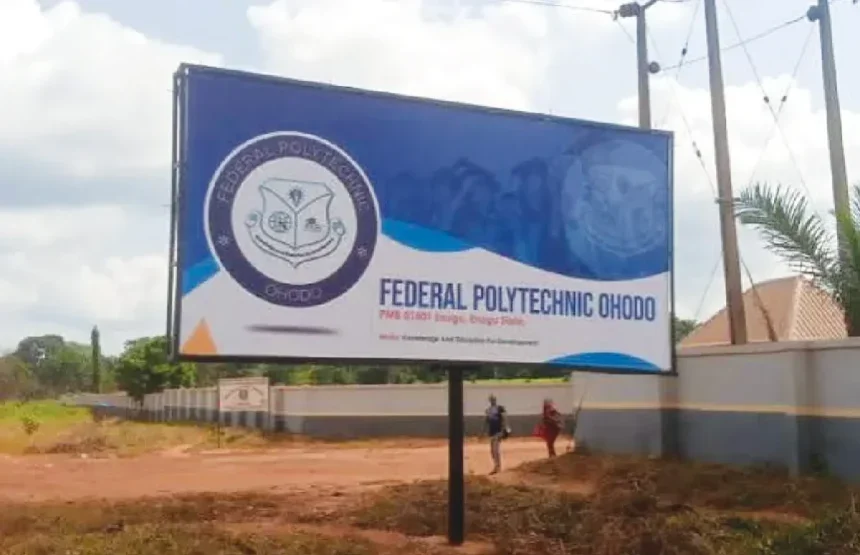
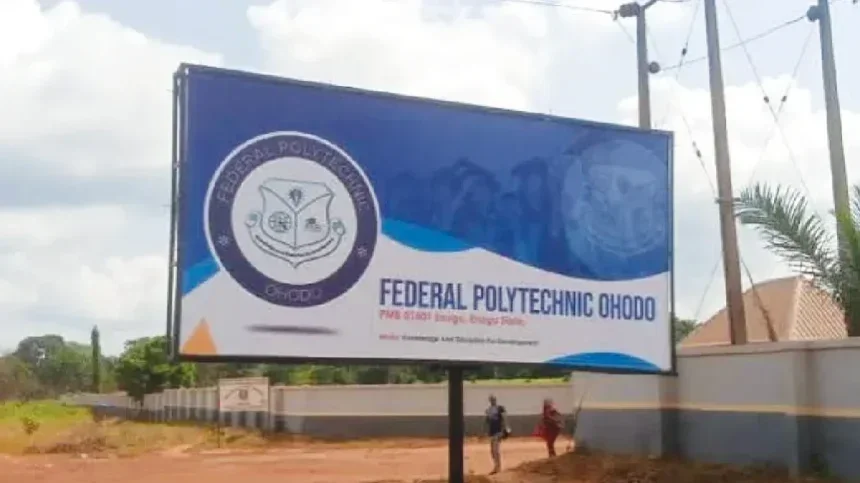
A land dispute has emerged in Owerre Ohodo, Igbo-Etiti Local Government Area of Enugu State, after the Umu Ogbonogu family accused the Federal Polytechnic Ohodo and its officials of taking about 40 acres of ancestral land without consultation or compensation.
/ You Might Also Like /




The family also alleges that fencing carried out on the disputed property affected an ancestral shrine and burial ground located on the land.
The claims were made in Enugu by the family head and President General of Owerre Autonomous Community, Chief Ikechukwu Asogwa, who said the family discovered that the property had been barricaded without prior discussions with its members.
The dispute places land ownership, acquisition procedures and compensation at the centre of questions surrounding development in the area.
Family Challenges Land Acquisition Process
Asogwa said land ownership in Ohodo is based primarily on family and ancestral ownership rather than communal ownership.
He alleged that people who were not members of the Umu Ogbonogu family signed documents relating to the disputed property and that the family was not consulted before a memorandum of understanding concerning the land was allegedly executed.
The family is seeking clarification over who authorised the transaction, which documents were used and whether the acquisition complied with the appropriate legal and administrative procedures.
The allegations have not been independently established.
Ancestral Shrine and Burial Ground Add to Dispute
The disagreement extends beyond questions of ownership and compensation.
The family says the disputed land contains an ancestral shrine and burial ground that were affected when the property was fenced.
A family member appealed for the fence to be temporarily removed to allow the family to rebury its ancestors and relocate the shrine.
The family said it was willing to negotiate if the institution genuinely required the land for development.
That position suggests the dispute is not necessarily centred on opposition to institutional development itself, but on how the land was acquired and whether affected families were properly consulted and compensated.
Polytechnic Rector Declines Comment
The Rector of the Federal Polytechnic Ohodo, Dr Ediri Emmanuel Agada, declined to comment when contacted by the publication.
He subsequently became unavailable by telephone.
The lack of a response from the institution leaves some of the family's allegations unresolved.
Other community representatives, however, provided a different account of the acquisition process.
Community Leaders Give Different Account
The traditional ruler of Ohodo, Igwe David Asogwa, acknowledged that the disputed land belonged to private families rather than the community collectively.
However, he defended the acquisition process, saying government officials had instructed community representatives to sign the relevant documents.
A former President General of Ohodo, Alphonsus Ugwuafia, also confirmed that he signed documents after being invited by the government in his capacity as community leader.
The differing accounts underscore the importance of establishing the documentary and legal history of the property before determining the validity of the competing claims.
Compensation Remains a Central Question
One of the major issues raised by the dispute is whether affected families were properly compensated for the land and any economic assets located on it.
The traditional ruler said individuals seeking compensation for economic trees and crops should approach the Enugu State Government or pursue legal remedies.
For landowners, however, compensation is only one part of the broader issue.
They also need clarity over the authority under which land is acquired, the identity of the acquiring institution, the purpose of the acquisition and the procedures followed before possession is taken.
Land Administration Remains Critical to Development
The dispute highlights a recurring challenge within Nigeria's property market: development projects can become contentious when land ownership and acquisition records are unclear.
This is particularly important in areas where customary and family ownership structures remain significant.
Without clear documentation and transparent acquisition processes, institutional, residential or commercial developments can face disputes that delay projects, increase costs and create uncertainty for investors.
Land administration therefore remains a critical component of housing and real estate development, alongside access to finance and infrastructure.
Enugu Has Faced Other Land-Use Disputes
The Ohodo dispute comes against a broader backdrop of land-use disagreements in Enugu.
Earlier this year, NHM reported a separate dispute involving the Amauzam-Ugbawka and Agbani communities over alleged conversion of portions of land associated with a Girls Special Science School into a housing development.
That dispute similarly raised questions about ancestral ownership, the original purpose of acquired land, compensation and the procedures required before government-owned or institutionally controlled land is repurposed for development.
The two cases are not the same and involve different parties and circumstances, but together they demonstrate the importance of transparent land administration in Enugu's expanding development environment.
Land Reform and Investment Need Stronger Documentation
Enugu has also introduced reforms aimed at making its land administration system more predictable.
The state government previously announced a 60% reduction in land-related rates, a unified land-use charge and measures to eliminate illegal levies, alongside efforts to digitise land records through the Enugu State Geographic Information System.
Such reforms can improve the investment environment, but their effectiveness ultimately depends on the quality of title documentation, dispute-resolution mechanisms and clarity over the rights of existing landowners.
The Ohodo dispute reinforces the importance of these safeguards as institutional and private development expands across the state.
Development Must Balance Institutional Needs and Land Rights
Nigeria needs land for schools, housing, infrastructure and other public-interest developments.
But the pursuit of development does not eliminate the need for transparent acquisition procedures.
Where land is privately or customarily owned, stakeholders need to establish ownership, follow legally recognised acquisition processes and address compensation before development proceeds.
Failure to do so can create disputes that undermine the very development projects intended to serve communities.
Family Seeks Administrative and Legal Resolution
The Umu Ogbonogu family says it has petitioned the Office of the National Security Adviser over the dispute and wants the matter resolved through administrative and legal channels.
Its demands include clarification of the ownership and acquisition documents, investigation of the process, removal of the fence and a formal procedure for any proposed acquisition.
The family has also indicated that it remains open to negotiation if the land is genuinely required for institutional development.
Outlook
The 40-acre dispute involving the Umu Ogbonogu family and Federal Polytechnic Ohodo highlights the importance of transparent land acquisition as institutional development expands in Nigeria.
The central issues remain unresolved: who legally owned the land, who authorised its acquisition, whether the appropriate documents were executed, and whether affected families were entitled to compensation.
Until those questions are established through the relevant administrative or legal processes, the competing claims should be treated as allegations rather than settled facts.
For Nigeria's housing and real estate sector, the wider lesson is significant. Land remains the foundation of development, and unclear ownership, weak documentation and disputed acquisition procedures can undermine housing projects, institutional developments and private investment alike.
Strengthening land administration, improving access to title records and ensuring transparent compensation processes will therefore remain essential to creating a more predictable environment for property development in Enugu and across Nigeria.
READ MORE