Dangote Cautions on Economic Impact of Middle East War on Nigeria
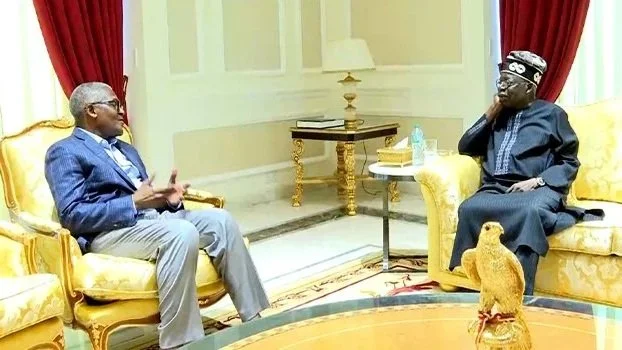
Africa’s richest industrialist, Aliko Dangote, has called for urgent de-escalation of the ongoing Middle East conflict following a meeting with President Bola Ahmed Tinubu. The discussions focused on rising global oil market volatility and its potential economic impact on Nigeria and the broader African region.
Dangote Warns of Economic Ripple Effects
Speaking after the meeting in Lagos, Dangote emphasised that although Nigeria is not directly involved in the conflict, the globalised nature of energy markets means the country will inevitably feel the impact.
He warned that sustained tensions could drive oil prices higher, intensifying economic pressure on African economies already grappling with high debt levels and limited fiscal buffers.
Dangote noted that rising energy costs would cascade across sectors, affecting households, small businesses, and industrial operations that rely heavily on fuel for power generation.
/ You Might Also Like /




Oil Market Volatility Intensifies Global Risks
The Middle East conflict has already triggered significant disruptions in global energy markets. Oil prices have surged amid fears of supply interruptions, particularly around key transit routes such as the Strait of Hormuz.
This volatility has increased inflation risks globally, with countries facing higher fuel costs and broader economic uncertainty. For Nigeria, where fuel prices directly influence transport and production costs, the impact is particularly pronounced.
Implications for Nigeria’s Economy
Dangote highlighted that rising oil prices would translate into higher fuel costs domestically, further straining consumers and businesses. He stressed that governments may struggle to offset these pressures through wage increases, leaving households to absorb the full impact.
He added that sectors dependent on fuel—ranging from small-scale enterprises to manufacturing—would face rising operational costs, potentially slowing economic activity.
The warning aligns with recent trends in Nigeria, where petrol price increases have already intensified cost-of-living pressures.
Potential Shift in Work and Energy Use
Dangote also pointed to potential global adjustments to rising energy costs, including reduced work schedules and increased remote work, similar to measures adopted during the COVID-19 pandemic.
He noted that some countries are already exploring energy-saving strategies to mitigate the impact of rising fuel prices, suggesting that prolonged conflict could force similar adjustments in other economies.
Tinubu’s Diplomatic Engagements and Economic Outlook
During the meeting, Dangote commended President Tinubu’s recent international engagements, particularly efforts to secure infrastructure investment and strengthen economic partnerships.
He referenced a £746 million agreement aimed at improving Nigeria’s port infrastructure, describing it as a signal of renewed investor confidence in the country’s economic prospects.
Dangote’s meeting with President Tinubu underscores the growing concern over the global economic implications of the Middle East conflict. While Nigeria remains geographically removed from the crisis, its exposure to global oil market dynamics makes it vulnerable to price shocks. The call for de-escalation reflects the urgency of stabilising energy markets to prevent further strain on African economies already facing significant fiscal and inflationary pressures
READ MORE