CBN Prepares to Manage Election Driven Liquidity Risks Ahead of 2027

CBN prepares for election-related liquidity risks
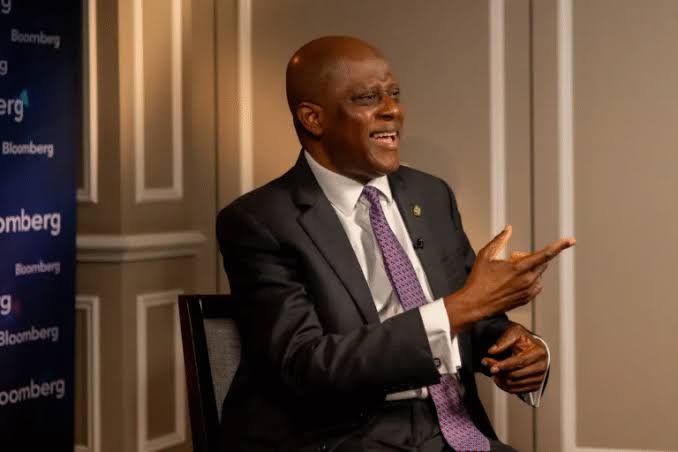
The Central Bank of Nigeria (CBN) is preparing to manage potential liquidity pressures that could arise from increased election-related spending ahead of the 2027 general elections, Governor Olayemi Cardoso has said.
Cardoso disclosed this while briefing journalists on the outcome of the CBN’s 307th Monetary Policy Committee (MPC) meeting in Abuja, where the apex bank also reduced its Monetary Policy Rate (MPR) from 26.5 per cent to 23 per cent.
/ You Might Also Like /




The governor said the CBN had analysed different scenarios around election-period spending and was prepared to deploy appropriate monetary policy instruments if excess liquidity emerged in the financial system.
CBN monitors currency circulation and banking liquidity
Cardoso said the central bank had carried out extensive analysis of how financial-market conditions could change during an election period.
Rather than relying on assumptions about the scale or direction of election-related spending, he said the CBN would monitor developments in real time and respond according to conditions in the financial system.
The indicators under watch include currency in circulation, banking-system liquidity, monetary aggregates and foreign exchange demand.
The CBN governor said the bank would proactively deploy available instruments to mop up excess liquidity if necessary, adding that the institution did not intend to be caught unprepared by election-related financial pressures.
The preparations come as Nigeria moves towards the 2027 general elections, with the Independent National Electoral Commission having revised the election timetable and fixed the presidential and National Assembly elections for January 16, 2027.
INEC has also indicated that it requires ₦873.78 billion to conduct the 2027 elections, compared with ₦313.4 billion released for the 2023 elections.
CBN cuts MPR to 23 per cent
Cardoso's comments followed the MPC's decision to reduce the benchmark interest rate by 350 basis points, taking the MPR from 26.5 per cent to 23 per cent.
The committee also recalibrated the Standing Facilities Corridor to +50/-300 basis points around the MPR while retaining the Cash Reserve Requirement at 45 per cent for deposit money banks and 16 per cent for merchant banks.
The rate reset came after three consecutive months of moderating headline inflation. Nigeria's headline inflation stood at 15.39 per cent in August 2026, while the economy recorded real GDP growth of 4.43 per cent in the second quarter.
The CBN has described the latest monetary-policy adjustment as an operational reset intended to improve policy transmission and align the benchmark rate more closely with prevailing financial-market conditions.
Election liquidity could influence financial conditions
Election-related spending can affect the amount and distribution of money circulating within the economy. Increased government, political and private-sector spending can influence banking-system liquidity, demand for foreign exchange and short-term financial-market conditions.
For the CBN, managing these pressures will be important as it balances the need to support economic activity with its objective of maintaining price and financial stability.
The timing is particularly significant because the apex bank has just lowered its benchmark interest rate after an extended period of tight monetary conditions.
While the rate reduction could ease financing conditions, increased liquidity could also create additional inflationary or foreign-exchange pressures if it grows faster than economic activity and available foreign-exchange supply.
Foreign reserves provide additional buffer
Nigeria's foreign reserves have also strengthened considerably ahead of the election period.
Cardoso said the country's reserves had crossed $55 billion, their highest level in more than 18 years. The governor attributed the improvement to consistency in the CBN's approach as well as diaspora contributions.
Stronger reserves provide a larger external buffer as the CBN monitors foreign-exchange demand and potential pressures on the naira.
However, reserve accumulation does not eliminate the possibility of short-term volatility. Election-related demand, global oil prices, capital flows and domestic economic conditions will continue to influence the foreign-exchange market.
What the liquidity outlook means for housing finance
The CBN's approach is relevant to Nigeria's housing market because liquidity and interest rates directly influence the cost and availability of credit.
Mortgage lenders and property developers depend on financial institutions for funding, while construction companies often require substantial working capital to purchase land, materials and equipment and to maintain projects until completion.
If lower monetary-policy rates are transmitted through the banking system, developers could eventually benefit from lower financing costs. Mortgage borrowers could also see improved affordability if mortgage rates decline.
However, the MPR reduction does not automatically mean mortgage and construction-loan rates will fall by the same 350 basis points.
Banks continue to price loans according to their own funding costs, credit risks, liquidity positions and operating expenses. The extent to which the recent policy reset reaches the property market will therefore depend heavily on monetary-policy transmission.
The Centre for the Promotion of Private Enterprise has already urged banks to reduce lending rates following the CBN's 350-basis-point adjustment, arguing that lower borrowing costs could support investment and activity in the real sector.
Construction sector could benefit from lower financing costs
For property developers, financing costs form a significant component of project economics.
High interest rates can increase the cost of construction finance, particularly for projects with long development cycles. They can also make it more difficult for developers to structure affordable payment plans for prospective buyers.
A sustained reduction in financing costs could therefore improve the viability of some residential, commercial and infrastructure projects.
However, finance is only one component of development costs. Cement, steel, diesel, transportation, labour, land and foreign-exchange movements continue to influence construction expenses.
The impact of monetary-policy changes on housing affordability will therefore depend on the combined movement of financing and construction costs.
Property investors will watch the rate environment
The changing interest-rate environment could also influence how investors allocate capital between financial assets and real estate.
Treasury bill yields have already been declining in recent auctions, with the 364-day Treasury bill rate falling to 16.62 per cent at the September 9 auction. The CBN subsequently offered another ₦500 billion in Treasury Bills at its final Q3 auction on September 23.
If yields on fixed-income instruments continue to moderate, some investors may reassess the relative attractiveness of alternative assets, including real estate.
For the property market, however, investment decisions will also depend on rental yields, capital appreciation prospects, liquidity, development costs and the wider economic outlook.
CBN faces balancing act ahead of 2027
The CBN is entering the election period with a significantly different monetary environment from previous years.
The MPR has fallen to 23 per cent, inflation has moderated, economic growth has strengthened and foreign reserves have crossed $55 billion. At the same time, the central bank is preparing for possible liquidity and foreign-exchange pressures associated with increased election-related spending.
For the housing and real estate sector, the key issue will be how these monetary conditions translate into actual borrowing costs and access to finance.
Developers will be watching lending rates and liquidity conditions, while mortgage providers and prospective homeowners will be monitoring whether the recent policy reset eventually improves access to longer-term housing finance.
The CBN's planned monitoring of election-related liquidity means monetary conditions could remain responsive to developments through the election cycle. For Nigeria's property market, the resulting cost and availability of finance will remain an important factor in determining investment, construction activity and housing delivery.
READ MORE