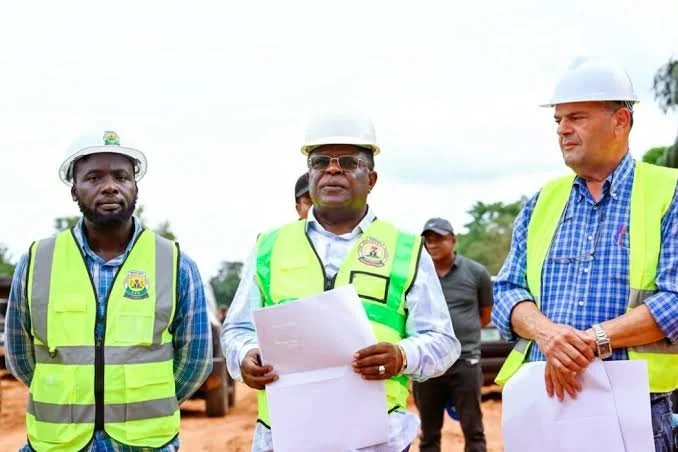
Umahi inspects the Calabar-Abuja Superhighway
The Federal Government has ordered contractors working on the Calabar-Abuja Superhighway to halt the demolition or disturbance of buildings along the current project alignment pending a review of the route.
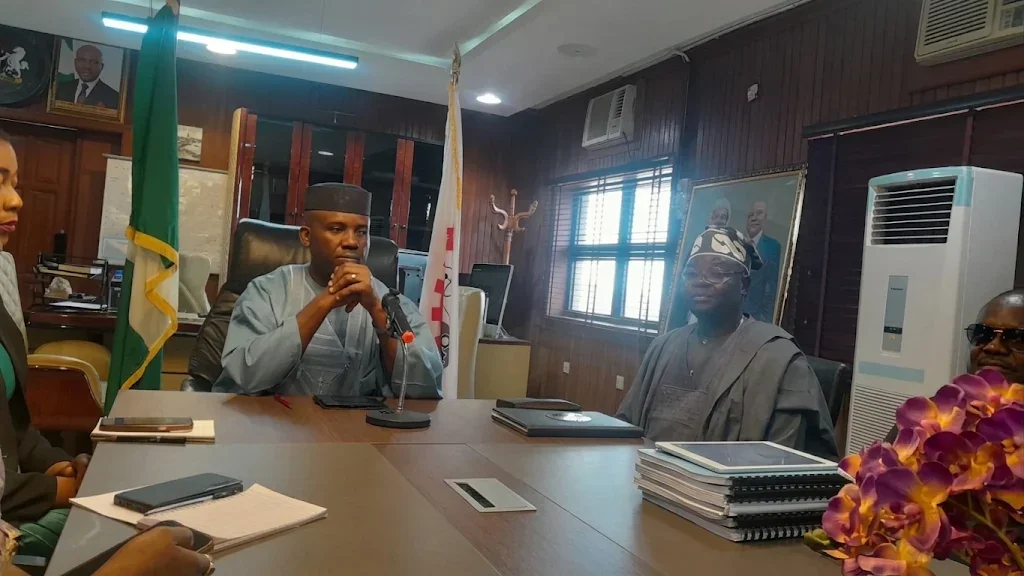
Minister of Works David Umahi issued the directive during an inspection of Phase Two of the highway at Ado in Benue State, where he also ordered contractors to accelerate construction across multiple sections of the project.
/ You Might Also Like /




The directive introduces a temporary pause on the impact of the project on existing properties while the government considers whether sections of the route should be realigned to minimise disruption to built-up areas.
Government Orders Review of Highway Alignment
Umahi directed contractors not to demolish buildings even where they fall within the current alignment.
He said the government would review the route and make adjustments where necessary, with contractors expected to work around affected buildings until the review is completed.
The approach signals a shift towards adjusting infrastructure alignment around existing development where technically feasible, rather than proceeding immediately with demolition.
For communities along the corridor, the decision could reduce the immediate threat to existing residential and commercial properties while the government evaluates the engineering and land-use implications of the route.
₦683bn Section Two Moves Into Faster Construction
The second section of the project covers 173 kilometres and is valued at ₦683 billion, while Section One has a reported value of ₦454 billion.
Umahi said the contractor handling Section Two had opened the first element of its initial eight-kilometre stretch, while engineers continued working on challenges associated with the Ado Bridge.
He directed the contractor to open at least three sections of the first element simultaneously to increase the pace of construction.
The ministry is therefore attempting to maintain construction momentum while reviewing portions of the alignment that could affect existing buildings.
Engineering Challenges Drive Alignment Adjustments
The Ado Bridge is among the engineering challenges currently affecting the project.
Umahi directed the contractor to open another section from the Ado River while engineers work on a solution for the bridge crossing.
He also instructed the project team to strengthen sharp curves along the highway regardless of the original design where site conditions require adjustments.
The minister said engineering decisions should reflect conditions encountered on the ground rather than relying exclusively on the initial design.
This is particularly relevant to a major highway project crossing rivers, swampy areas and existing settlements, where the final alignment can have significant implications for construction costs, land acquisition and surrounding development.
Property Impact Becomes a Key Infrastructure Consideration
The directive has wider implications for property owners along major infrastructure corridors.
Large road projects can increase land values and stimulate development by improving accessibility, but the construction process can also affect existing properties where road reserves, rights-of-way or revised alignments intersect established settlements.
The government's decision to review the alignment before demolishing buildings highlights the importance of integrating transport planning with existing land use.
For property owners and developers, certainty over road alignments is particularly important because major infrastructure projects can influence investment decisions, development plans and land values long before construction is completed.
Superhighway Could Reshape Development Corridors
Once completed, the Calabar-Abuja corridor is expected to strengthen road connectivity across several states and improve movement between communities along the route.
Improved connectivity can support the emergence of new residential, commercial and logistics locations, particularly around junctions and communities that gain easier access to major transport infrastructure.
However, these development benefits depend on effective land-use planning around the highway.
Without coordinated planning, improved road access can also accelerate unplanned development, roadside commercial activity and pressure on existing communities.
The current alignment review therefore has significance beyond the immediate construction phase. It could influence how settlements and future development are organised around the corridor.
EPC Plus Finance Arrangement Limits Variations
Umahi said the project is being executed under an EPC Plus Finance arrangement, which does not provide for variations.
This makes careful management of quantities and resources particularly important as the government considers alignment changes and additional engineering requirements.
The situation creates a balance between protecting existing properties, solving engineering challenges and controlling the financial implications of modifications to a large-scale infrastructure project.
Any significant realignment could therefore require detailed technical assessment to determine its effect on construction schedules, quantities and project economics.
Infrastructure and Existing Communities Must Be Planned Together
The development highlights a recurring challenge in Nigeria's infrastructure expansion: major transport corridors often pass through areas where residential and commercial development already exists.
For the built environment, the long-term value of transport infrastructure depends partly on how effectively new corridors are integrated with existing settlements.
Early land-use planning, accurate surveys and clear rights-of-way can help reduce conflicts between infrastructure projects and property development.
Where development already exists, engineering solutions that minimise unnecessary displacement can also reduce disruption while allowing strategic infrastructure projects to proceed.
Outlook
The Federal Government's decision to halt building demolitions along the affected section of the Calabar-Abuja Superhighway places route optimisation and property impact at the centre of the project's next phase.
At the same time, contractors have been instructed to accelerate work on multiple fronts, meaning the government is seeking to maintain construction progress while resolving alignment and engineering challenges.
For Nigeria's property and infrastructure markets, the development underscores the importance of coordinating highway expansion, land acquisition, existing property and future urban development.
If the alignment review successfully reduces unnecessary disruption while preserving the project's transport objectives, it could provide a model for managing major infrastructure corridors through densely developed areas.
READ MORE