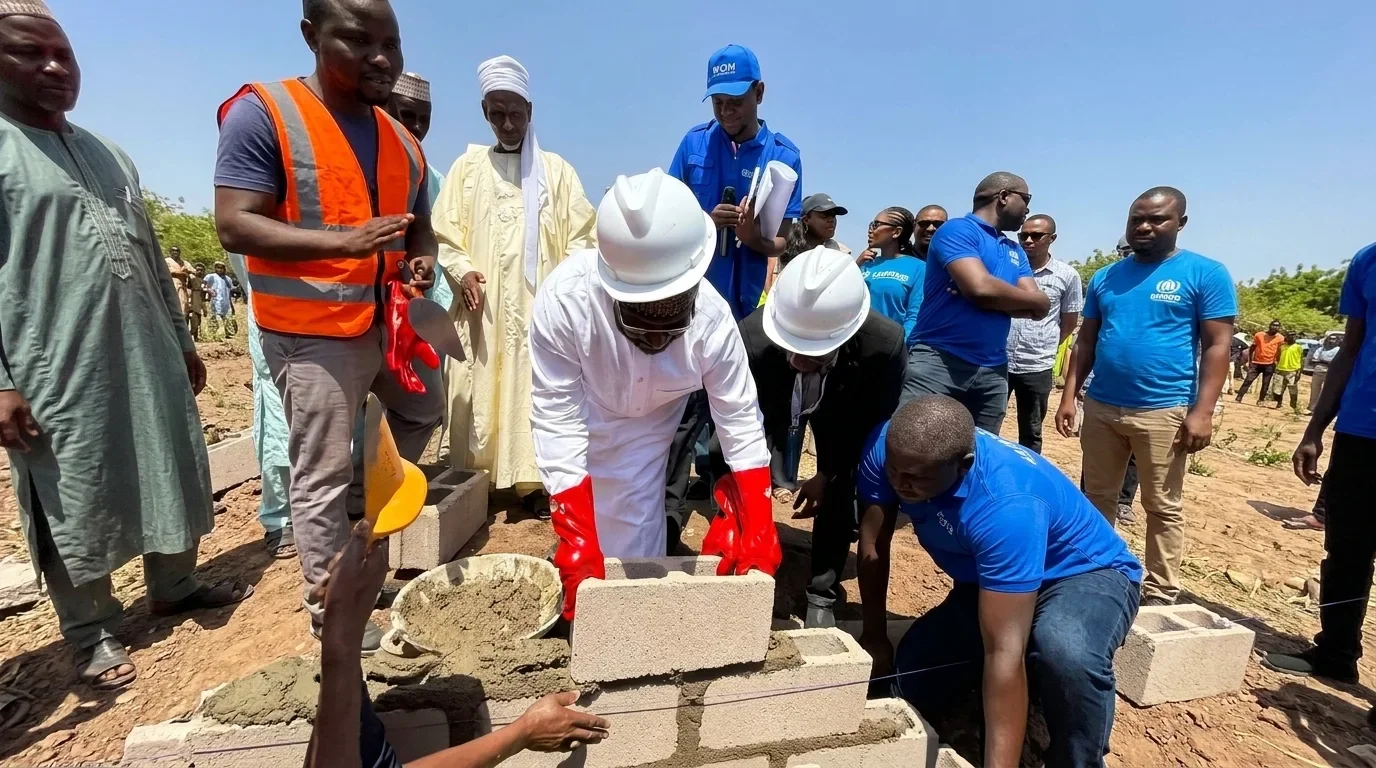
Adamawa State and IOM launch a housing project for vulnerable displaced households in Yola
The Adamawa State Government has partnered with the International Organization for Migration (IOM) to construct 100 housing units for vulnerable internally displaced persons (IDPs) in Malkohi, Yola South Local Government Area, as part of efforts to provide durable shelter and support the reintegration of displaced families.
/ You Might Also Like /




The project, being implemented through the state Ministry of Reconstruction, Rehabilitation, Reintegration and Humanitarian Services, is expected to provide accommodation alongside essential social infrastructure, including schools, healthcare facilities, potable water and water, sanitation and hygiene (WASH) facilities.
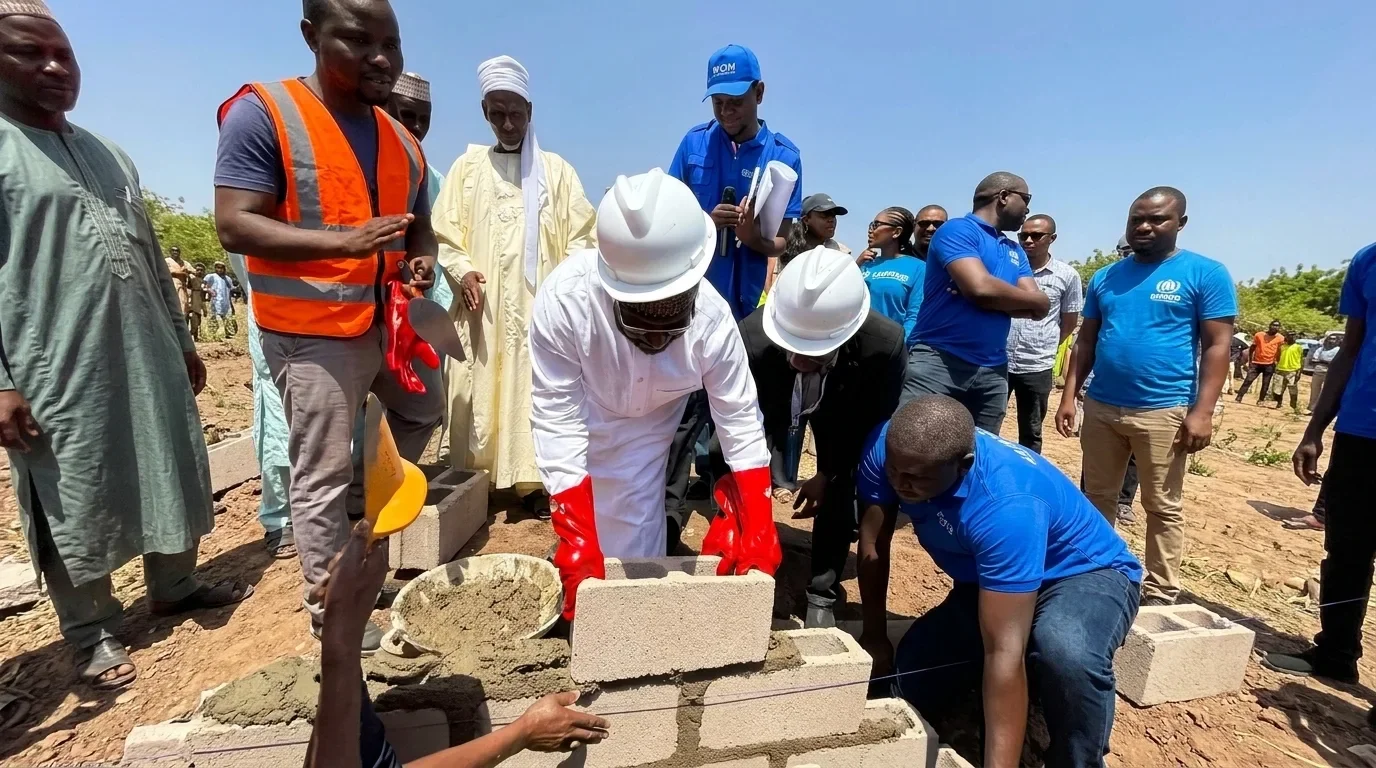
The Commissioner for Reconstruction, Rehabilitation, Reintegration and Humanitarian Services, Bello Hamman Diram, performed the groundbreaking ceremony alongside the Commissioner for Environment and the Executive Secretary of the Adamawa State Primary Healthcare Development Agency.
The intervention targets some of the state's most vulnerable displaced residents and forms part of wider efforts to move beyond temporary humanitarian assistance towards longer-term resettlement and local integration.
Housing Project to Include Schools, Healthcare and Water Facilities
The proposed development will combine residential accommodation with basic services intended to support the living conditions of beneficiaries.
The inclusion of schools, healthcare facilities and water and sanitation infrastructure is significant because access to adequate housing extends beyond the provision of physical shelter. Displaced households also need essential services and community facilities to rebuild their lives.
The project is expected to provide a safer and more stable environment for beneficiaries while supporting their integration into host communities.
However, the state government and IOM have not publicly disclosed the project's total cost, construction timeline, delivery schedule or the precise criteria for selecting beneficiaries.
Adamawa Seeks Long-Term Solutions to Internal Displacement
Adamawa has faced persistent displacement challenges linked to insecurity in the North-East, particularly insurgency-related violence that has forced residents to leave their communities.
Many displaced households face difficulties securing affordable accommodation and accessing basic services after leaving their homes. Temporary shelters and humanitarian assistance provide immediate relief, but they do not always offer the stability required for long-term recovery.
The partnership with IOM reflects an approach that places housing, rehabilitation and reintegration at the centre of displacement response.
For the state, providing permanent or more durable accommodation could reduce pressure on temporary settlements and help vulnerable families regain some stability.
IOM Partnership Highlights Role of Humanitarian Organisations in Housing Delivery
The collaboration illustrates how international humanitarian organisations can support state governments in addressing housing needs among displaced populations.
IOM's involvement provides a partnership framework for delivering shelter and associated facilities, while the state government is coordinating the intervention through its reconstruction and rehabilitation ministry.
The project also demonstrates the importance of linking humanitarian support with local development planning. Housing interventions for displaced households require coordination around land, infrastructure, access to services and the long-term management of settlements.
A successful outcome will therefore depend not only on completing the 100 homes but also on ensuring that the supporting facilities become operational and remain accessible to beneficiaries.
Project Delivery Will Determine Its Long-Term Impact
The 100-unit development represents a targeted intervention rather than a solution to the wider housing needs of displaced people across Adamawa State.
Its impact will depend on timely construction, transparent beneficiary selection and the delivery of the promised social amenities. The government and IOM will also need to ensure that the housing arrangement provides secure and sustainable accommodation for the families selected.
For Nigeria's housing sector, the initiative highlights the role of targeted housing programmes in addressing displacement and vulnerability. It also reinforces the need to integrate shelter provision with infrastructure, social services and long-term settlement planning.
READ MORE