Rainstorm Damages Abuja Bus Terminal Months After Commissioning
Storm Damage at Abuja Bus Terminal Highlights Urban Infrastructure Risks
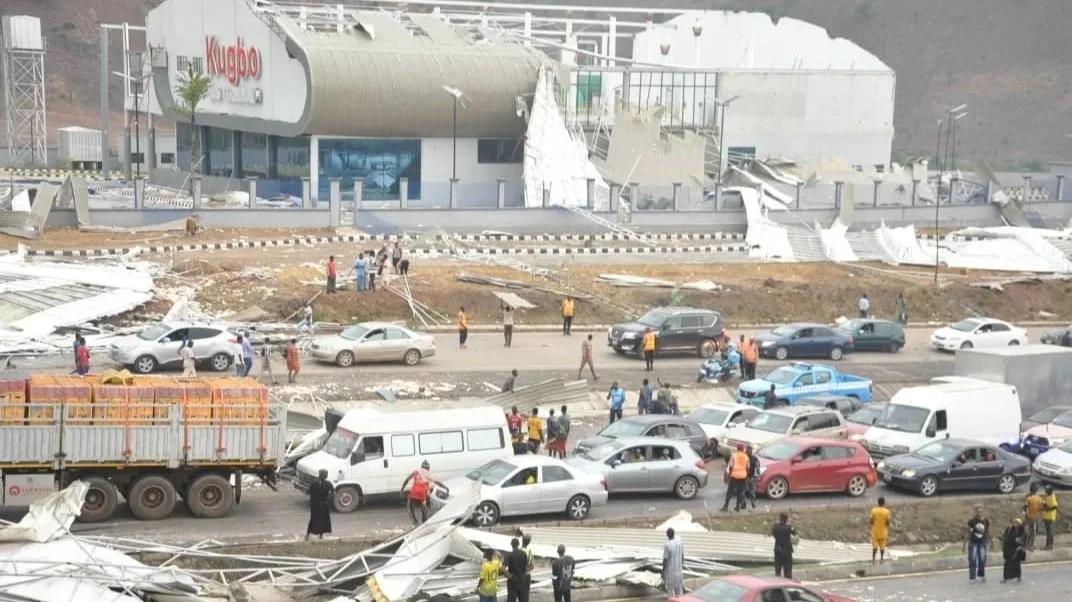
A newly commissioned bus terminal in Abuja has sustained significant damage following a heavy rainstorm, disrupting transport operations and triggering widespread traffic congestion. The incident occurred just months after the facility was opened for public use, raising concerns about infrastructure durability and project execution standards.
Immediate Impact on Transport and Mobility
The rainstorm caused structural damage to sections of the terminal, forcing a breakdown in operations and creating traffic gridlock across surrounding routes. Commuters experienced delays as vehicles were diverted and transport activities slowed.
/ You Might Also Like /




The terminal, designed to improve urban mobility within the Federal Capital Territory (FCT), serves as a key node in Abuja’s public transport network. Its disruption underscores the vulnerability of critical infrastructure to extreme weather events, particularly in rapidly expanding urban centres.
Questions Over Construction Quality and Standards
The incident has prompted scrutiny of construction quality, especially given the short period between commissioning and damage. Stakeholders within the built environment sector have raised concerns about adherence to engineering standards, material quality, and project supervision.
Infrastructure experts emphasise that public transport facilities must meet strict resilience benchmarks, particularly in regions prone to heavy rainfall. Failure to integrate climate-responsive design and drainage systems can lead to early-stage deterioration and operational inefficiencies.
Climate Resilience and Urban Planning Implications
The damage highlights broader challenges related to climate resilience in Nigeria’s infrastructure development. Increasing rainfall intensity and urban flooding have exposed weaknesses in drainage systems and structural design across major cities.
Urban planners argue that infrastructure projects must incorporate climate adaptation measures, including flood-resistant materials, proper water management systems, and long-term maintenance frameworks. Without these, new developments risk premature failure and increased lifecycle costs.
Economic and Policy Considerations
Disruptions to transport infrastructure have direct economic implications. Delays in commuter movement reduce productivity, increase logistics costs, and affect business operations. For a city like Abuja, where road transport plays a central role in daily economic activity, such disruptions can have ripple effects across sectors.
The incident also raises policy questions regarding procurement processes, contractor accountability, and post-construction maintenance. Strengthening oversight mechanisms and enforcing quality assurance standards will be critical to preventing similar occurrences in future projects.
Broader Infrastructure Context
Nigeria continues to invest in transport infrastructure to support urbanisation and economic growth. However, the effectiveness of these investments depends on durability, maintenance, and resilience to environmental stressors.
The Abuja terminal incident reflects a recurring challenge in emerging markets, where rapid infrastructure expansion is sometimes not matched by equally robust quality control and sustainability planning.
Outlook
The rainstorm damage to the Abuja bus terminal underscores the need for stronger infrastructure governance and climate-resilient design standards. Immediate repairs will be necessary to restore operations, but the long-term priority lies in addressing systemic weaknesses in project delivery.
For policymakers and investors, the incident serves as a reminder that infrastructure value is defined not only by delivery speed but by durability, resilience, and lifecycle performance.
READ MORE