Tinubu’s Reforms Enable N90bn Nasarawa Infrastructure Investment, Says Sule
Nasarawa Executes N90bn Infrastructure Projects Without Bank Borrowing
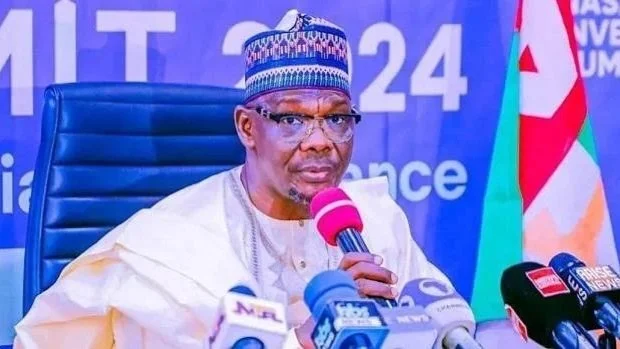
Nasarawa State Governor Abdullahi Sule says increased revenue following President Bola Tinubu’s economic reforms has enabled the state to execute about N90 billion worth of infrastructure projects without borrowing from commercial banks.
/ You Might Also Like /




Sule disclosed this on Saturday, August 8, 2026, at the Government House in Lafia while receiving the Renewed Hope Ambassadors Presidential Media Team, led by Bayo Onanuga, the President’s Special Adviser on Information and Strategy. The team visited the state to inspect completed and ongoing federal and state infrastructure projects.
Higher revenue expands Nasarawa’s fiscal capacity
According to Sule, the removal of the fuel subsidy and other reforms under the Tinubu administration have increased the resources available to state governments.
He said Nasarawa’s monthly allocation, which previously ranged between N3.8 billion and N4.5 billion, now averages between N14 billion and N16 billion.
The governor said the higher revenue has given the state greater capacity to finance major infrastructure projects without relying on commercial bank loans.
He recalled that Nasarawa previously struggled to raise N5 billion through borrowing for a single market project. The state can now execute infrastructure projects worth about N90 billion without taking loans from commercial banks, he said.
Sule attributed the improvement in the state’s fiscal position particularly to the Federal Government’s removal of the fuel subsidy.
Infrastructure projects target transport and urban development
The media team inspected several infrastructure projects across Nasarawa during the visit.
Among them was the Shendam Road and President Bola Ahmed Tinubu Interchange, valued at N16 billion. The team also inspected flood-control infrastructure and the Nasarawa State Secretariat, which houses about 11 ministries.
The governor also highlighted the reconstruction and expansion of major transport corridors, including the Keffi-Nasarawa-Toto-Abaji Road and the dualisation of the Keffi-Karu-Abuja Road.
Other projects include the Keffi flyover and twin flyovers around Karu, which Sule said have improved traffic movement and contributed to rising property values in surrounding areas.
Nasarawa’s proximity to Abuja makes these transport investments particularly relevant to the state’s property market. Improved connectivity along major corridors can strengthen demand for residential, commercial and mixed-use developments as commuting becomes easier.
Infrastructure spending extends beyond roads
Sule said the state’s development programme extends beyond roads, flyovers and other transport infrastructure.
The Nasarawa State Secretariat was developed to consolidate ministries that previously operated from scattered and dilapidated offices. The complex is powered by a 1MW solar plant, while the state is considering extending excess electricity to neighbouring communities.
The facility also includes electric vehicle charging infrastructure.
The state is simultaneously investing in healthcare, agriculture, skills development and mining.
Sule said tertiary healthcare services are being expanded across the state’s three senatorial zones. The state has also committed 10,000 hectares to rice production as part of its food security programme.
Mining investment adds another growth dimension
Nasarawa is also positioning itself as a centre for mineral processing, particularly lithium.
Sule attributed the expansion of the state’s mining sector to Federal Government policies aimed at encouraging value addition within mineral-producing states rather than relying primarily on the export of raw materials.
The media tour was scheduled to include inspections of the Avatar Lithium Processing Plant and Diamond Energy Lithium Processing Plant in Nasarawa Local Government Area.
Expansion in mineral processing could increase demand for industrial land, logistics infrastructure, commercial facilities and worker accommodation as investment activity grows.
Infrastructure spending could influence property markets
Nasarawa’s infrastructure programme has implications for the state’s property market, particularly along strategic corridors connecting the state with Abuja.
Improved roads, flyovers and flood-control infrastructure can reduce travel times, improve accessibility and increase the development potential of areas previously constrained by poor connectivity.
Sule specifically cited rising property values around Karu following the development of twin flyovers.
However, infrastructure improvements alone do not guarantee sustained property-market growth. The long-term impact will depend on complementary investments in urban planning, utilities, housing supply and economic activity.
For developers and investors, improved transport connectivity can create new opportunities along emerging growth corridors. At the same time, stronger land demand could increase acquisition and development costs, potentially placing additional pressure on housing affordability if supply fails to keep pace.
Fiscal gains increase the need for accountability
While Sule credited the Federal Government’s reforms with expanding Nasarawa’s financial capacity, he also stressed the importance of assessing how states deploy increased revenues.
He urged journalists to examine the relationship between government resources, infrastructure spending and outcomes for residents rather than focusing only on the physical appearance of projects.
The governor maintained that the media should recognise positive government performance while continuing to scrutinise public spending and hold authorities accountable where resources are not properly deployed.
The issue becomes increasingly important as higher allocations provide state governments with greater spending capacity while also raising expectations for infrastructure delivery, public services and fiscal transparency.
Outlook
Nasarawa’s reported N90 billion infrastructure investment highlights the potential impact of stronger state revenues on infrastructure delivery.
The immediate significance for the housing and real estate market will depend on whether transport, flood-control, utility and economic infrastructure translates into sustained development along the state’s growth corridors.
With its proximity to Abuja, continued infrastructure investment could strengthen Nasarawa’s position as an alternative residential and commercial growth market. However, maintaining affordability will require housing supply, land administration and urban planning to develop alongside infrastructure expansion.
READ MORE