Enugu Building Collapse Kills Six as Torrential Rain and Landslide Cut Off Community
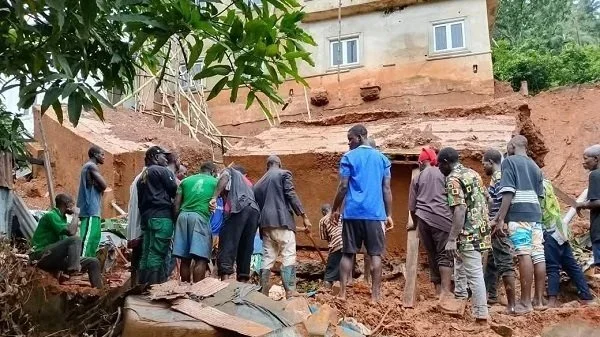
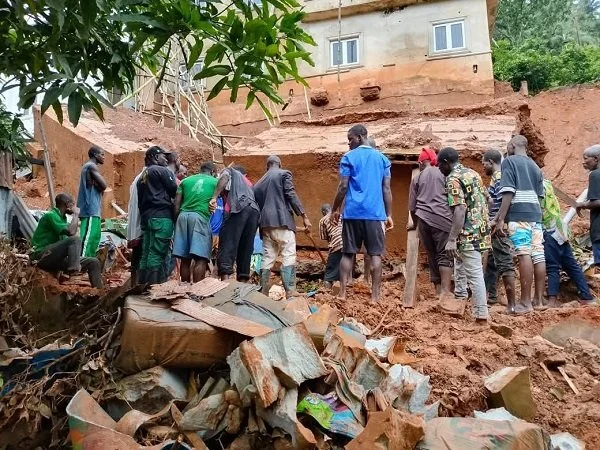
Enugu building collapse after heavy rainfall
Six members of the same family have died after a head tank collapsed on their home in Nenwenta community, Awgu Local Government Area of Enugu State, during torrential rainfall and landslides.
The victims were reportedly a man, his wife, their three children and their grandmother. A four-year-old child survived the incident and was rescued from the rubble before being taken to hospital.
/ You Might Also Like /




The incident occurred on September 18, 2026, as heavy rainfall triggered landslides that also disrupted road access to Nenwenta and neighbouring Ugwueme communities.
Landslide Complicates Emergency Response
The disaster was compounded by the collapse of the road connecting the affected communities with other parts of Enugu State.
Residents reportedly faced difficulties moving in and out of the area, while emergency responders encountered challenges reaching the scene. Some residents were forced to travel through parts of Abia and Imo states to reconnect with other parts of Enugu.
Anthony Nwankwo, who represents Awgu South State Constituency in the Enugu State House of Assembly, subsequently raised the incident under a motion of urgent public importance.
He called on the Enugu State Ministry of Works, the Enugu State Emergency Management Authority and the Ecological Fund to intervene, particularly by reopening the road linking Nenwenta and Ugwueme.
Nwankwo said faster access for emergency responders could have improved the chances of rescuing people trapped in the collapsed structure, although this remains his assessment of the circumstances.
Building Safety Meets Environmental Risk
The tragedy highlights how building safety can intersect with environmental and infrastructure risks.
According to reports, the immediate structural failure involved an elevated water tank collapsing onto the building after severe rainfall and landslides affected the area.
The incident therefore raises questions not only about the integrity of buildings and structures supporting heavy water tanks, but also about the suitability and resilience of development in areas exposed to erosion, landslides and unstable terrain.
Members of the Enugu State House of Assembly cautioned residents against building close to hills and carrying out unsafe excavation of soil and stones, citing the potential contribution of such activities to landslide risks.
Housing Development Needs Greater Climate-Risk Consideration
The incident underscores the importance of incorporating environmental and climate-related risks into housing development.
For developers and homeowners, factors such as terrain stability, drainage, erosion patterns, rainfall intensity and the structural loading of elevated tanks and other installations can affect the safety and resilience of a property.
In areas with steep terrain or known erosion and landslide risks, development decisions require more than conventional building considerations. Site assessment, appropriate engineering design, drainage infrastructure and compliance with applicable building standards become particularly important.
The wider lesson for Nigeria's housing sector is that expanding housing supply must also involve improving the safety and resilience of the structures and communities being developed.
Infrastructure Access Is Also a Housing-Safety Issue
The Nenwenta incident also demonstrates the relationship between housing and surrounding infrastructure.
A structurally safe building can still become more vulnerable during an emergency if roads, drainage systems and other supporting infrastructure cannot withstand extreme weather or provide reliable access.
The reported landslide left communities isolated and complicated the movement of emergency personnel.
For housing development, this reinforces the importance of planning beyond individual plots. Roads, drainage, access routes and emergency connectivity form part of the infrastructure required to create safe and resilient communities.
Pressure for Government Intervention
Following the incident, lawmakers called for urgent intervention to reopen the affected road and provide assistance to residents.
Other members of the Assembly supported the motion and called for measures to reduce further risks to residents in the affected communities. They also urged caution over development around hills and areas susceptible to landslides.
The immediate focus is on restoring access and assisting affected residents, but the incident also raises longer-term questions about environmental risk mapping, development control and infrastructure provision in vulnerable communities.
Outlook
The Enugu tragedy highlights the interaction between housing safety, environmental hazards and infrastructure resilience.
While the immediate incident involved the collapse of a head tank onto a family home, the surrounding landslide and road failure amplified the consequences by isolating the community and complicating emergency response.
For Nigeria's housing sector, the incident reinforces the need for development decisions to account for site-specific environmental risks, structural safety and access infrastructure. As extreme rainfall and other environmental hazards continue to pose challenges to communities, resilience will increasingly need to form part of how housing projects are planned, designed and delivered.
READ MORE