Nigeria’s Housing Crisis Is Also an Economic Growth Problem

Housing remains central to national development
Nigeria’s housing challenge is increasingly a question of economic development as much as shelter, with inadequate supply, high construction costs, limited mortgage access and inefficient land administration constraining the sector’s wider contribution to the economy.
/ You Might Also Like /




An analysis published by The Nation argues that housing should be treated as a major driver of national development rather than solely as a social need. The argument comes against a backdrop of persistent affordability pressures and a housing supply gap that continues to affect households, developers and investors.
Housing connects several parts of the economy, including construction, building-material manufacturing, banking, mortgage finance, employment, land markets and professional services.
Expanding housing delivery could therefore generate economic activity well beyond the construction of individual homes.
Housing supply remains constrained by structural challenges
Nigeria’s housing problem is rooted in a persistent mismatch between demand and supply.
Rapid urbanisation, population growth, rising construction costs and limited access to affordable housing finance have all contributed to pressure on the market.
The result is a housing environment where many households struggle to purchase or rent suitable accommodation, while developers face increasingly difficult project economics.
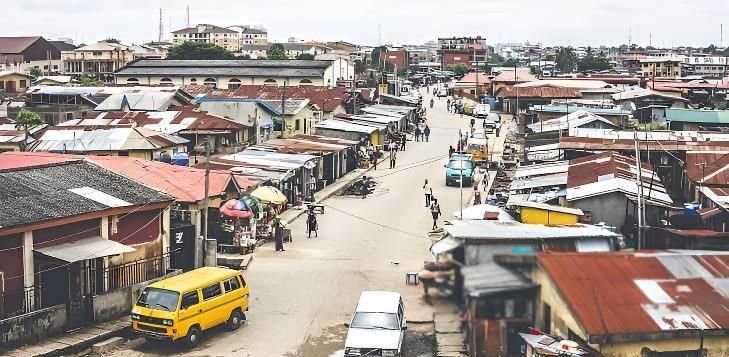
The challenge is particularly significant in major urban centres, where population growth and economic activity continue to increase demand for residential property.
Housing can drive jobs and industrial activity
Housing construction has extensive links to other parts of the economy.
A residential development requires cement, steel, blocks, roofing materials, electrical components, plumbing products, furniture and other inputs. It also creates demand for architects, engineers, quantity surveyors, estate surveyors, builders, artisans, transport operators and other professionals.
A stronger housing-construction pipeline could therefore generate employment while expanding demand for locally produced building materials.
This is one reason housing policy has implications beyond the property sector itself.
The Nation analysis argues that Nigeria's housing sector currently contributes less than 10 per cent to GDP, highlighting the potential for a larger economic role if structural constraints are addressed.
Affordable housing requires more than cheaper houses
The affordability problem cannot be solved simply by asking developers to reduce selling prices.
Developers must contend with the cost of land, finance, building materials, labour, transportation, infrastructure and regulatory approvals.
If these input costs remain high, reducing the final price of a home becomes difficult without reducing the quality or financial viability of the development.
This makes the wider housing ecosystem important.
Reducing construction costs, improving access to development finance, expanding mortgage liquidity and increasing the supply of serviced land could have a more meaningful effect on affordability than isolated interventions.
Mortgage finance remains critical
Access to long-term housing finance remains one of the major constraints on effective housing demand.
Most Nigerian households cannot purchase a home outright, making mortgage finance an important mechanism for converting housing demand into actual purchasing power.
However, high interest rates, limited mortgage penetration and income constraints have historically restricted access to formal housing finance.
The development of longer-term and more affordable mortgage products would therefore allow more households to participate in the formal housing market.
Recent reforms across institutions such as the Federal Mortgage Bank of Nigeria, Nigeria Mortgage Refinance Company and MOFI Real Estate Investment Fund are part of efforts to strengthen the financing side of the housing market.
The broader objective is to increase the availability of capital for both homebuyers and developers.
Land administration remains a major bottleneck
Land is another critical component of housing delivery.
The cost and difficulty of acquiring, registering and securing development rights can significantly affect the final cost of housing.
Slow titling processes and uncertainty around ownership can also discourage investment and make it more difficult for property owners to use land as collateral for financing.
The Nation's analysis highlights land titling as important to unlocking the economic value of real estate because properly documented property provides greater ownership security, transferability and potential access to finance.
For developers, more efficient land administration could reduce transaction uncertainty and improve the speed at which projects move from acquisition to construction.
Private investment will be essential
Government alone cannot provide the scale of housing required across Nigeria.
The public sector can provide policy direction, infrastructure, land, incentives and regulatory frameworks, but large-scale housing delivery will require substantial participation from developers, financial institutions and institutional investors.
The Federal Government's Unified Housing Delivery Framework, for example, is designed around greater coordination between federal and state governments, with private capital and public-private partnerships playing a significant role in housing delivery.
This approach reflects the scale of the financing challenge.
Government budgets can support housing programmes, but private investment can provide additional capital required to develop larger pipelines of residential projects.
Construction technology could help reduce costs
The cost of building materials remains another major obstacle.
The use of locally produced and alternative building materials could help reduce dependence on expensive inputs and improve the economics of housing construction.
Nigeria already has research institutions with expertise in alternative construction technologies, but scaling these solutions requires stronger commercial adoption and policy support.
The Federal Government has also been pursuing building-material manufacturing hubs intended to increase local production and reduce construction costs.
For developers, the importance of such initiatives will ultimately be measured by whether they translate into lower and more predictable input costs.
Housing development can stimulate surrounding economies
The economic value of housing does not end when a building is completed.
New residential communities generate demand for schools, retail centres, transport, healthcare, hospitality, financial services and other businesses.
This creates secondary economic activity around housing developments and can support the emergence of new urban centres.
For property investors, this also means that housing development can create opportunities across several asset classes rather than residential property alone.
However, this depends on adequate infrastructure. Housing developments without reliable roads, drainage, electricity, water and other services can struggle to achieve their full economic potential.
Policy continuity remains important
One of the sector's longstanding challenges has been the discontinuity of housing policies between administrations.
Large housing programmes require years of planning, financing, construction and occupancy. Policies that change significantly with each administration can make it difficult for developers and investors to plan over the long term.
A durable national housing framework could provide greater certainty for private investors while ensuring that housing programmes remain focused on measurable outcomes rather than individual political cycles.
The need for institutional continuity has also been raised by housing-sector professionals, including calls for the Federal Government's housing agenda to evolve into a national policy framework that survives changes in administration.
Housing investment could unlock wider economic value
The central economic argument is straightforward: increasing housing supply can create activity across multiple sectors simultaneously.
More homes require more construction materials, labour, finance, infrastructure and professional services. More residents create demand for retail, transport, education, healthcare and other services.
For Nigeria, expanding housing delivery could therefore address a major social need while simultaneously creating a broader economic multiplier.
The challenge is ensuring that investment flows into housing that households can actually afford and that new communities have the infrastructure required to remain viable.
Outlook
Nigeria's housing challenge is ultimately a supply, finance, land and infrastructure problem, but it is also an economic opportunity.
A more productive housing sector could strengthen construction activity, create employment, deepen mortgage and property finance, expand domestic manufacturing and support the development of new urban centres.
Realising that potential will require coordinated action across government, financial institutions, developers, manufacturers and land authorities.
For the Nigerian property market, the priority is therefore not simply to build more houses, but to create the financial, regulatory and infrastructure conditions that allow the private sector to deliver more homes at prices that match household incomes.
READ MORE