Real Estate Ranks Third as Nigeria’s Economy Grows 4.43% in Q2 2026
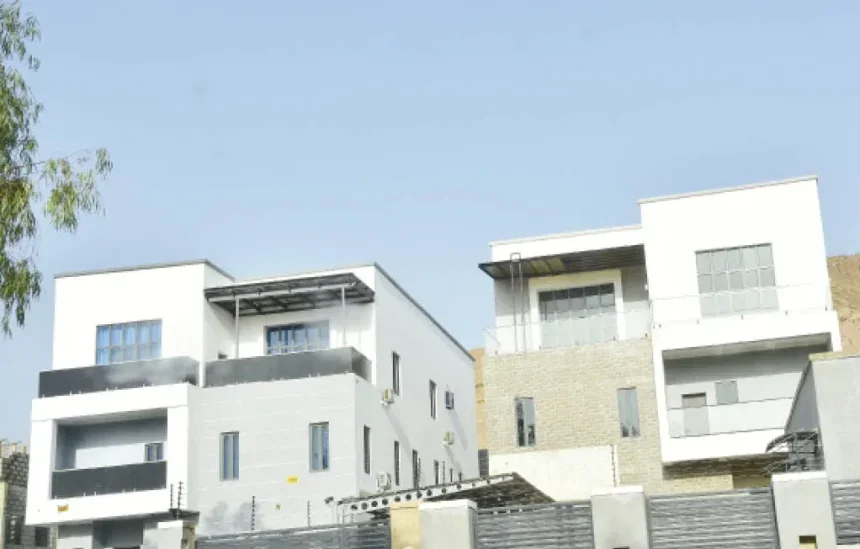
Real estate remains a major pillar of Nigeria’s economy
Nigeria’s economy expanded by 4.43 per cent year-on-year in real terms in the second quarter of 2026, with real estate accounting for 12.71 per cent of real GDP and ranking as the country’s third-largest economic activity.
The latest figures from the National Bureau of Statistics (NBS) show that overall economic growth accelerated from 3.89 per cent in the first quarter of 2026 and 4.23 per cent in the corresponding quarter of 2025.
/ You Might Also Like /




The Q2 performance was supported by stronger activity across the oil and non-oil economies, although industrial-sector growth slowed compared with the same period last year.
For the property industry, the data highlights the substantial contribution of real estate to economic output while also showing that the sector's growth rate remains relatively moderate.
Real Estate Accounts for 12.71% of Real GDP
Real estate accounted for 12.71 per cent of Nigeria’s real GDP in Q2 2026, placing it behind only trade and crop production among the largest individual economic activities.
The sector grew by approximately 3.76 per cent year-on-year in real terms during the quarter, improving from 2.29 per cent in Q1 2026 but remaining slightly below its 3.79 per cent growth rate in Q2 2025.
The figures show that real estate remains a significant component of economic output even though its growth did not keep pace with the broader economy during the quarter.
That distinction is important for interpreting the data: the sector's 12.71 per cent represents its contribution to GDP, not its growth rate.
Nigeria’s Economy Accelerates to 4.43%
Nigeria recorded real GDP growth of 4.43 per cent in Q2, compared with 3.89 per cent in Q1 and 4.23 per cent in Q2 2025.
The services sector remained the largest contributor to real GDP, accounting for 56.62 per cent, while agriculture contributed 26.15 per cent and industry 17.23 per cent.
Services grew by 4.60 per cent year-on-year, while agriculture expanded by 4.39 per cent. Industrial growth, however, slowed to 3.96 per cent from 7.46 per cent in Q2 2025.
The figures indicate that Nigeria’s latest expansion continues to rely heavily on the non-oil economy.
Construction Also Strengthens
The broader built environment recorded additional support from construction activity.
Construction grew by 6.75 per cent year-on-year in Q2 2026, according to a breakdown of the NBS data, strengthening the connection between property development, construction activity and wider economic output.
Cement manufacturing also recorded strong growth during the quarter, while the NBS identified real estate, construction and manufacturing among activities supporting non-oil-sector expansion.
For the housing market, stronger construction activity could support additional housing supply and demand for building materials, labour, logistics and related services, although the pace of actual housing delivery will continue to depend on financing, land costs, infrastructure and household purchasing power.
Real Estate’s Economic Weight Extends Beyond Housing
The sector's 12.71 per cent GDP share reflects more than residential property transactions.
Real estate activity encompasses property-related services and housing accommodation, linking the sector to household consumption, business activity and investment.
Its position among Nigeria's largest economic activities therefore gives the sector wider macroeconomic significance. Changes in mortgage availability, construction costs, rental demand, commercial property activity and investment flows can have implications beyond individual property markets.
The latest GDP figures reinforce the importance of viewing housing and real estate as part of the productive economy rather than solely as an asset market.
Non-Oil Economy Remains Dominant
Nigeria's non-oil sector grew by 4.31 per cent in real terms in Q2 2026, up from 3.94 per cent in Q1 and 3.64 per cent in Q2 2025.
It accounted for 95.84 per cent of real GDP during the quarter, with agriculture, information and communication, real estate, trade, financial services, manufacturing and construction among the activities supporting growth.
The oil sector grew more rapidly at 7.31 per cent year-on-year, helped by higher crude production, but accounted for only 4.16 per cent of real GDP.
Average daily crude production increased to 1.72 million barrels per day in Q2, from 1.55 million barrels per day in Q1 and 1.68 million barrels per day in Q2 2025.
What the Figures Mean for Property Markets
For the real estate industry, the Q2 figures provide evidence of the sector's substantial role in Nigeria's economy, but they also highlight the difference between economic size and growth momentum.
Real estate's 12.71 per cent GDP share places it among the country's largest economic activities, while its 3.76 per cent growth rate shows that the sector is expanding at a slower pace than the overall economy.
For developers and investors, the broader economic expansion could support demand for residential, commercial, logistics and industrial property. However, stronger GDP growth does not automatically translate into stronger effective housing demand, particularly where affordability, mortgage costs and construction expenses remain constraints.
The construction sector's 6.75 per cent growth offers a more direct indication of activity within the built environment and will be an important metric to monitor alongside real estate output.
Outlook
Nigeria's 4.43 per cent Q2 GDP growth places the economy on a stronger growth path than the previous quarter, while real estate's 12.71 per cent share confirms its importance to national output.
The next challenge for the property sector will be converting its substantial economic weight into stronger growth, greater housing supply and broader investment activity.
For policymakers and industry participants, the combination of real estate's large GDP footprint and continued construction growth strengthens the case for policies that improve access to housing finance, reduce development bottlenecks and support productive investment across the built environment.
READ MORE