Nigeria Targets Policy Stability to Sustain Oil and Gas Investment and Infrastructure Growth
Nigeria prioritises oil and gas investment stability
Nigeria is reinforcing policy stability, regulatory certainty and investment conditions as it seeks to sustain investment in the oil and gas sector amid the global energy transition.
Minister of State for Petroleum Resources (Gas), Ekperikpe Ekpo, said stable policies, regulatory clarity, fiscal competitiveness, security and efficient project delivery were necessary to maintain investor confidence and unlock further investment in the sector.
/ You Might Also Like /




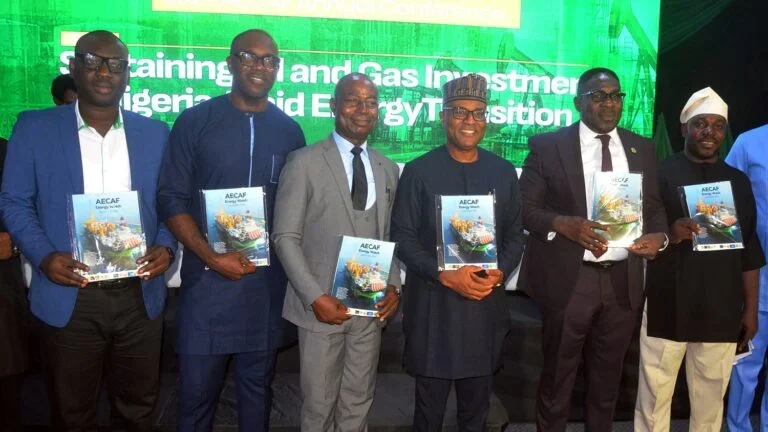
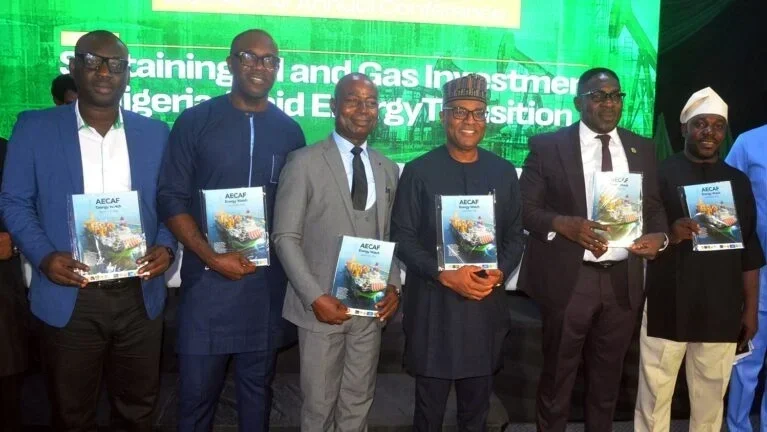
Ekpo made the remarks on Thursday in Abuja at the 2026 Annual Conference of the Association of Energy Correspondents, Abuja, which focused on sustaining oil and gas investment in Nigeria amid the energy transition.
For Nigeria's built environment, the investment environment in the energy sector has wider implications. Large-scale oil and gas projects require pipelines, processing facilities, terminals, storage infrastructure and industrial support services, while reliable gas supply can influence the location and viability of manufacturing and other commercial activities.
Government Links Investment to Policy Stability
Ekpo said sustaining investment in Nigeria's petroleum industry requires more than legislation.
He identified policy stability, regulatory certainty, fiscal competitiveness, security and efficient project execution as important conditions for investors considering long-term projects.
The minister said the implementation of the Petroleum Industry Act 2021 and other reforms was intended to provide greater clarity for investors, strengthen regulatory institutions and create a more competitive operating environment.
The emphasis on implementation is significant because oil and gas projects often involve substantial upfront capital and long development periods.
Investors therefore need visibility over the regulatory and fiscal environment throughout the life of a project.
Gas Infrastructure Takes Centre Stage
The Federal Government is particularly focused on using Nigeria's gas reserves to support wider economic development through the Decade of Gas Initiative.
Ekpo identified investments in gas infrastructure, including the Ajaokuta-Kaduna-Kano (AKK) and Obiafu-Obrikom-Oben (OB3) gas pipelines, gas-processing facilities, LNG and other midstream infrastructure as important to expanding domestic gas penetration.
The government is also promoting the expansion of liquefied petroleum gas and compressed natural gas infrastructure to improve access to alternative energy sources for households, businesses and industries.
These investments could have implications well beyond the energy sector if they improve the availability and reliability of gas for industrial users.
Energy Infrastructure Can Shape Industrial Property Demand
The connection between energy investment and real estate is particularly important for industrial property.
Manufacturers, processing companies and other energy-intensive businesses require reliable and affordable power to operate efficiently.
Where gas infrastructure supports additional electricity generation or provides direct fuel supply to industrial users, locations with access to the network could become more attractive to businesses.
This can support demand for industrial parks, factories, warehouses, logistics facilities and other commercial property.
However, the property-market impact will depend on whether infrastructure projects are completed and whether the resulting energy supply reaches businesses at commercially viable costs.
AKK and OB3 Have Wider Development Implications
The AKK and OB3 pipelines form part of Nigeria's broader effort to expand the domestic gas network.
Infrastructure of this scale can create development opportunities around pipeline corridors and industrial consumption centres, particularly where gas availability is combined with roads, electricity, water and other supporting infrastructure.
For property developers, the presence of energy infrastructure can reduce one of the constraints affecting the development of industrial and commercial sites.
The effect is not automatic. Land-use planning, security, transport connections, market demand and access to finance will also determine whether new economic activity develops around energy infrastructure.
Policy Certainty Matters for Long-Term Property Investment
The government's emphasis on policy stability also has relevance for real estate investors involved in energy-linked development.
Industrial parks, logistics facilities and commercial projects associated with oil and gas operations require significant capital and long investment horizons.
Investors need confidence that the regulatory environment will remain sufficiently predictable to support their business models over the life of those projects.
Greater certainty can make it easier for developers and institutional investors to assess demand, infrastructure costs and expected returns.
Conversely, uncertainty around regulations, taxation, project approvals or energy pricing can increase perceived investment risk.
Nigeria Wants Oil and Gas to Support Industrialisation
Ekpo said Nigeria's energy transition should reflect the country's development realities, including energy security, economic growth, industrialisation and improved living standards.
This approach places oil and gas within a wider industrial-development strategy rather than treating the sector solely as an export industry.
For Nigeria's manufacturing sector, reliable gas supply can support industrial processes and power generation.
That creates a potential multiplier effect across the built environment because industrial expansion generates demand for physical infrastructure, factories, warehouses, offices and worker accommodation.
Gas Investment Could Strengthen Emerging Industrial Corridors
Where new gas infrastructure connects production areas with industrial and commercial centres, it can support the development of economic corridors.
Businesses may choose to locate close to reliable energy supplies to reduce operating costs and improve production efficiency.
Over time, this can encourage clustering of manufacturers, logistics companies and service providers.
Such clusters can generate additional demand for industrial land and purpose-built commercial property, while population growth around employment centres can create demand for residential and retail development.
For investors, however, the key indicator will be actual industrial activity rather than the announcement of infrastructure projects alone.
Upstream Investment Also Remains Important
The emphasis on gas infrastructure comes alongside renewed interest in upstream oil and gas investment.
At the same conference, officials from the Nigerian Upstream Petroleum Regulatory Commission said the commission had approved field development plans worth more than $57 billion since 2024.
The NUPRC also said 22 offshore projects are planned between 2026 and 2030, with estimated additional investment of between $30 billion and $50 billion.
The scale of those potential investments highlights the importance of regulatory and project-execution conditions.
If projects move from approval to construction and production, they can generate demand for supporting infrastructure, logistics services, accommodation and commercial facilities in host and connected locations.
Investment Commitments Need to Translate Into Projects
The NUPRC has also stressed that investment approvals and commitments only deliver economic value when projects progress and new production volumes come onstream.
This distinction is equally important for the property market.
Announcements of large energy investments can create expectations around future development, but sustained real estate demand depends on actual project execution.
Completed pipelines, processing plants, terminals and industrial facilities can generate economic activity and supporting property demand. Delayed or cancelled projects have a much smaller effect.
Energy Transition Adds a New Investment Consideration
Nigeria's policy challenge is complicated by the global shift towards lower-carbon energy.
The government has maintained that the country's energy transition should reflect its development needs while expanding access to cleaner energy.
Ekpo said the government was promoting LPG and CNG while continuing to use Nigeria's gas resources as part of the country's broader energy strategy.
For investors, this means Nigeria's energy infrastructure is likely to develop across multiple fuel and technology segments rather than through an immediate replacement of existing oil and gas systems.
That could create demand for different types of industrial infrastructure, including gas processing, storage, distribution, CNG facilities and renewable-energy-related assets.
Outlook
Nigeria's renewed emphasis on policy stability places regulatory certainty at the centre of efforts to attract and retain oil and gas investment.
The government's focus on gas infrastructure, including the AKK and OB3 pipelines, LNG, CNG and LPG facilities, also connects energy investment with broader industrial and economic development objectives.
For Nigeria's property sector, the significance lies in the infrastructure and economic activity that can develop around a more reliable energy system.
Industrial parks, factories, logistics facilities, warehouses and supporting residential developments could benefit where energy investment translates into actual industrial expansion.
The critical test, however, will be whether policy commitments and investment approvals translate into completed projects, reliable energy supply and commercially viable infrastructure.
READ MORE