Nigeria Owes $51.9bn in External Debt as Eurobond Investors Top Creditors
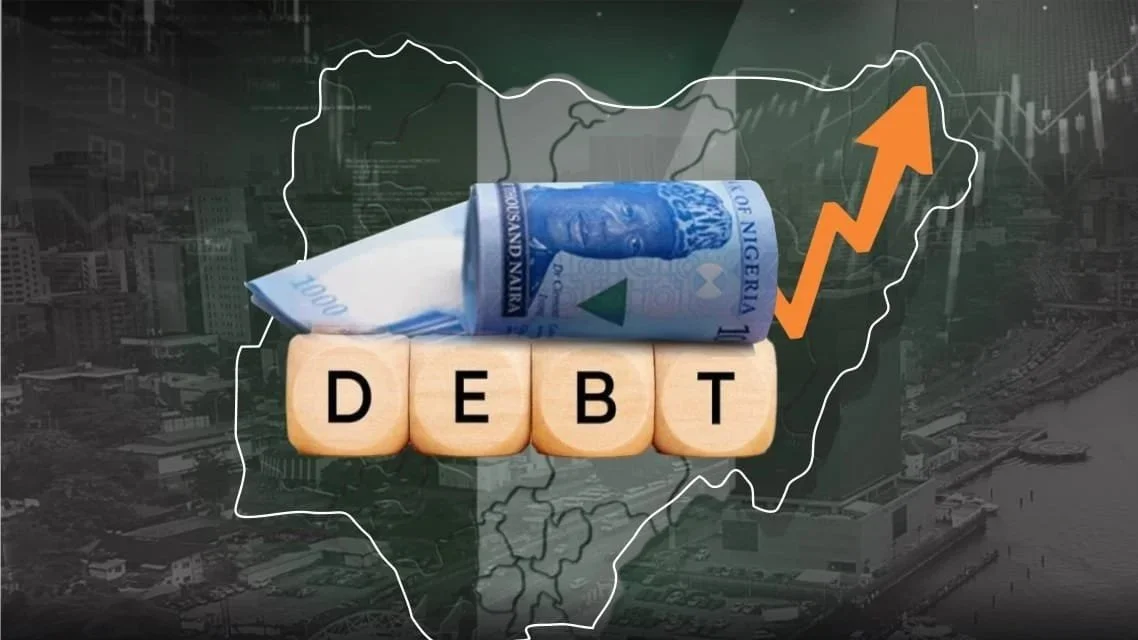
Nigeria’s external debt reaches $51.9bn
Nigeria’s external debt rose to $51.90 billion as of March 31, 2026, with Eurobond investors and the World Bank’s International Development Association (IDA) accounting for more than 70% of the country’s external obligations.
An analysis of Debt Management Office (DMO) data by Nairametrics, reported by The Sun, showed that external debt increased marginally from $51.86 billion at the end of December 2025. However, compared with the $45.98 billion recorded in March 2025, the figure represents a $5.93 billion, or 12.9%, increase over one year.
/ You Might Also Like /




Eurobond investors remain largest creditors
Eurobond investors hold the largest share of Nigeria’s external debt, with $18.55 billion owed to them. This represents 35.73% of the total external debt.
The World Bank’s IDA ranks second, with $18.39 billion, equivalent to 35.43% of the external debt stock.
Combined, Eurobond investors and the IDA account for approximately 71% of Nigeria’s external debt, highlighting the concentration of the country’s external borrowing among a relatively small number of creditors.
China ranks among major bilateral creditors
China’s Export-Import Bank is Nigeria’s third-largest external creditor, with an exposure of $4.95 billion, representing 9.54% of the total.
The African Development Bank follows with $2.19 billion, while First Abu Dhabi Bank holds $1.87 billion.
Other significant creditors include the World Bank’s International Bank for Reconstruction and Development (IBRD), with $1.43 billion; the African Development Fund, with $1.01 billion; France’s Agence Française de Développement, with $902.17 million; Afreximbank, with $637.82 million; and China Development Bank, with $507.52 million.
External debt forms 45% of public debt
The DMO’s broader figures put Nigeria’s total public debt at ₦159.35 trillion as of March 31, 2026.
External debt of $51.90 billion was equivalent to approximately ₦71.95 trillion and accounted for 45.15% of the total public debt. Domestic debt stood at ₦87.40 trillion.
The figures show the significant role external financing continues to play in Nigeria’s overall public debt structure.
Dollar-denominated debt creates currency risks
Nigeria’s large exposure to Eurobonds also leaves its public finances vulnerable to movements in the naira-dollar exchange rate.
Because Eurobond obligations are denominated largely in foreign currency, a depreciation of the naira increases the amount of local currency required to meet dollar debt obligations.
This creates an additional fiscal pressure for government, particularly when foreign exchange conditions remain volatile.
Development financing remains a key component
Not all external borrowing carries the same financing conditions.
The IDA, for example, provides relatively concessional financing with longer repayment periods and lower costs than commercial borrowing. Its financing supports sectors including education, healthcare, agriculture, power, social programmes and infrastructure.
Commercial borrowing through Eurobonds, by contrast, exposes Nigeria to international market conditions, including changes in investor sentiment and global interest rates.
Implications for infrastructure and housing investment
Nigeria’s external borrowing profile has implications for public investment in infrastructure, including transport, power, water and urban development.
Development-oriented borrowing can provide government with resources for projects that improve economic productivity and support housing and property markets.
However, rising debt obligations also place pressure on future budgets. Higher debt-service requirements can reduce the fiscal space available for capital expenditure if government revenues do not grow sufficiently to meet both financing and development needs.
For the housing sector, sustained infrastructure investment remains particularly important because roads, electricity, water and public transport directly influence the viability and value of residential and commercial developments.
Debt management remains critical
The latest figures highlight the need to balance access to external financing with the country's capacity to service and repay its obligations.
The concentration of external debt among Eurobond investors and major development institutions also means that Nigeria faces different repayment conditions and risks across its creditor base.
For policymakers, the challenge remains ensuring that borrowed funds support productive investments capable of strengthening economic activity and government revenue while maintaining a sustainable debt profile.
Outlook
Nigeria’s $51.90 billion external debt position reflects continued reliance on international financing, with Eurobond investors and the World Bank’s IDA accounting for the largest shares.
While external borrowing can support infrastructure and economic development, the rising debt stock and exposure to foreign exchange movements underscore the importance of disciplined borrowing and effective debt management.
For the property and construction sectors, the sustainability of public finances will remain important because government capacity to fund infrastructure directly affects housing development, urban expansion and private-sector investment.
READ MORE