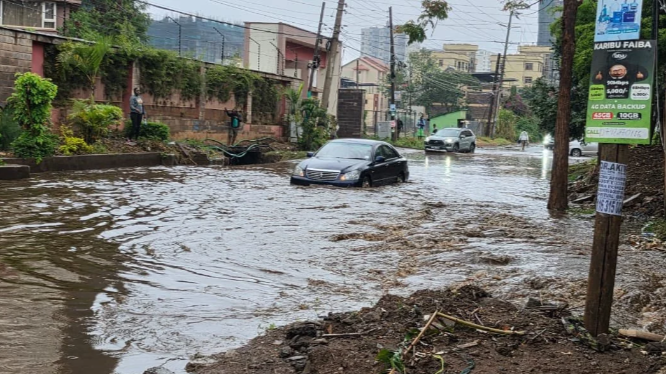
Flooding in Nairobi
Heavy rainfall has flooded several parts of Nairobi, disrupting movement and raising fresh concerns about the city's drainage infrastructure and preparedness for the anticipated 2026 El Niño rainy season.
Sections of Githurai, Parklands and Westlands experienced flooding on Saturday, 31 October, as water overwhelmed roads and affected movement for motorists and pedestrians. Vehicles struggled through submerged roads, while businesses and surrounding properties faced the effects of rising floodwater.
/ You Might Also Like /




The flooding has renewed scrutiny of government preparations ahead of forecasts of above-average rainfall across parts of East Africa, particularly whether drainage improvements and other flood-control measures will adequately protect residents, businesses and critical infrastructure.
Flooding Exposes Nairobi's Drainage Challenges
The latest flooding has highlighted the vulnerability of several Nairobi neighbourhoods to heavy rainfall.
At Githurai Roundabout, floodwater disrupted movement along a major commuter corridor, forcing motorists and pedestrians to navigate submerged sections of the road. Parklands and Westlands also experienced flooding, with water spreading across roads and affecting access to nearby businesses.
The incidents have raised questions about the effectiveness of drainage infrastructure in a city where rapid urbanisation, inadequate stormwater management and development around waterways have contributed to recurring flood risks.
Nairobi's exposure is particularly concerning because its drainage systems must accommodate growing population densities, expanding commercial activity and increasing development pressure.
Where drainage channels become blocked or lack sufficient capacity, heavy rainfall can quickly affect roads, residential neighbourhoods, commercial properties and essential services.
El Niño Concerns Put Government Preparations Under Scrutiny
The flooding comes as Kenya prepares for the October–December 2026 rainy season, with meteorological forecasts indicating above-average rainfall across several parts of the country.
Nairobi County has identified 246 potential flood hotspots, with as many as 100,000 residents considered at risk under a worst-case planning scenario.
Authorities have announced drainage clearance, river desilting and other flood-mitigation measures. The county has also identified potential evacuation locations and strengthened emergency coordination ahead of the anticipated rainfall.
However, the latest incidents have raised questions about whether these interventions are translating into sufficient protection for vulnerable neighbourhoods.
The World Health Organisation has also warned that the anticipated rainy season could increase flooding, damage infrastructure and disrupt essential services across parts of East Africa.
The rainfall outlook does not mean every location will experience severe flooding, but it reinforces the importance of preparing communities and infrastructure in areas already vulnerable to heavy rainfall.
Property and Infrastructure Face Growing Exposure
For Nairobi's property market, recurring flooding presents risks beyond temporary road disruption.
Residential and commercial properties located near waterways, low-lying areas and inadequate drainage networks face greater exposure to floodwater. Repeated flooding can damage building foundations, electrical installations, internal fittings and access infrastructure, increasing maintenance and repair expenses for property owners.
Flood exposure can also affect investment decisions, particularly where developers fail to account for drainage capacity, site elevation and the surrounding area's flood history during project appraisal.
Inadequate drainage can reduce the attractiveness of residential developments, disrupt commercial activity and increase the long-term costs of property ownership.
The risks also extend to the wider urban economy. When roads become impassable, residents may struggle to access workplaces, businesses lose customers and the movement of goods and services becomes more difficult.
Urban Development Requires Stronger Flood-Risk Planning
Nairobi's experience highlights the importance of integrating flood-risk assessments into urban planning and property development.
Developers need to consider site elevation, natural drainage routes, flood histories and the capacity of existing stormwater infrastructure before undertaking construction.
Authorities also face the challenge of enforcing development controls around waterways and riparian reserves while investing in drainage networks that can accommodate expanding urban populations.
Beyond clearing existing drainage channels, cities require long-term infrastructure planning that addresses the volume and direction of stormwater runoff.
The preservation of wetlands, waterways and other natural drainage systems can also help reduce pressure on engineered drainage infrastructure.
For Nigeria, where cities such as Lagos, Abuja and Port Harcourt face their own flooding and urban-development challenges, Nairobi's experience offers an important reminder that housing delivery must account for environmental conditions and infrastructure capacity.
As extreme rainfall risks increase, the resilience of residential and commercial properties will depend increasingly on effective urban planning, reliable drainage systems and stronger enforcement of development standards.
READ MORE