Rising land prices in Ikeja are making the Lagos commercial district increasingly inaccessible
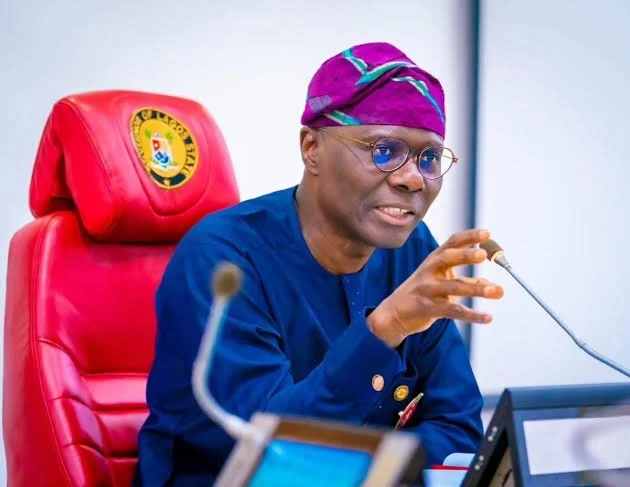
Land prices in Ikeja have risen to slightly above ₦3 million per square metre, making it increasingly difficult for low-income earners to afford accommodation in the Lagos commercial district, Governor Babajide Sanwo-Olu has said.
The governor disclosed this during his acceptance speech after his investiture as an Honorary Fellow of the Nigerian Institute of Town Planners (NITP) at the institute's 57th Annual Conference and Annual General Meeting in Ikeja.
/ You Might Also Like /




Sanwo-Olu, who was represented by the Commissioner for Physical Planning and Urban Development, Dr Oluyinka Olumide, said the high cost of land had made it difficult for lower-income residents to live close to the area's commercial and employment centres.
He explained that the state's investment in rail transportation was intended to improve connectivity between residential communities outside central Lagos and major employment locations.
Rail Infrastructure Becomes Part of Lagos Housing Strategy
Sanwo-Olu identified transportation infrastructure as an important component of the state's response to the growing cost of living in established urban districts.
He cited the administration's investment in rail transportation, particularly the connection that allows residents to live in Agbado and commute towards central Lagos.
The Lagos Red Line, which serves the Agbado-Ikeja-Oyingbo corridor, is expected to improve access to employment centres and reduce dependence on road transportation for commuters along the route.
The strategy reflects the relationship between housing affordability and transport accessibility. When land and residential property become increasingly expensive in established commercial districts, improved transport links can expand the range of locations workers can consider when choosing where to live.
However, the benefits depend on the availability of affordable housing around transport corridors and the cost of daily commuting.
Limited Land Supply Intensifies Development Pressure
The governor also highlighted the wider planning challenges facing Lagos, noting that the state has a limited land area of approximately 3,577 square kilometres while accommodating a growing population and expanding economic activity.
The pressure on available land has implications for housing delivery, infrastructure provision, environmental protection and urban regeneration.
As commercial activity expands, competition for strategically located land can increase development costs and influence the type of properties developers choose to build.
In high-value locations such as Ikeja, expensive land can make lower-cost residential developments more difficult to deliver commercially. Developers must recover land acquisition expenses alongside construction, financing, infrastructure and regulatory costs.
This creates a challenge for policymakers seeking to maintain mixed-income communities in areas with strong employment opportunities.
Housing Affordability Requires More Than Transport Investment
Although improved rail connectivity can help residents access employment from less expensive locations, transport infrastructure alone cannot resolve Lagos' housing affordability challenges.
The availability of appropriately priced homes, access to housing finance, land administration and infrastructure provision also influence whether lower-income households can secure accommodation within reasonable commuting distances.
Without sufficient affordable housing around transport corridors, improvements in connectivity could increase the attractiveness of surrounding locations and place additional pressure on land and property prices.
The challenge for Lagos is therefore to coordinate transport investment with housing development and land-use planning.
This would require identifying suitable locations for affordable residential projects, improving infrastructure around emerging communities and creating conditions that encourage developers to deliver homes across different income categories.
Lagos Faces Long-Term Urban Planning Challenges
Sanwo-Olu said building a sustainable Lagos required long-term planning, institutional discipline and decisions that considered the needs of future generations.
He emphasised the importance of professional town planners in managing population growth, coordinating infrastructure and ensuring that development follows orderly planning principles.
The governor also reaffirmed the state's commitment to working with the Nigerian Institute of Town Planners and other built-environment professionals to improve urban development.
For the housing market, the rising cost of land in Ikeja illustrates a wider challenge facing Lagos: ensuring that people who work in major commercial districts can afford to live within accessible commuting distances.
As the state continues to expand its transportation network, aligning rail development with affordable housing delivery and effective land-use planning will be important to preventing established economic centres from becoming increasingly inaccessible to lower-income residents.
READ MORE