Lagos State is targeting an economy valued between $800 billion and $1 trillion by 2052, with the government looking to accelerate manufacturing, expand exports, attract private investment and strengthen infrastructure to support long-term economic growth.
/ You Might Also Like /




Governor Babajide Sanwo-Olu announced the ambition on November 15, 2026, at the closing ceremony of the 40th Lagos International Trade Fair in Lagos. Represented by the Secretary to the State Government, Abimbola Salu-Hundeyin, he said the state wanted to move beyond its traditional position as a major centre for commerce and consumption towards becoming a stronger hub for industrial production and exports.
The strategy centres on increasing local production, improving access to finance, developing transport and electricity infrastructure, and creating a more supportive environment for businesses.
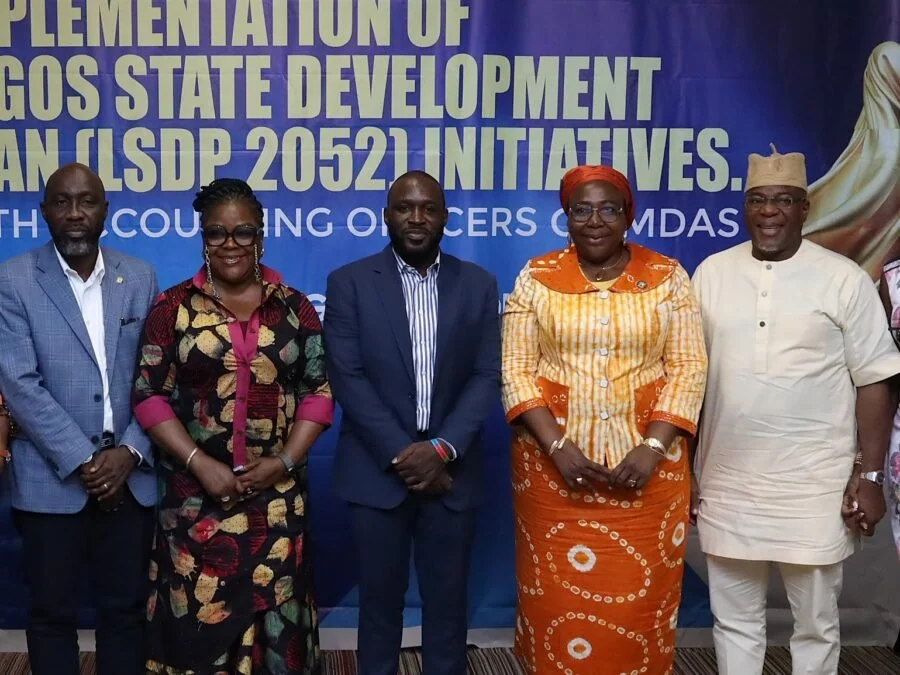
The announcement reinforces the state's long-term development ambitions under the Lagos State Development Plan 2052 and its Industrial Policy 2025–2030.
Lagos seeks to expand manufacturing and export capacity
Sanwo-Olu said the state intended to increase the competitiveness of locally manufactured products in African and international markets.
He identified manufacturing, value addition and export development as important drivers of the proposed economic expansion, arguing that Lagos needed to strengthen its productive capacity rather than depend predominantly on trading and consumption.
The government is pursuing this ambition through its Lagos State Industrial Policy 2025–2030, which seeks to promote enterprise development and strengthen the state's industrial base.
The governor also highlighted the opportunities available through the African Continental Free Trade Area (AfCFTA), which provides access to a continental market of approximately 1.4 billion people.
However, he noted that businesses would need competitive products, reliable infrastructure, affordable financing and stronger commercial networks to take advantage of the expanded market.
Government highlights ₦10 billion financing facility for businesses
As part of its efforts to improve access to capital, the Lagos State Government is expanding financing opportunities for cooperative-backed businesses through its ₦10 billion Micro Enterprise Cooperative financing arrangement.
The facility is intended to improve access to affordable capital for smaller businesses and support enterprise development.
The government also plans to strengthen the business environment through investments in electricity reforms, transportation and other infrastructure.
These interventions are expected to reduce some of the constraints facing businesses, particularly manufacturers and small enterprises that require reliable power, efficient transport networks and access to financing to expand production.
Lagos reports more than ₦1 trillion in investments attracted in 2025
Commissioner for Commerce, Cooperatives, Trade and Investment, Folashade Ambrose-Medebem, disclosed that Lagos attracted more than ₦1 trillion in investments in 2025.
The reported investments covered sectors including technology, healthcare, logistics and port operations.
She also said the state trained more than 2,000 micro, small and medium-sized enterprises in export readiness and market access through partnerships with the African Export-Import Bank and other organisations.
The programme aims to prepare local businesses to access opportunities under AfCFTA and compete in regional and international markets.
The commissioner added that Lagos planned to lead a delegation of local businesses to China through its Export Readiness Programme to explore international markets and establish commercial partnerships.
She also cited the Lagos State Economic Development Update, which put the state's contribution to Nigeria's gross domestic product at 30 per cent in the first half of 2024.
Transport and industrial infrastructure form part of growth strategy
The state government is positioning infrastructure development as a major requirement for achieving its 2052 economic ambition.
Projects highlighted by the commissioner include the Blue and Red rail lines, road network expansion, Lekki Deep Sea Port and Lekki Free Zone.
These facilities are expected to improve connectivity between industrial areas, commercial centres, ports and markets, supporting the movement of goods and services.
For manufacturing and export businesses, efficient transport infrastructure can reduce logistics constraints and improve access to domestic and international markets.
The development of port and industrial facilities around the Lekki corridor also reinforces the state's efforts to strengthen its position as a regional logistics and production hub.
The commissioner said the state would host the Intra-African Trade Fair from November 5 to 11, 2027, as part of efforts to attract international businesses, investors and trade partnerships.
The event is expected to bring together more than 100,000 visitors and 2,500 exhibitors from over 100 countries, with projected trade and investment deals of $50 billion. These figures represent expectations for the event, not investments already secured.
Implications for industrial and commercial property investment
Lagos' ambition to expand manufacturing, exports and investment has implications for demand across the state's industrial and commercial property markets.
A stronger manufacturing base could increase demand for factories, warehouses, logistics parks and industrial estates, particularly around major transport corridors and port-linked developments.
Improved rail and road connectivity could also influence where manufacturers and distribution businesses choose to establish operations. Areas with reliable access to transport infrastructure, electricity and port facilities may become more attractive to industrial property investors.
The expansion of smaller businesses could generate additional demand for commercial premises, business parks and flexible workspace, although the scale of this demand will depend on the growth and financing capacity of those enterprises.
For property developers and investors, the state's long-term industrial strategy makes infrastructure connectivity and proximity to production and logistics centres important considerations when assessing investment opportunities.
However, the proposed $800 billion–$1 trillion economic target remains an ambition for 2052 rather than a guaranteed outcome. Achieving it will require sustained investment, effective implementation of industrial policies, reliable infrastructure, improved productivity and a business environment capable of supporting long-term private-sector growth.
READ MORE