Coastal Highway Reshapes Real Estate Investment Across Victoria Island and Oniru
The Lagos coastal corridor is attracting more luxury residential and mixed-use development as new road infrastructure and private investment reshape property prospects around Victoria Island, Eko Atlantic City, Oniru and Bluewater Okunde.
/ You Might Also Like /




The area is emerging as an important growth zone for Lagos’s premium property market, supported by improved access along the Lagos-Calabar Coastal Highway, large-scale waterfront development and investor interest in high-value residential projects.
The shift reflects a wider pattern in the city’s real estate market: infrastructure can change how investors assess locations, while new developments can attract further capital and commercial activity. However, rising land valuations and luxury project launches do not automatically translate into broad-based demand or affordable housing supply.
Coastal Highway Reshapes Property Investment Prospects
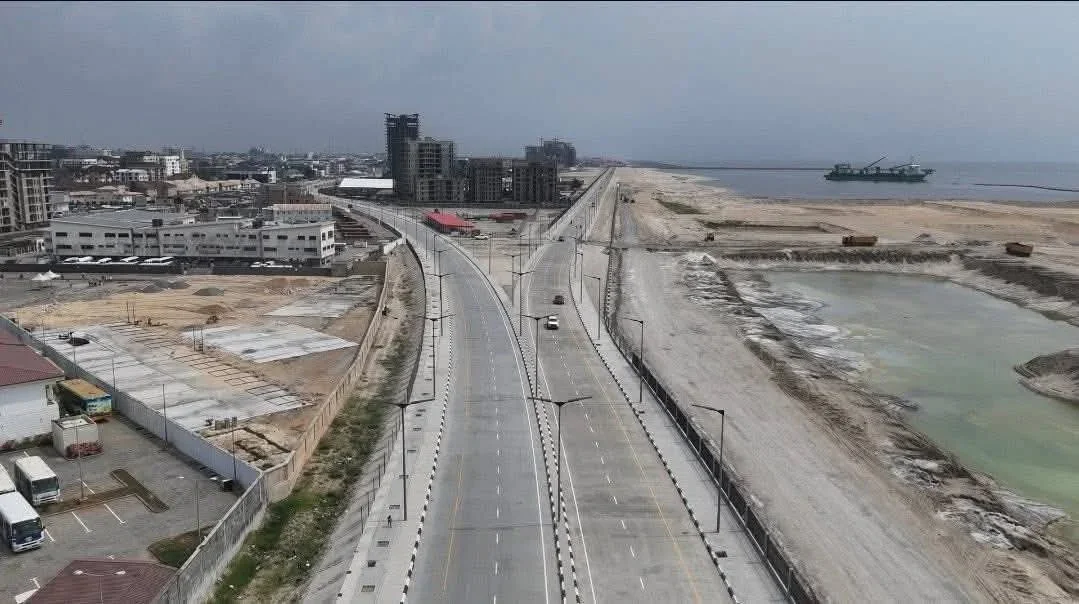
The Lagos–Calabar Coastal Highway is one of the major infrastructure projects influencing the corridor. Its first 47.47-kilometre phase has improved road connectivity along parts of the route between Victoria Island and the Lekki axis, strengthening access to emerging coastal districts.
The corridor stretches from Ahmadu Bello Way through Eko Atlantic and Oniru towards Bluewater Okunde. It combines established commercial locations with reclaimed land, waterfront sites and areas attracting new residential and mixed-use projects.
Improved access can make previously less accessible sites more attractive to developers and buyers. But the longer-term effect on property values will also depend on infrastructure completion, drainage, utilities, land-use planning, environmental resilience and the pace at which developments attract residents and businesses.
Land Values Reflect Growing Investor Interest
Bluewater Okunde illustrates the scale of the market expectations surrounding the coastal corridor. A BusinessDay report cited an estimated increase in the value of a roughly 2,400-square-metre parcel from about ₦800 million a few years ago to more than ₦5 billion.
That comparison points to a substantial rise in the reported value of the site, but it should not be interpreted as proof that every property in the area has recorded similar appreciation. Asking prices, estimated valuations and completed transactions can differ significantly, and individual sites vary in location, title, permitted use and development potential.
For investors, the distinction matters. Infrastructure-led appreciation can create opportunities, but high entry prices also raise the amount of capital at risk if demand weakens, construction costs increase or expected projects fail to materialise.
Luxury Towers Lead the Development Pipeline
Residential towers and mixed-use schemes are becoming more prominent across Oniru and Eko Atlantic City. Projects cited in the corridor include Paramount Twin Towers by Palton Morgan Holdings, Azuri Towers and other developments associated with Eko Development Company and Periwinkle Residences, as well as Nautica Rise by Cruxstone Development and Investment.
Paramount Twin Towers, located at Oniru Waterfront, comprises two towers with a total of 160 apartments. The developer has said the scheme includes two- and three-bedroom apartments, penthouses and amenities such as a gym, children's play area and retail facilities. The company has indicated that it expects to welcome its first residents in the first quarter of 2027.
Reported asking prices place the development firmly in the luxury segment: a regular two-bedroom apartment is priced at ₦736 million, a premium two-bedroom unit at ₦858 million, a maisonette at ₦1.2 billion and penthouses at ₦4 billion each.
These prices illustrate the purchasing power developers are targeting in the premium market. They do not, on their own, establish the level of completed sales, occupancy or investment returns.
Infrastructure Does Not Remove Investment Risks
The coastal corridor’s growth prospects depend on more than road access and high-profile developments. Investors still need to assess title documentation, planning approvals, construction quality, delivery timelines, service charges, flood exposure and the capacity of supporting infrastructure.
Coastal locations also require particular attention to erosion, drainage, sea-level rise and other climate-related risks. These factors can affect maintenance costs, insurance, long-term asset performance and the resilience of buildings.
For developers, successful delivery will depend on matching construction and financing costs with effective demand. For buyers, the key question is whether a property’s price reflects its location, quality, income potential and resale prospects rather than expectations of future appreciation alone.
The Affordability Question Remains
The concentration of high-value developments raises a broader question about the type of housing being delivered along Lagos’s expanding coastal corridor.
Luxury apartments may attract high-net-worth individuals, expatriates and some diaspora buyers, while supporting construction, retail and property-management activity. But they address a different market from households seeking affordable homes or mortgage-financed housing.
The corridor’s broader economic contribution will depend on whether development also supports jobs, local businesses, public services and better-connected residential options. A market can attract significant private capital while leaving much of the city’s housing affordability challenge unresolved.
Outlook: Growth Will Depend on Delivery and Demand
Lagos’s coastal corridor is becoming a more prominent destination for premium property investment, with transport infrastructure and private developments influencing how investors view the area.
Yet the sustainability of that growth will depend on the delivery of infrastructure, the completion and occupation of projects, transparent land administration and the ability of developments to attract genuine end-user demand.
For investors and policymakers, the next measure of progress is not simply the number of towers announced or the rise in reported land values. It is whether the corridor develops into a functioning urban district with reliable infrastructure, occupied buildings and a property market supported by durable demand.
READ MORE