Wike Orders Arrest After Abuja Building Collapse, Revokes Land Allocation
Wike Orders Arrest, Seizes Land for Public Use
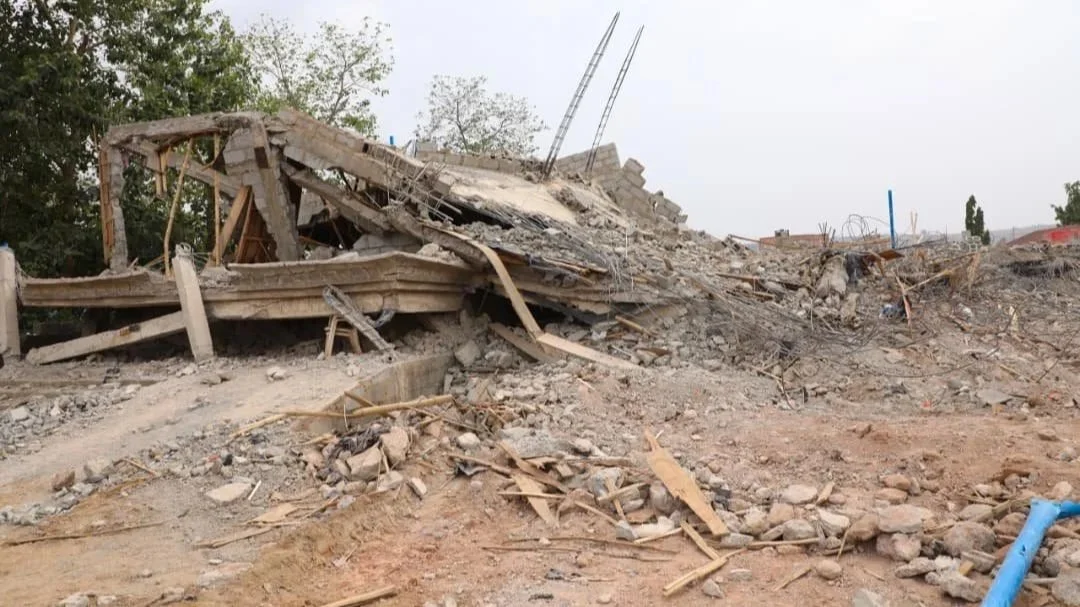
The Minister of the Federal Capital Territory (FCT), Nyesom Wike, has ordered the arrest and prosecution of a developer following the collapse of a two-storey building under construction in Jikwoyi, Abuja. The minister also directed the immediate revocation of the land allocation tied to the property, citing regulatory violations and failure to obtain official approval.
The structure, reportedly intended for hotel use, collapsed while construction was ongoing, leaving several workers injured but resulting in no fatalities.
/ You Might Also Like /




Regulatory Violations and Enforcement Action
According to the FCT Administration, the developer proceeded with construction without approval from the Development Control Department. Authorities confirmed that stop-work notices had been issued but were ignored, raising serious concerns about compliance and enforcement gaps within the capital’s building sector.
Wike stated that the absence of regulatory approval meant that officials could not verify structural integrity or material quality, significantly increasing the risk of failure. He emphasised that adherence to approval processes enables government oversight at every stage of construction, from design to execution.
Land Revocation and Public Use Conversion
Beyond enforcement against the developer, the FCT Administration has moved to reclaim the land estimated at approximately 2,500 square metres and repurpose it for public use.
The minister indicated that local community stakeholders would be consulted to determine the most appropriate use for the site. This approach reflects a broader policy direction that prioritises public benefit in cases where private developments violate planning regulations.
Implications for Urban Development and Housing Policy
The incident highlights persistent challenges in Nigeria’s urban development landscape, particularly around compliance, enforcement, and construction standards. Unregulated developments continue to pose risks to public safety, especially in rapidly expanding urban centres such as Abuja.
For policymakers and investors, the case underscores the importance of strong regulatory frameworks and consistent enforcement. Effective development control systems are critical to ensuring building safety, maintaining urban order, and protecting long-term asset value in the real estate sector.
The FCT Administration’s response signals a stricter enforcement posture, with authorities reiterating plans to demolish structures that lack proper approvals and to prosecute violators.
Strengthening Oversight and Compliance
Wike directed enforcement agencies to intensify monitoring and take decisive action against non-compliant developments. He stressed that early intervention including demolition where necessary remains essential to preventing future incidents and safeguarding lives.
The minister also urged property owners and developers to adhere strictly to approval processes, noting that regulatory compliance is not only a legal requirement but a critical safeguard for structural integrity.
The Jikwoyi building collapse and subsequent enforcement actions highlight the risks associated with unregulated construction in Nigeria’s urban centres. By ordering arrests, revoking land allocation, and reinforcing compliance measures, the FCT Administration has signalled a zero-tolerance approach to regulatory breaches.
Sustained enforcement and improved oversight will be essential to restoring confidence in the construction sector and ensuring safer urban development outcomes across Abuja and other rapidly growing cities.
READ MORE