Gwangwan Bridge Collapse Disrupts Livelihoods Across Kano Communities
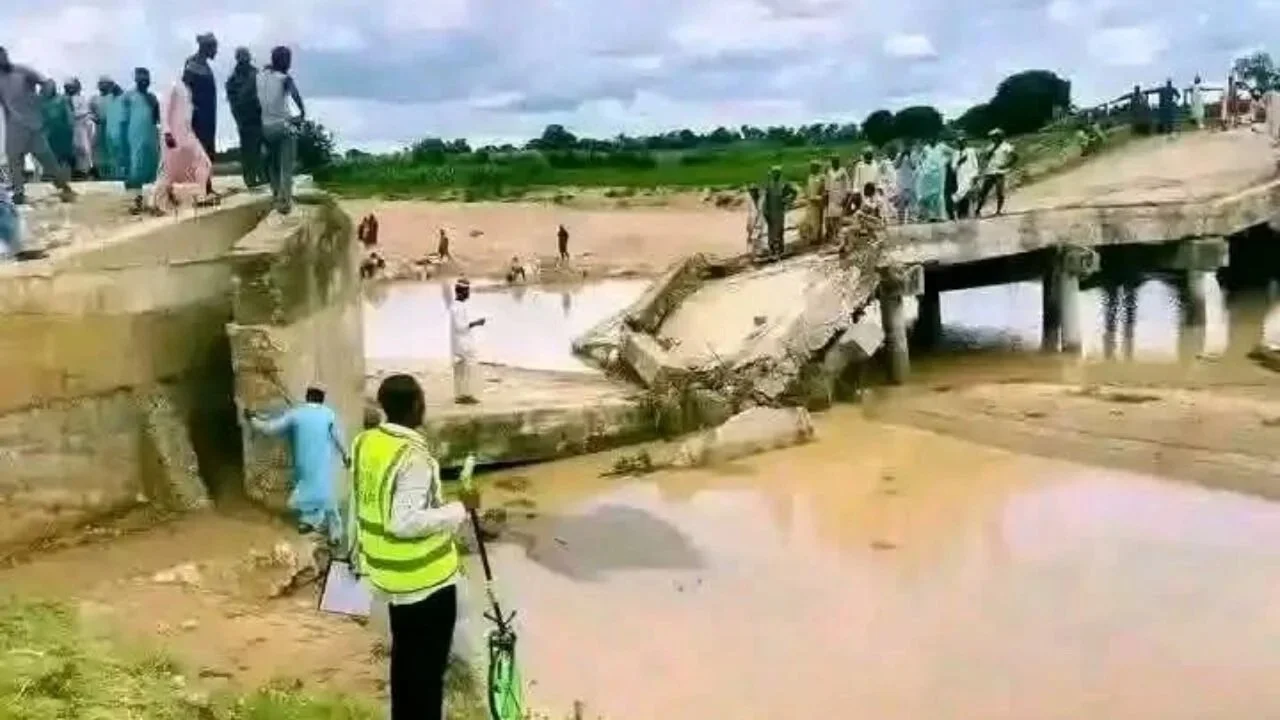
Kano Communities Face Isolation Following Gwangwan Bridge Collapse
The collapse of the Gwangwan Bridge in Rogo Local Government Area of Kano State has severely disrupted economic and social activities, cutting off multiple communities from markets, schools, and healthcare facilities. The incident highlights the critical role of infrastructure in rural connectivity and the growing consequences of neglect across Nigeria’s transport network.
/ You Might Also Like /

Communities Cut Off from Essential Services
The bridge served as a primary link connecting rural communities to key economic and social hubs. Its collapse has left residents stranded, with limited or no access to essential services.
Farmers and traders who relied on the route to transport goods to markets have been among the hardest hit. In many cases, perishable goods have been lost due to delays and inaccessibility. According to reports, some residents suffered significant financial losses as a result of the sudden disruption.
Access to healthcare has also been affected. Patients requiring urgent medical attention now face longer and often impractical alternative routes, increasing health risks, particularly for vulnerable groups such as pregnant women and the elderly.
Economic Activity Declines Across Affected Areas
The collapse has triggered a sharp decline in local economic activity. Small-scale traders, transport operators, and farmers depend heavily on daily movement across the bridge.
With the route now impassable, household incomes have dropped significantly, and local trade has slowed. Residents report that markets are less active, while supply chains linking rural producers to urban consumers have been disrupted.
This pattern aligns with broader evidence from similar infrastructure failures in Nigeria, where collapsed bridges have historically led to widespread economic dislocation and reduced productivity.
Education and Social Mobility Impacted
The disruption extends beyond economic activity into education and social life. Many students who previously crossed the bridge daily to attend school are now unable to do so, leading to prolonged absenteeism.
Social interactions and community events have also declined, as mobility constraints limit movement between neighbouring communities. Over time, this isolation risks weakening social cohesion and reducing access to opportunities.
Infrastructure Neglect and Policy Gaps
Residents and community leaders have raised concerns about long-standing neglect of the bridge prior to its collapse. Reports indicate that the structure had shown signs of deterioration, with repeated calls for repairs failing to yield timely intervention.
This reflects a broader infrastructure challenge across Nigeria, where ageing transport assets often remain under-maintained until failure occurs. Analysts note that reactive rather than preventive maintenance increases long-term costs and economic disruption.
Broader Development Implications
The collapse underscores the link between infrastructure and regional development. Reliable transport networks are essential for agricultural productivity, market access, and service delivery in rural areas.
When such infrastructure fails, the effects extend beyond immediate inconvenience to long-term economic and social setbacks. Reduced mobility limits investment, constrains growth, and exacerbates poverty in already vulnerable communities.
Calls for Government Intervention
Community representatives have called for urgent government intervention to rebuild the bridge and restore connectivity. They emphasise that infrastructure projects should prioritise durability, regular maintenance, and alignment with local economic needs.
Experts also advocate for stronger monitoring systems and accountability frameworks to ensure timely infrastructure upgrades and prevent similar incidents in the future.
The collapse of the Gwangwan Bridge highlights the critical importance of infrastructure in sustaining economic activity and social wellbeing. As communities in Kano grapple with isolation and income loss, the incident reinforces the need for proactive investment in transport infrastructure and maintenance systems.
For policymakers and investors, the situation underscores a broader imperative: closing Nigeria’s infrastructure gap is essential not only for economic growth but also for improving living standards and ensuring inclusive development.
READ MORE