Five Die as Two Buildings Collapse in Kano
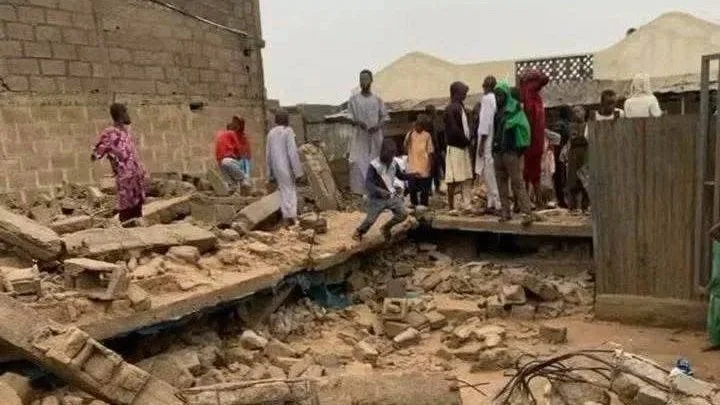
Two building collapses claim five lives in Kano
Five people have died and 10 others were rescued after two separate building collapses in Kano State on Saturday, August 15, according to the Kano State Fire Service.
The incidents occurred at Gaida in Kumbotso Local Government Area and Kurna in Fagge Local Government Area, with emergency responders deployed after receiving distress calls at about 2:34 p.m. and 2:40 p.m., respectively.
/ You Might Also Like /




Incomplete building collapses at Gaida
The first incident occurred at Gaida, near Salbas Filling Station, where an incomplete building under construction collapsed on six workers.
The Kano State Fire Service said the structure measured approximately 50 by 50 feet. Firefighters from the state headquarters responded to the scene and rescued two workers alive.
The two rescued workers were identified as 17-year-old Muhammad Hassan and 19-year-old Khalid Abubakar.
The incident highlights the risks associated with construction activities on incomplete structures, particularly where adequate safety measures and construction standards may not be maintained.
Second collapse occurs in Fagge
A separate building collapse occurred at Kurna in Fagge Local Government Area later the same day.
Emergency responders were also deployed to the location following a distress call received by the Kano State Fire Service.
The two incidents collectively resulted in five deaths, while 10 people were rescued, according to the Fire Service statement reported by PUNCH.
Other reports citing the Kano State Fire Service provided slightly different casualty details, including the death of four construction workers and a 14-year-old student across the two incidents. NHM will therefore rely on the official Fire Service casualty figure of five deaths and the confirmed rescue figure reported by PUNCH.
Building safety remains a major concern
The Kano incidents add to a continuing pattern of building-collapse incidents across Nigeria, raising questions around construction supervision, compliance with approved building plans, quality of materials and enforcement of building regulations.
Building collapses can result from several factors, including structural design deficiencies, poor workmanship, substandard materials, inadequate supervision and unauthorised alterations. Establishing the specific cause of the Kano collapses will require an investigation by the relevant authorities.
The immediate priority following such incidents remains search and rescue, treatment of survivors and securing the affected sites.
Construction standards critical to property development
For Nigeria's housing and construction industry, recurring building collapses underline the importance of stronger compliance throughout the development process.
Developers, contractors, consultants and regulators all have roles in ensuring that structures meet approved specifications and applicable safety requirements.
Effective enforcement also protects property buyers and investors. Buildings constructed without adequate technical oversight can expose occupants and investors to significant financial and safety risks.
Need for stronger regulatory enforcement
The Kano incidents also reinforce the need for effective monitoring of construction sites, particularly buildings that remain under construction.
Regulatory authorities need sufficient capacity to inspect projects at different stages of development and intervene where construction work fails to meet approved standards.
For property professionals, stronger enforcement can improve confidence in the built environment by reducing the risks associated with structurally deficient buildings.
Outlook
The deaths in Kano underline the human and economic consequences of failures in building safety.
While emergency agencies continue to respond to such incidents, preventing future collapses requires stronger enforcement of building regulations, professional supervision and compliance with approved construction standards.
For Nigeria's housing and construction sector, improving structural safety remains essential to protecting lives, preserving property investments and supporting confidence in the built environment.
READ MORE