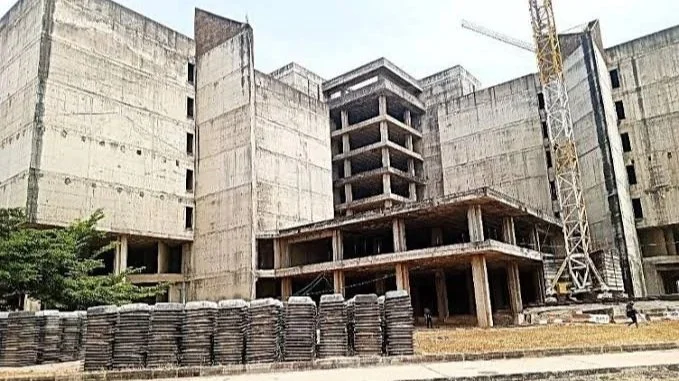
Abandoned national library headquarters complex
The Federal Government has renewed its push to complete the National Library of Nigeria project in Abuja, directing contractors and consultants to meet agreed delivery timelines or face sanctions.
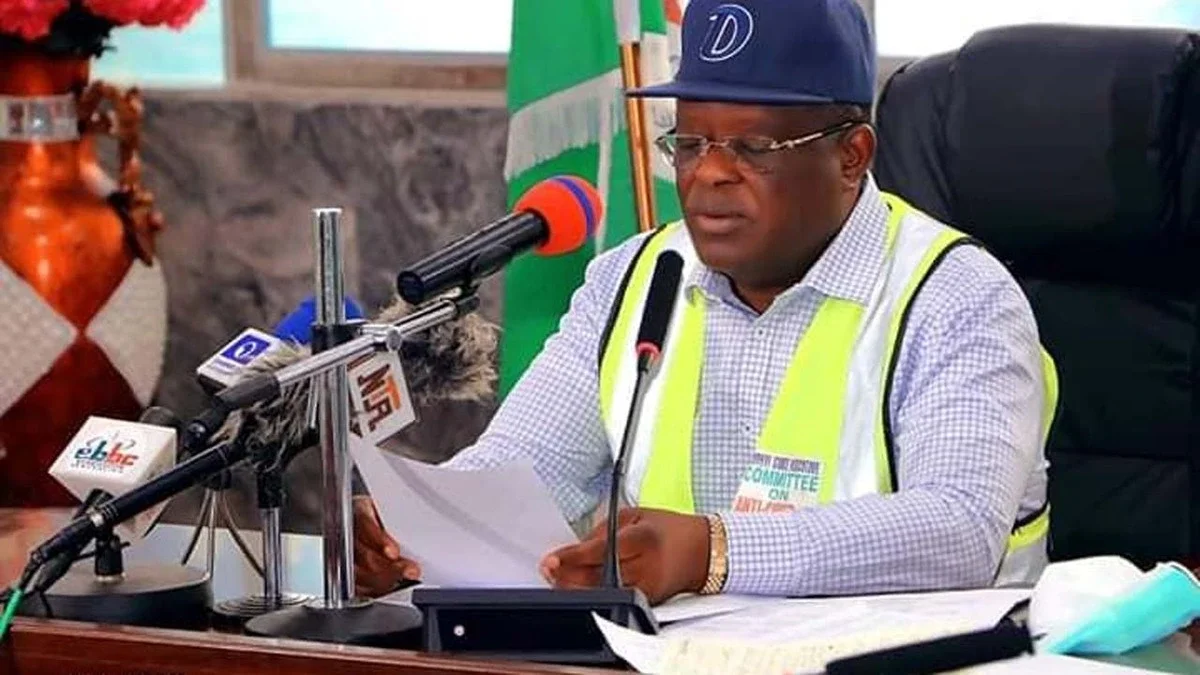
Minister of Education, Dr Tunji Alausa, issued the directive during a meeting with contractors, consultants and officials of the National Library of Nigeria, stressing that government funding would be matched by stricter requirements for performance, quality and accountability.
/ You Might Also Like /




FG moves to end decades of delays
The National Library project has faced prolonged delays since construction began in 2006.
The project was originally conceived in 1981, while construction commenced in 2006 with an initial completion period of 24 months. The facility was therefore expected to be completed by 2008, but it has remained unfinished for years.
Alausa said the government would establish realistic timelines and hold contractors and consultants to the commitments contained in their agreements.
He warned that failure to meet agreed guidelines and deadlines would attract penalties.
Construction and furnishing to run simultaneously
To accelerate completion, the government has divided the project into two major components: physical infrastructure and furnishing.
The two aspects will be pursued concurrently rather than waiting for the building works to be completed before beginning the furnishing phase.
The minister said the Federal Government was prepared to provide the funds required to complete the project but would expect contractors to deliver according to agreed standards and timelines.
This approach is intended to reduce further delays and ensure that construction and internal fit-out progress together.
Government places greater emphasis on project accountability
The renewed approach also places greater emphasis on accountability for public construction projects.
Alausa said the government would not compromise on quality, standards or value for money, stressing that every naira committed to the National Library must result in a functional facility.
The minister's warning reflects growing pressure on contractors handling major public projects to deliver within agreed timeframes rather than allow projects to remain under construction indefinitely.
National Library positioned as more than an education facility
The government sees the National Library as a national institution for learning, research, knowledge development and human-capital development rather than simply another public building.
The project is located in Abuja's Central Business District, close to major national landmarks including the National Mosque and the National Ecumenical Centre.
Alausa said the renewed vision is to deliver a modern facility capable of serving Nigerians to international standards.
The government also intends to incorporate more inclusive facilities for children, persons with disabilities, pregnant women and other users.
Qatar library influences new design vision
The Federal Government's renewed vision for the facility has also been influenced by the National Library of Qatar.
Alausa said the First Lady's visit to the Qatari facility had encouraged Nigerian officials and project stakeholders to study its features and consider relevant elements for the Nigerian project.
The proposed facility is expected to include modern furniture, improved accessibility and dedicated spaces designed around different categories of users.
Implications for Abuja's built environment
The National Library's location in Abuja's Central Business District gives the project significance beyond education infrastructure.
Completion of a major public institution in the area could strengthen activity around the surrounding commercial district and contribute to the wider development of Abuja's civic and institutional landscape.
Large public projects can also generate demand for construction services, professional consultants, furnishing companies, maintenance providers and other businesses within the built environment.
However, the wider economic and property-market impact will depend on the quality and scale of the completed facility and the level of activity it attracts once operational.
Public project delivery remains a key issue
The National Library project illustrates one of the challenges facing Nigeria's infrastructure development: projects can remain incomplete for extended periods despite substantial public expenditure.
For the construction and property sectors, timely project delivery is important because prolonged delays increase uncertainty, disrupt contractor planning and can reduce the economic value generated by completed infrastructure.
The government's decision to link funding with clear delivery targets could therefore provide a stronger framework for monitoring the project's progress.
READ MORE