Nigeria’s $14.8bn Gender Financing Gap Draws FG Push for Bank, Fintech Action
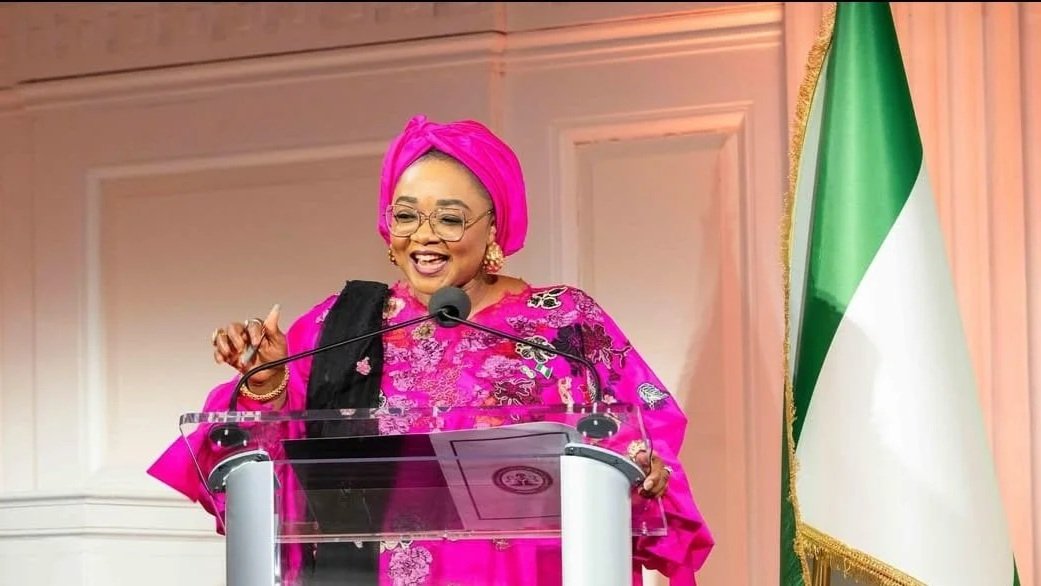
FG Calls on Financial Institutions to Close Nigeria’s $14.8bn Gender Financing Gap
The Federal Government has urged banks, fintechs and other financial institutions to expand access to finance for Nigerian women, citing an estimated $14.8 billion annual economic opportunity that could be unlocked by closing the country’s gender financing gap.
/ You Might Also Like /




Minister of Women Affairs and Social Development, Imaan Sulaiman-Ibrahim, made the call on Wednesday at the Second National Gender Inclusion Conference, SheIsIncluded 2026, in Abuja. The conference focused on financing, systems and scaling women’s economic participation.
FG Calls for New Approach to Women’s Financing
Sulaiman-Ibrahim said the challenge facing women’s economic transformation was not a lack of ambition but the design of financial systems that often fail to reflect the realities of women-owned businesses.
She noted that conventional lending models frequently rely on collateral, while many women have limited access to assets that can be used as security for loans.
The minister therefore urged financial institutions to develop products that consider alternative measures of creditworthiness and the operating realities of women entrepreneurs.
She specifically proposed alternative-data credit scoring, guarantee-backed lending based on group liability and low-cost interoperable payment systems.
The government also offered to open its existing programme pipelines to financial institutions willing to test and scale new products targeting women.
$14.8bn Financing Opportunity
The minister cited an International Finance Corporation estimate that closing Nigeria’s gender financing gap could unlock approximately $14.8 billion annually.
She argued that the potential benefit should be viewed not only as a social intervention but also as a commercial opportunity for financial institutions and the wider economy.
The financing gap is particularly relevant to women-owned micro, small and medium-sized enterprises, which require working capital, investment finance and payment infrastructure to expand.
Greater access to capital could enable more women-led businesses to increase production, employ workers and participate in formal value chains.
Nigeria for Women Programme Reaches 4.5 Million Women
The minister also highlighted progress under the World Bank-supported Nigeria for Women Project Scale-Up.
According to her, the programme now extends its model to 4.5 million women organised into 300,000 Women Affinity Groups nationwide.
The first phase mobilised more than 560,000 women into over 26,000 groups, with participating women collectively saving more than N4.9 billion and accessing approximately N15.6 billion in livelihood grants.
The group-based model allows women to save together, provide loans to members and build businesses collectively.
The government is seeking to use this structure as a basis for financial institutions to develop lending models that do not depend exclusively on traditional collateral.
Government Wants Private Sector to Drive Scale
Vice President Kashim Shettima, represented at the conference by Special Adviser to the President on General Duties, Aliyu Modibbo Umar, said government policy alone would not be sufficient to achieve large-scale economic inclusion.
He said financial institutions, fintech companies, investors and development partners would need to provide the capital, technology and operational capacity required to scale the initiatives.
The message places greater responsibility on the private financial sector to convert government programmes and policy frameworks into accessible financial products.
For banks and fintechs, the opportunity extends beyond conventional lending to areas such as digital payments, savings, insurance, investment products and alternative credit assessment.
Women’s Capital Market Participation Remains Low
The Securities and Exchange Commission also highlighted the limited participation of women in Nigeria’s capital market.
According to figures presented by SEC Director-General Emomotimi Agama’s representative, women account for between 12% and 15% of participation in corporate institutions, while their representation in executive offices remains below 7%.
The official added that women accessing capital to raise funds account for less than 5%.
The SEC is reviewing entry criteria in the capital market with the aim of improving access for women and small and medium-sized enterprises.
The regulator also encouraged women to explore crowdfunding platforms available within the capital market.
Financing Gap Has Wider Economic Implications
Improving women's access to finance could have effects beyond individual businesses.
Women-owned businesses contribute to household income, employment and local economic activity. Greater access to capital can allow viable businesses to invest in equipment, expand operations and enter larger markets.
Technical Adviser to the President on Economic and Financial Inclusion, Nurudeen Abubakar Zauro, said productive capital that cannot reach productive citizens leaves the wider economy operating below its potential. He cited estimates suggesting that greater equality in women's economic participation could materially increase national output.
The argument reinforces the government's position that financial inclusion should be treated as part of broader economic growth policy rather than solely as a social programme.
Implications for Housing and Real Estate
Greater access to finance for women-owned businesses could also have indirect implications for Nigeria's housing and real estate markets.
As businesses expand and household incomes increase, demand for housing, commercial space and related property services can rise. Increased access to business finance could also strengthen the ability of entrepreneurs to meet rental obligations, invest in workspaces or acquire property over time.
For women operating businesses from residential premises, access to growth capital could support a transition towards dedicated commercial spaces as their enterprises expand.
The broader impact, however, will depend on whether financial products become affordable, accessible and sustainable enough to support long-term business growth.
Outlook
The Federal Government's push for banks and fintechs to address Nigeria's gender financing gap places greater emphasis on financial product design, alternative credit assessment and private-sector participation.
The estimated $14.8 billion annual opportunity highlights the potential economic value of improving women's access to capital. However, translating that opportunity into measurable economic growth will require more than policy commitments.
Financial institutions will need to develop products that reflect the realities of women-led businesses, while regulators and government programmes must provide an enabling framework for responsible lending and investment.
For Nigeria's wider economy, closing the financing gap could support entrepreneurship, household incomes and business expansion, with potential knock-on effects across sectors including housing, construction and real estate.
READ MORE