FG Approves Two New Satellites to Expand Nigeria’s Digital Infrastructure

Two New Satellites Approved as Nigeria Seeks Stronger Digital Connectivity
The Federal Executive Council has approved the acquisition and deployment of two next-generation High-Throughput Communication Satellites, NIGCOMSAT-2A and NIGCOMSAT-2B, as Nigeria seeks to expand its satellite capacity and reduce reliance on external infrastructure.
/ You Might Also Like /




NIGCOMSAT Acting Head of Corporate Affairs, Stephen Kwande, disclosed the approval on Saturday. The satellites will be delivered by Thales Alenia Space of France and Israel Aerospace Industries, with NIGCOMSAT implementing the project in collaboration with the Federal Ministry of Communications, Innovation and Digital Economy.
New Satellites to Expand National Connectivity
According to NIGCOMSAT Managing Director Nkechi Egerton-Idehen, the two satellites will strengthen Nigeria’s communications capacity and expand access to digital services.
The satellites will complement terrestrial broadband infrastructure, particularly in areas where conventional networks are difficult or expensive to deploy.
This could improve connectivity in underserved, unserved and hard-to-reach communities, where limited telecommunications infrastructure continues to restrict access to digital services.
Satellites to Support Broadband and Government Services
The additional satellite capacity will support high-capacity broadband, broadcasting, enterprise connectivity and government services.
NIGCOMSAT also identified education, healthcare, agriculture and financial services among the sectors that could benefit from improved satellite-enabled connectivity.
The project is also expected to strengthen national security and defence communications while improving the resilience of Nigeria’s communications infrastructure.
Project Could Support Digital Infrastructure Development
The satellite programme is expected to create opportunities across several areas of Nigeria’s digital infrastructure ecosystem.
These include telecommunications, broadcasting, ground infrastructure, systems integration, technical support and other satellite-enabled services.
NIGCOMSAT said the programme would also support indigenous capacity development through knowledge transfer, professional development and specialised expertise in satellite engineering, network operations and cybersecurity.
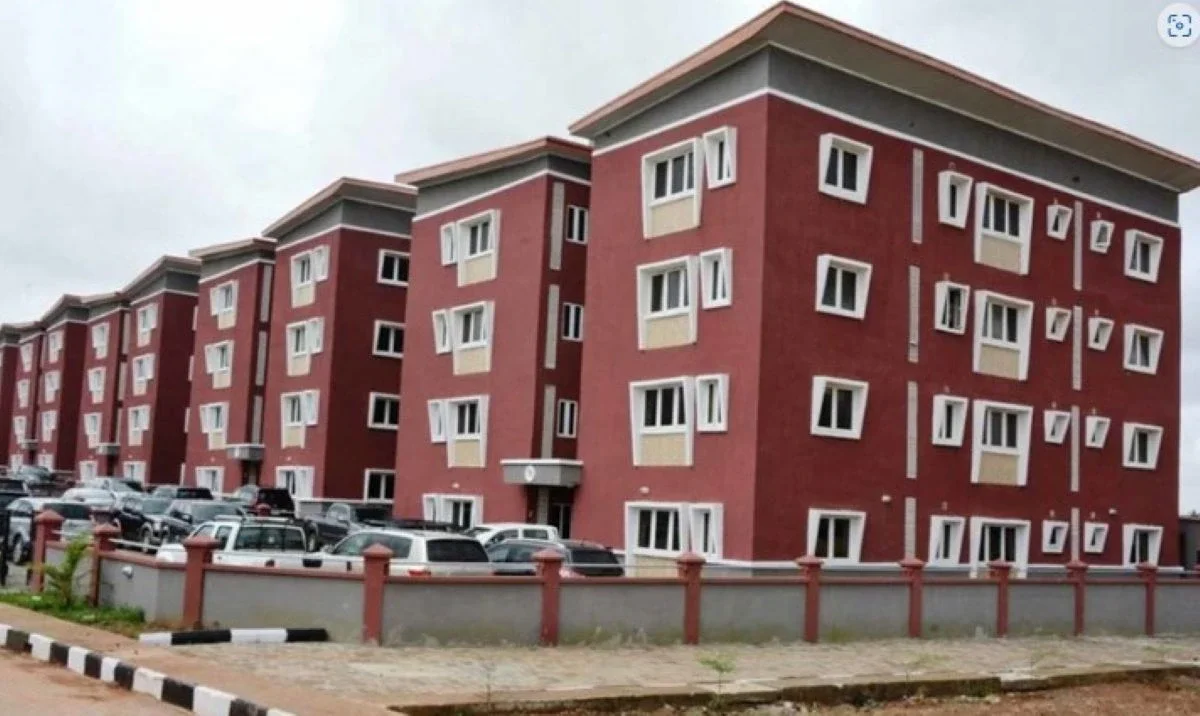
Implications for Housing and Urban Development
Although the project focuses primarily on communications infrastructure, improved connectivity has wider implications for Nigeria’s housing and urban development.
Reliable digital infrastructure increasingly forms part of the infrastructure requirements for modern communities. Broadband access supports remote work, digital businesses, education, financial services and other activities that influence where households and businesses choose to locate.
For property developers, stronger connectivity can also improve the attractiveness of emerging residential communities, particularly in areas outside established urban centres.
Satellite connectivity can be particularly important in locations where extending conventional fibre or terrestrial broadband networks remains commercially difficult.
Digital Connectivity Could Support Emerging Communities
Improved telecommunications infrastructure can help reduce the economic disadvantages faced by communities located far from major urban centres.
Where digital connectivity improves alongside roads, electricity, water and other infrastructure, smaller towns and emerging urban areas can become more attractive to businesses, workers and investors.
This could support more distributed economic activity and, over time, generate demand for residential and commercial property.
However, connectivity alone cannot resolve infrastructure and housing shortages. Developers and policymakers will still need to coordinate digital infrastructure with physical infrastructure and land-use planning.
Programme Builds on Earlier NIGCOMSAT Efforts
The new satellites form part of Nigeria’s longer-term effort to strengthen its satellite infrastructure.
NIGCOMSAT-1R, launched in 2011, is approaching the end of its 15-year operational lifespan. NIGCOMSAT has therefore been working to replace the ageing satellite while expanding its capacity for broadband and other digital services.
The company also partnered with Eutelsat in January 2025 to deploy low-Earth-orbit satellite services in Nigeria.
In March 2026, NIGCOMSAT reported that its revenue had increased from ₦650 million in 2023 to more than ₦2 billion in 2025, while confirming plans for NIGCOMSAT-2A and NIGCOMSAT-2B.
Satellites to Support Digital Broadcasting
The programme also comes as Nigeria continues to expand its digital broadcasting infrastructure through the Digital Switch-Over programme.
The Federal Government is pursuing a hybrid broadcasting model combining digital terrestrial television, direct-to-home satellite delivery and digital application-based platforms.
The additional satellite capacity could therefore support the country's broader transition towards expanded digital broadcasting and improved access to television services.
Next Stage Is Implementation
With Federal Executive Council approval secured, the project now moves into its implementation phase.
NIGCOMSAT said the next steps include formal engagement with technology partners, contract finalisation, technical planning and preparatory activities for the manufacture, launch and deployment of the satellites.
The successful execution of these stages will determine when the additional capacity becomes operational and how quickly it can translate into improved connectivity.
Implications for Nigeria’s Infrastructure Strategy
The satellite programme reflects a broader shift towards strengthening domestic infrastructure and reducing dependence on external capacity.
For Nigeria, greater domestic satellite capability could improve the resilience of critical communications infrastructure while expanding access to services in locations where terrestrial networks face geographical or commercial limitations.
For investors and businesses, stronger digital infrastructure could also create opportunities across telecommunications, technology, broadcasting, data services and supporting infrastructure.
Outlook
The approval of NIGCOMSAT-2A and NIGCOMSAT-2B represents a significant step in Nigeria’s effort to expand domestic communications capacity and extend digital connectivity to underserved areas.
The wider economic impact will depend on successful implementation, affordability of satellite-enabled services and the ability to integrate the new capacity with existing terrestrial networks.
For Nigeria’s housing and urban development market, improved connectivity could strengthen the viability of emerging communities and support the development of digitally connected residential and commercial locations. The project therefore has relevance beyond telecommunications as Nigeria seeks to build infrastructure capable of supporting more distributed economic and urban growth.
READ MORE