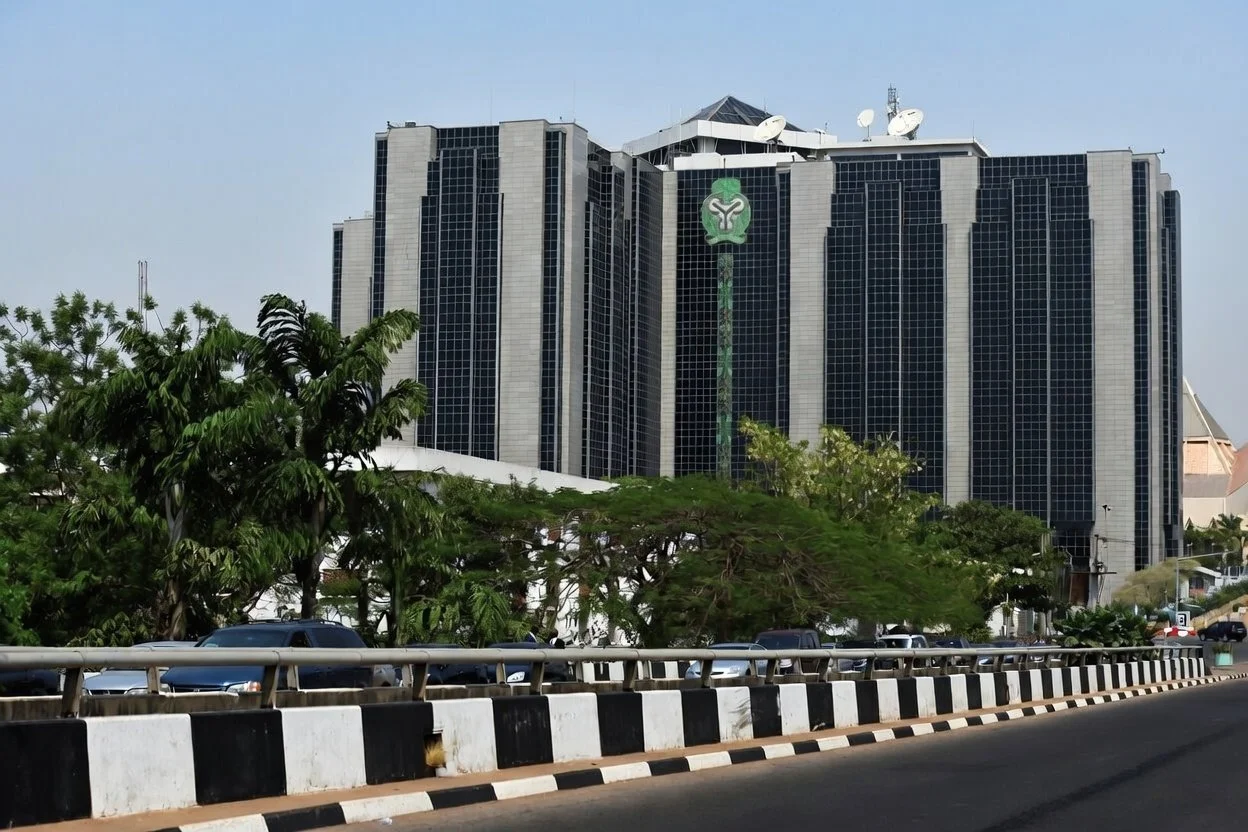
Nigeria's rising budget deficits are raising concerns about exchange-rate stability
Nigeria’s persistent budget deficits are contributing to exchange-rate instability and could keep borrowing costs elevated, raising fresh concerns about the impact of government financing on private investment and the wider economy.
A study published in the Central Bank of Nigeria’s (CBN) Journal of Applied Statistics found that rising fiscal deficits are a major driver of naira depreciation and exert delayed upward pressure on interest rates.
/ You Might Also Like /




The research, titled “Budget Deficit Dynamics and Macroeconomic Performance in Nigeria”, was authored by Ndubuisi E. Uguru. It examined annual economic data covering 1981 to 2024, using a Vector Autoregressive (VAR) framework to assess the relationship between budget deficits and key macroeconomic indicators.
The findings suggest that persistent fiscal imbalances can weaken exchange-rate stability, complicate monetary policy management and constrain investment by increasing pressure on financing conditions.
Budget Deficits Put Pressure on Naira Stability
The study identified government budget deficits as a significant source of exchange-rate fluctuations, linking persistent fiscal imbalances to sustained depreciation of the domestic currency.
It found that deficits accounted for a substantial share of exchange-rate movements, with their influence extending beyond the immediate period.
The research also highlighted the possibility of a self-reinforcing cycle in which persistent deficits contribute to currency weakness, increasing economic uncertainty and complicating efforts to maintain financial stability.
The findings point to fiscal dominance, a situation in which government borrowing and spending requirements constrain the central bank’s ability to pursue monetary stability independently.
For Nigeria, this presents a policy challenge because efforts to stabilise the naira depend not only on monetary decisions but also on how the government manages expenditure, revenue and borrowing.
Rising Deficits Could Keep Interest Rates Elevated
Beyond exchange-rate depreciation, the research found that budget deficits exert delayed upward pressure on interest rates.
Government borrowing can compete with private businesses for available funds, potentially increasing the cost of credit and limiting access to financing for productive investment.
The study also found that fiscal deficits could trigger a contraction in money supply, which it associated with defensive monetary tightening by the central bank.
This creates a difficult environment for businesses that depend on borrowing to finance expansion, acquire equipment or sustain operations.
For Nigeria's property and construction sectors, elevated borrowing costs can make it more expensive for developers to finance land acquisition, construction and infrastructure. Higher financing expenses can also influence the prices developers charge buyers and the viability of projects that depend on long-term credit.
The implications extend to prospective homeowners, particularly those who rely on mortgage financing to acquire property.
Study Finds No Direct Statistical Link Between Deficits and Inflation
Despite identifying a relationship between fiscal deficits, exchange-rate depreciation and interest rates, the research found no statistically significant direct relationship between budget deficits and inflation.
It suggested that inflationary pressures in Nigeria are more strongly influenced by supply-side shocks, structural bottlenecks and the transmission of exchange-rate movements into domestic prices.
This distinction is important because it means that reducing government deficits alone may not resolve Nigeria's inflation problem.
Supply constraints, production costs, infrastructure weaknesses and dependence on imported goods also influence the prices households and businesses face.
For the construction industry, these factors can affect the cost of cement, steel, finishing materials, machinery and other inputs, even when government borrowing conditions improve.
Government Borrowing Requirements Continue to Rise
The findings come amid substantial government financing requirements for the 2026 fiscal year.
President Bola Tinubu presented the 2026 budget to the National Assembly in December 2025 with a proposed deficit of ₦23.85 trillion.
By April 2026, the Federal Government had increased its planned borrowing for the year to ₦29.20 trillion following adjustments to the proposed budget and its financing requirements.
The scale of the borrowing requirement has renewed concerns about the government's reliance on debt to finance expenditure and its implications for private-sector access to credit.
Meanwhile, the CBN reduced its Monetary Policy Rate by 350 basis points to 23 per cent in September 2026, following its 307th Monetary Policy Committee meeting.
The reduction marked the largest cut in the benchmark interest rate since December 2006, following the committee's decision to retain the rate at 26.5 per cent in July.
However, the study suggests that monetary easing alone may not be sufficient to secure lasting exchange-rate stability and lower borrowing costs if fiscal pressures remain unresolved.
Researchers Call for Stronger Fiscal Discipline
To address the risks associated with persistent deficits, the study recommended introducing a legally binding fiscal rule that limits budget deficits relative to gross domestic product.
Such a framework could help contain government borrowing, reduce competition between the public and private sectors for available financing and ease pressure on interest rates.
The research also proposed establishing a non-oil Fiscal Stabilisation Fund to strengthen the government's ability to manage revenue fluctuations and reduce exposure to external economic shocks.
Other recommendations include improved foreign-reserve management, strategic trade policies and incentives for domestic production to reduce dependence on imports.
It also called for a transparent framework for coordinating fiscal and monetary policies, enabling both authorities to manage economic pressures more effectively.
For private investment, the study recommended improving access to credit, lowering borrowing costs and stabilising inflation expectations to encourage capital formation.
Implications for Housing and Property Investment
The findings carry important implications for Nigeria's housing and real estate sector, where access to affordable long-term financing remains a major constraint.
Property development requires substantial upfront capital, while many projects take several years to generate returns. When borrowing costs rise, developers face higher financing expenses, which can affect project timelines, construction budgets and the final prices of completed homes.
Exchange-rate depreciation presents another challenge because Nigeria's construction industry relies on imported machinery, equipment, fittings and some building materials. A weaker naira can increase procurement costs and make project budgeting more difficult.
For mortgage lenders, sustained pressure on interest rates can also complicate efforts to offer affordable home loans. Higher funding costs can limit the availability of mortgages and make repayment obligations more difficult for households.
Although the study does not examine housing-market outcomes directly, its findings reinforce the importance of macroeconomic stability to housing delivery and property investment.
Ultimately, improving access to affordable housing finance will require more than adjustments to monetary policy. Greater fiscal discipline, stronger domestic production, stable exchange rates and a more predictable financing environment will also be important to reducing the cost of developing and acquiring homes in Nigeria.
READ MORE